The world's two largest trading blocs are seeking an agreement that will connect the supply chains of countries including Canada, Singapore, Mexico, Japan, Vietnam, Malaysia and Australia with Europe. The new alliance will bring almost 40 countries closer together located on opposite sides of the globe.
Business groups across Europe are increasingly vocal in their support for the deal and are pressing Brussels and London to continue working, POLITICO has learned. The deal will take the cards out of Donald Trump's hands — proving that allies are uniting despite brutal U.S. pressure.
The world's two largest trading blocs – the EU and the Comprehensive and Progressive Agreement for Trans-Pacific Partnership (CPTPP) – are considering closer ties to circumvent Donald Trump's tariffs.
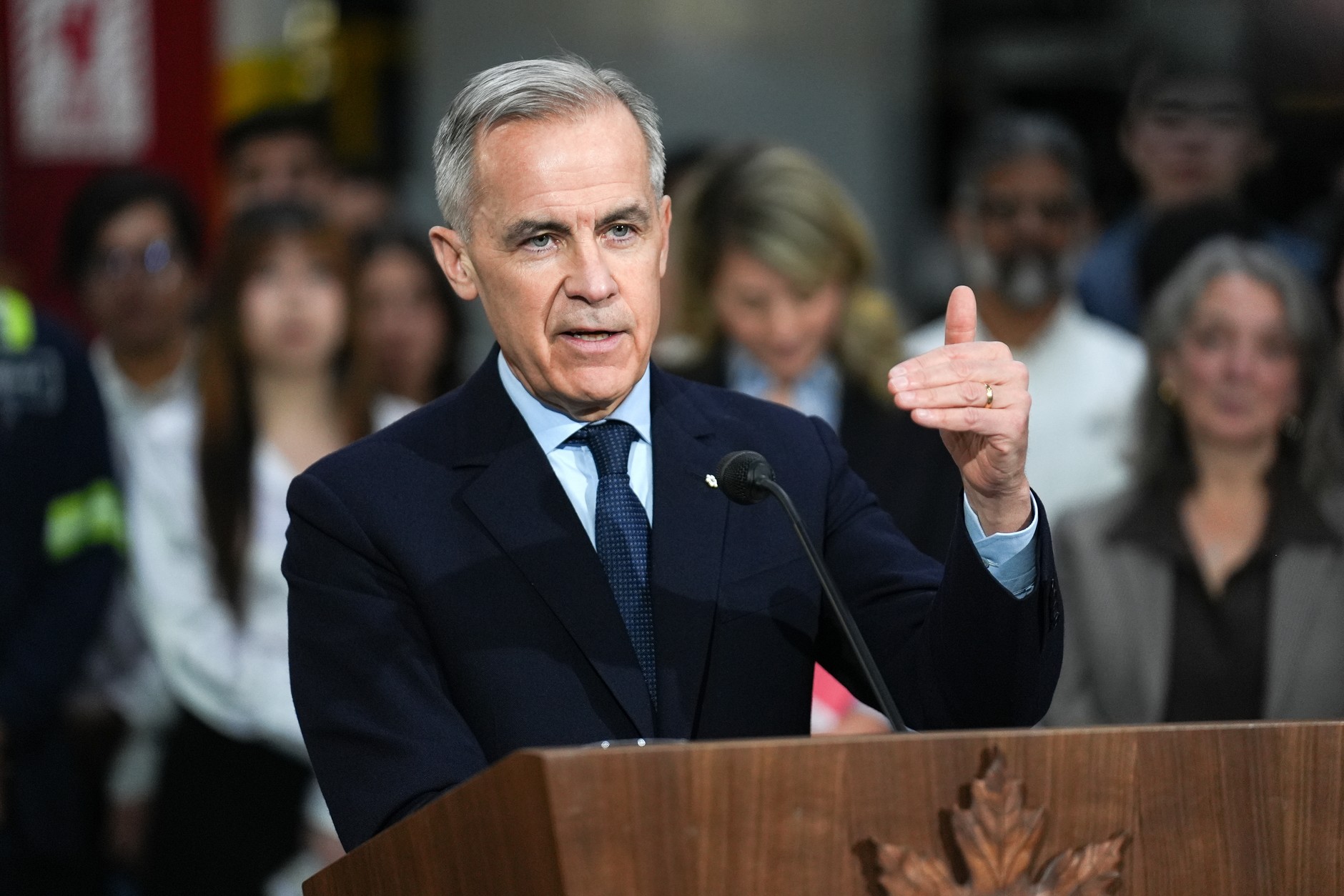
Canada's prime minister is leading talks between the EU and the large Indo-Pacific trading bloc, multiple people familiar with the ongoing talks told POLITICO. Last month, Canadian Prime Minister Mark Carney called on mid-sized countries to resist U.S. trade pressure.
He did it a few days after Trump has threatened to increase tariffs on Denmark's European allies if it does not give up Greenland.
The article continues below the video
Ottawa “supports efforts to build a bridge between the Trans-Pacific Partnership and the European Union, which would create a new trading bloc of 1.5 billion people,” Carney told world leaders and the global business elite in Davos.
The agreement would enable producers from both blocs to exchange goods and their parts more smoothly with low tariffs. The proposal for this agreement is supported by, among others: German Chamber of Commerce and Industry (DIHK) and British Chamber of Commerce.
“Things are getting really interesting.”
Earlier this month, Canadian Prime Minister Carney sent his personal representative to the European Union, John Hannaford, to Singapore to gather the views of regional leaders on a potential agreement.
Canadian Prime Minister Mark CarneyMert Alper Dervis/Anadolu Agency via Getty Images/Getty Images
“The work is definitely progressing,” a Canadian government representative told POLITICO. “We have had very fruitful discussions on this topic with other partners around the world.”
The EU and Indo-Pacific countries decided last November to join their economic forces to counter the fragmentation of free trade following Trump's “liberation day” tariffs in April last year.
“We see great value in increasing trade between the EU and the CPTPP, which would also contribute to strengthening supply chain resilience,” a Japanese trade official, who spoke on condition of anonymity, told POLITICO. He added that the agreement is an interesting prospect for Tokyo, but “no specific results can be expected in the short term.”
“The EU is ready to talk, and that obviously makes things really, really interesting,” a trade diplomat from another CPTPP country told the Associated Press.
— In the EU, some officials are “very interested” in striking a deal, a business official familiar with the ongoing trade talks told POLITICO.
While the agreement “is indeed part of the broad scope of cooperation between the EU and the CPTPP,” an EU official confirmed to POLITICO, “it is not a priority at this time.” More urgent discussions focus on “concrete deliverables” in terms of bringing together supply chains in both blocs and strengthening trade diversification between their members.
— These issues are “discussed internally” in both blocs but are not yet the subject of public discussion, said Klemens Kober, director of trade policy, EU customs and transatlantic relations at the Association of German Chambers of Industry and Commerce [DIHK, organizacja zrzesza 79 podmiotów reprezentujących niemieckie przedsiębiorstwa]. “All interested players are looking into this matter.”
“If these negotiations can focus on harmonizing and simplifying these rules as much as possible, it could prove beneficial for German companies,” Kober said. He pointed out that the EU has free trade agreements with most CPTPP members, including New Zealand, Japan, the UK and Canada. “The ability to combine the benefits of different free trade agreements is very useful.”
“We hope that if this is successful and there are tangible benefits in various areas, it may encourage other countries to join and establish positive cooperation,” Kober added. “The more [krajów zawierających porozumienia z UE]”the better.”
I’m Ashley Davis as an editor, I’m committed to upholding the highest standards of integrity and accuracy in every piece we publish. My work is driven by curiosity, a passion for truth, and a belief that journalism plays a crucial role in shaping public discourse. I strive to tell stories that not only inform but also inspire action and conversation.