He noted that Tuzlovsky Estuaries is the only marine national park in Ukraine that was not occupied, which allows for constant monitoring and documentation of the consequences of war on nature.
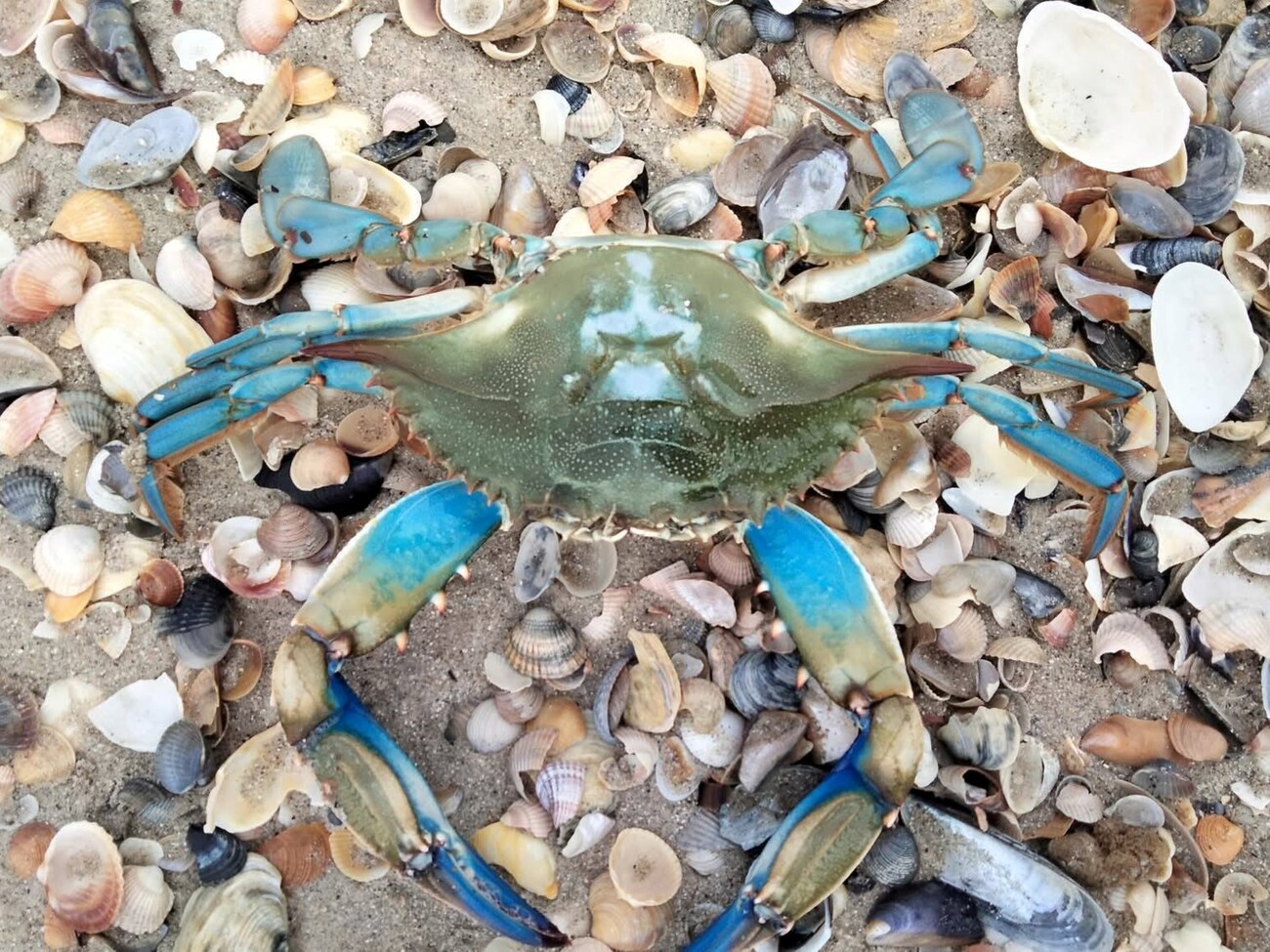
Rusev explained that the blue crab is not native to the Black Sea. Its homeland is the Atlantic coast of America from Canada to Argentina.
“It is believed that it entered the Black Sea along with the ballast waters of ships or simply migrated through the Mediterranean and Marmara Seas, where it already lives,” the scientist noted.
Rusev said that this species prefers coastal areas and estuaries with shallow depth and salinity. Although the crab is attractive on the outside and considered a delicacy, it is an invasive species in the Black Sea ecosystem.
Among the main threats Rusev outlined are that the crab is larger and more aggressive than native crabs, which could lead to displacement of native species; it is omnivorous, which can affect the balance of flora and fauna; it is quite hardy and survives low oxygen levels and large fluctuations in salinity.
Later, Rusev reported that he had discovered two more specimens of such a crab in the shallow waters of the sea. Thus, there are already three finds of an exotic invasive species in the national park.