NATO, as it was known for decades, no longer exists, warns American political scientist Robert Kagan

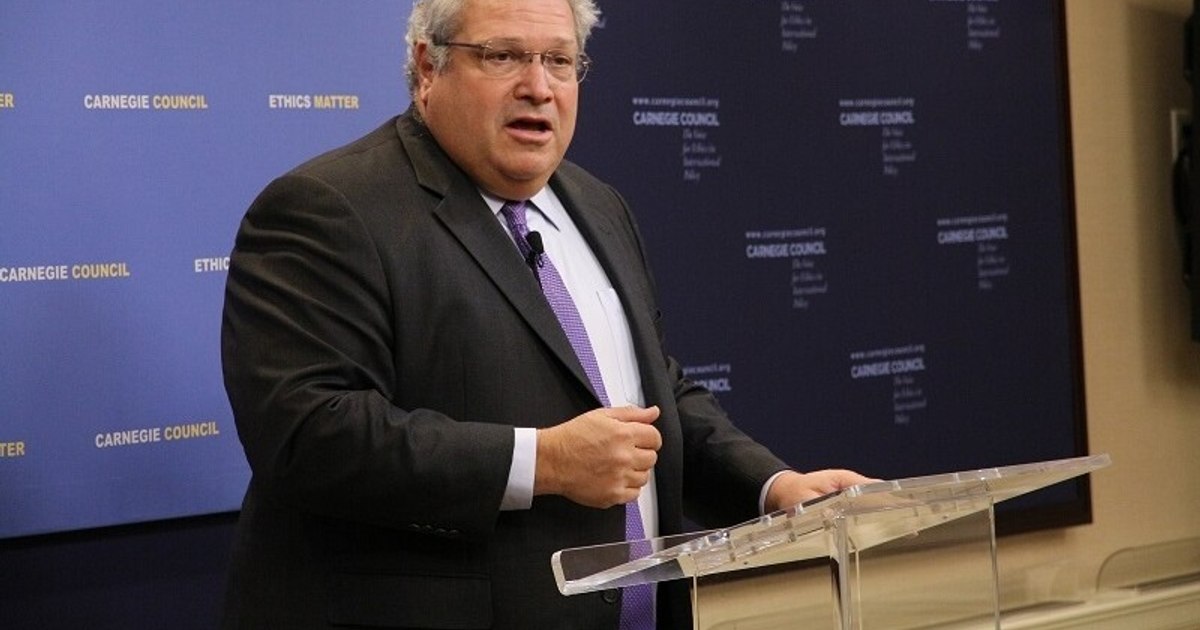
NATO, as it was known for decades, no longer exists. It is the harsh verdict of the American political scientist Robert Kagan, who warns that Europe can no longer rely on the United States and that Donald Trump represents a potential aggressor rather than a guarantor of European security. The only hope, Kagan says, may come from Germany.
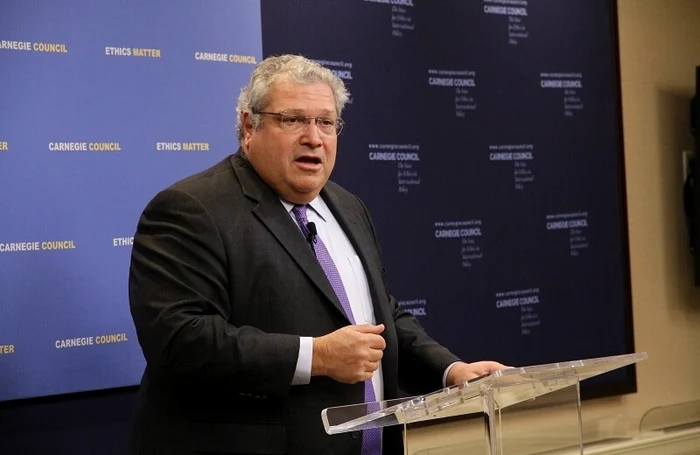
American political scientist Robert Kagan/ PHOTO:carnegiecouncil.org/
In an interview given to the publication Frankfurter Allgemeine Zeitung, Robert Kagan claims that the foreign policy promoted by Donald Trump is not an isolationist one, but a form of global imperialism. “Trump wants to be a kind of emperor of the world,” states the political scientist, explaining that European leaders have not yet understood the true extent of the change produced in Washington.
“NATO Secretary General Mark Rutte does not understand that the problem is not whether Europe still needs NATO. NATO simply does not exist anymore. Trump has made it clear that he will not defend anyone. Moreover, the United States has become a potential aggressor, which is also demonstrated by its position in the case of GreenlandKagan said.
Greenland and the policy of “grabbing”
According to the political scientist, the dispute regarding Greenland is not over. Rutte believes that if he calls Trump “Daddy” enough times, he will calm him down. This is a pure appeasement policy, the American analyst said. “Europe must understand that Trump and his movement (MAGA) are deeply hostile to Europe. For him, the center-right and center-left parties are forms of liberalism, which he rejects. The German, French and British leaders are as much his enemies as Nancy Pelosi or the Clinton family,” he explained.
Europe, caught between two opponents
Kagan's conclusion is a grim one: Europe must rely solely on its own forces. “Europe is between two adversaries – America and Russia. Therefore, it must be able to defend itself, both economically and militarily“, he warns.
Without this capability, Europe risks becoming “a patchwork of dependent territories”, with Britain turned into a satellite of the US and Eastern Europe into a zone of Russian influence.
In this context, Robert Kagan sees in Germany a possible pillar of the liberal resistance. “It is true that a too strong Germany still unsettles many states. But today Germany is the main liberal force and has the mission of defending liberalism globally.” he states.
“What we see in the US is fascism”
Kagan does not hesitate to use extremely harsh terms to describe the domestic situation in the United States. “We are dealing with fascism. A dictator who rules by relying on a movement. When the movement is based on a single “heroic” figure, when paramilitary structures loyal exclusively to the president are built, when the Department of Justice, the FBI and the CIA are directly subordinate to him – yes, that is fascism.”claims the political scientist.
In his opinion, Trump's goal is the “reconstruction of the American nation” on ideological grounds, in which white Christians hold a privileged position. The ideologues surrounding the president do not hide their intention to destroy the liberal spirit of the Declaration of Independence and replace it with a “right-wing Christian hierarchy”.
Kagan also says that ICE is not only used to fight illegal immigration, but as a tool for federal pressure on states. In an extreme scenario, he warns, these mechanisms could be used to prevent free and fair elections in 2026.
Who is Robert Kagan?
Robert Kagan is one of the most influential ideologues of American neoconservatism. He co-founded the Project for the New American Century think tank, which played a major role in shaping the policy of the George W. Bush administration. After Donald Trump became the Republican nominee in the 2016 election, Kagan left the Republican Party.
In Romania, he is also known for the book “Power and paradise. America and Europe in the new world order”, published in 2003, in which he analyzed the strategic and cultural rift between the two sides of the Atlantic – a rift which, according to his current warnings, risks becoming definitive.