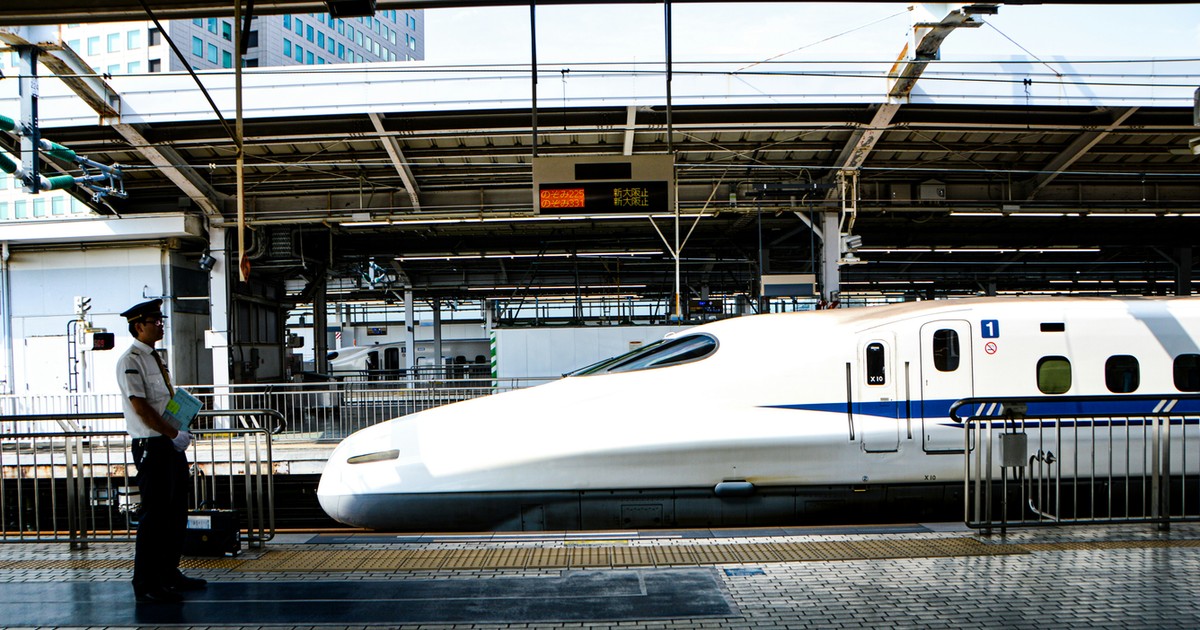
High-speed trains are designed so precisely that accidents are extremely rare. Nevertheless, in the face of disasters such as those that occurred in mid-January in Spain, the issue of train drivers and the conditions in which they work arises.
See also: This is how Poland protects itself against train accidents
As a reminder: on Sunday, January 18, two high-speed trains collided in Adamuz in the province of Córdoba in southern Spain. As a result of the disaster, 45 people died and over 100 were injured. Spanish services are carrying out activities aimed at explaining the causes and circumstances of the tragedy.
The text continues below the video
High-speed railways transport over 2.5 billion passengers annually around the world and are considered the safest means of transport. Each incident raises questions about the limits of safety, reliability of these systems and the work of the train drivers themselves.
What's it like to drive a high-speed train?
As CNN explains, a typical high-speed train weighs almost 500 tons, and the compact engines provide about 11,000. horsepower – equivalent to the power of approximately 100 family cars.
Trains typically have around 500-600 seats, a dining car, heating, ventilation, lighting and countless other features. The result is an extremely advanced structure that resembles a Formula 1 car on rails.
The text continues below the video
Each unit costs about $40 million to build, with millions more spent on maintenance over its typical operational life.
Many high-speed trains – including TGV and Shinkansen – reach speeds of up to around 300 kilometers per hour, and China's Fuxing trains are even faster.
Such speed is exhausting: the forces exerted on the bodywork, wheels, suspension, brakes and track components are enormous. Few high-speed trains last longer than 25 years.
High speed train. A machinist like a Formula 1 driver
As CNN explains, above a speed of about 200 km h, trackside signals are no longer visible enough to allow a safe response. The average reaction time of car drivers is from 0.7 to 1.5 seconds. Years of intensive job training can reduce a train driver's reaction time to 0.2–0.4 seconds, although fatigue and distraction still play a role.
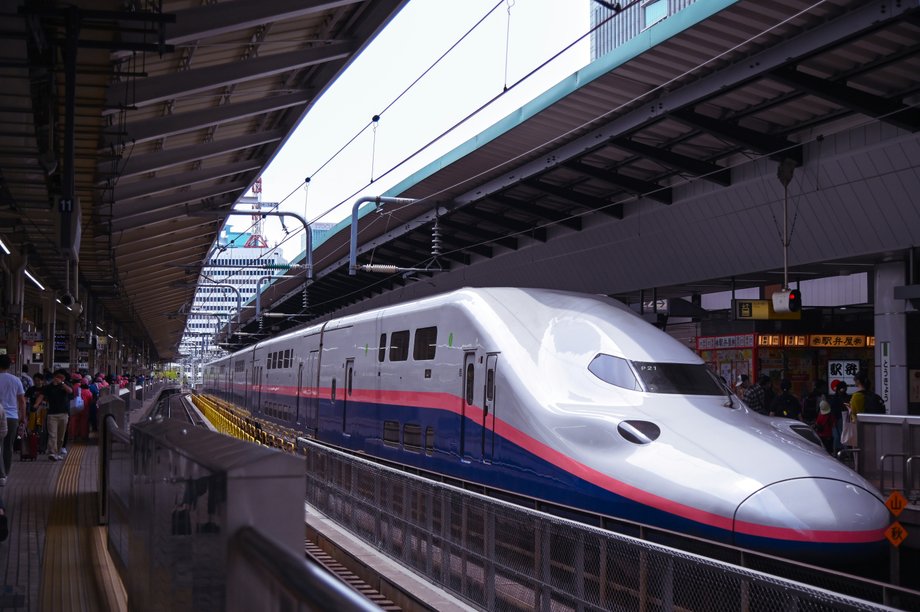
No Shinkansen passenger has died in Japan since 1964
|
Unsplash
High-speed train drivers use in-cab systems that provide real-time information about speed limits and track conditions. This allows drivers to focus on what is happening far in front of them. Especially since – as CNN explains – the most difficult thing is to safely stop a speeding train.
See also: This is the first such Polish ferry in almost 50 years. We looked inside [ZDJĘCIA]
Braking from 300 km/h takes up to 83 seconds and requires advanced systems. Additional security measures, such as fences and monitoring, minimize the risk of trespassing on the tracks.
Since the first Shinkansen trains ran from Tokyo Station in 1964, Japan has not recorded a single fatal accident on high-speed trains. France has only had one fatal accident involving a TGV train, the derailment of a non-public test train in 2015.