publication
2026-01-30 10:51
update
2026-01-30 11:10
It couldn't have ended any other way. After phenomenal increases in gold and silver prices for several hours, we have been witnessing a very sharp correction. The old market wisdom has been confirmed once again: what goes up strongly, then falls sharply.
We have been recording above-average volatility on the precious metals markets for several (or maybe even a dozen or so) days. Today, this volatility manifested itself in massive declines. By 10:49, silver prices dropped by 15.8%, falling to USD 96.35/oz. This is a move of over USD 15/oz. compared to Thursday's reference price. The situation is very dynamic and prices can change by several percent in just a few minutes.
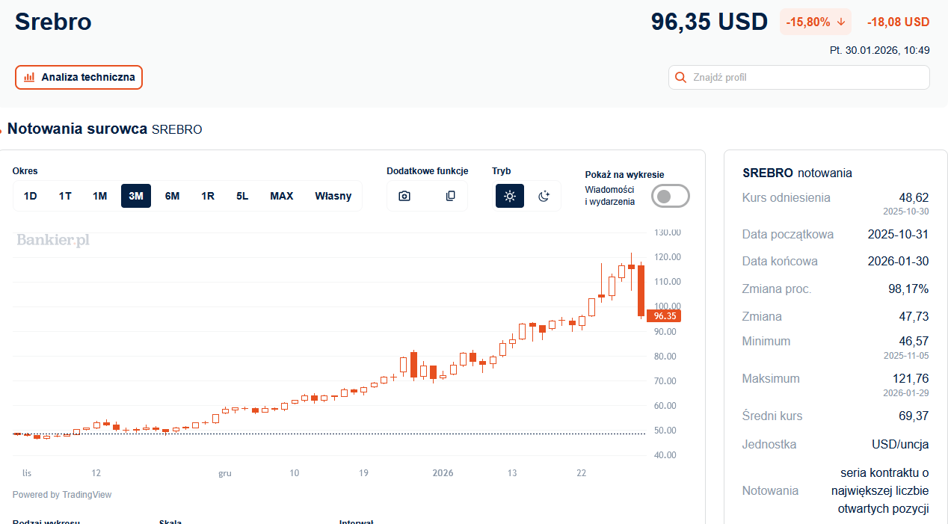
In fact, we saw very nervous movements on the precious metals markets yesterday, when the white metal went from USD 114/oz. by almost USD 122/oz, and then the inn dropped to just under USD 108/oz. and end the day near the level of USD 116/oz. On Friday morning it was already less than USD 100/oz.
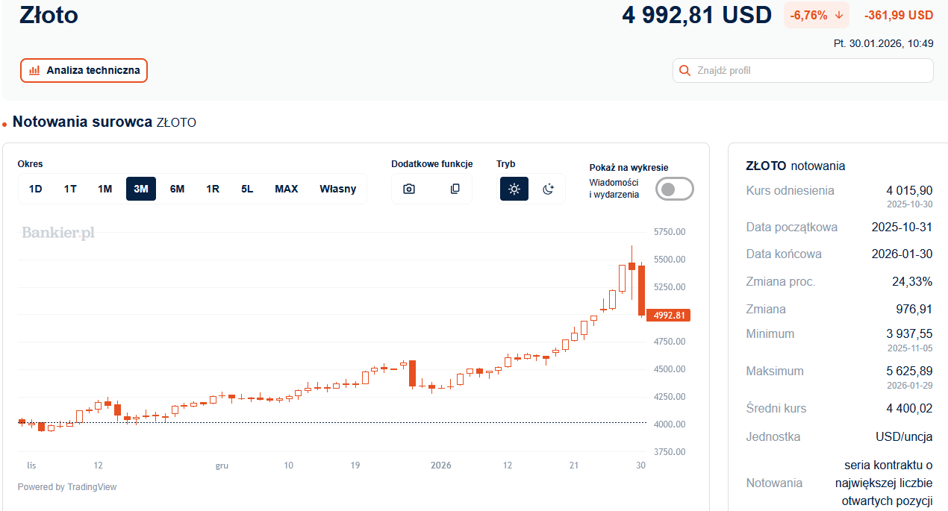
The same – although to a lesser extent – applies to gold, which fell by 6.8% on Friday morning, or as much as USD 362 per ounce. This is a record nominal decline in the prices of the yellow metal. As a result, the gold rate fell below USD 5,000 per ounce, falling to USD 4,992.81/oz.
The market is very dynamic at the moment. It is ruled by panic and most likely also by forced automatic closing of leveraged long positions open on the futures market. Individual investors may also be panicking, as they have been buying instruments giving exposure to the precious metals market (ETFs, CFDs and other leveraged inventions) over the last few days and weeks without a deeper understanding of the situation.
Such increases, such correction
It is also worth putting Friday's declines in a broader context. Over the previous weeks and months, precious metal prices had been climbing on an upward parabola, recording huge rates of return. On Thursday, this year's silver result was +70% and gold +30%. And all this happened after the royal metal gained 65% in 2025, and its “poorer cousin” earned as much as 142%.
Moreover, even such sharp corrections after strong previous increases are completely normal in financial markets. They happen regularly in “hot” markets with strong upward trends. What's more, these types of declines do not necessarily mean the end of the bull market. Usually, such strong upward movements do not end after the first correction, no matter how sharp.
Especially since the arguments behind the recent gold price rally were and remain strong. The financial world is moving away from the dollar and, having little other choice, is diversifying towards gold. That is, traditional money, free from credit risk and independent of governments, central banks and the financial system. It is also a play on the growing importance of China and other declining markets and the ongoing decline of the West and the United States.
This trend has been going on for over a dozen years and has intensified after 2022. It is therefore possible that it will take a few more years before the change in the global monetary order is finalized.
Knees: It is possible that we will see a correction in gold with a capital “K”
The year is 2026. If someone had said a decade ago that an ounce of gold would cost over $4,650, they would have been considered crazy. Today it is a market reality. Last year was simply not a good year for precious metals – it was an absolute anomaly. In the background of these increases, however, there is not only investor greed, but a fundamental reconstruction of the global financial order. What was last year and what will the new year be like? All this in the latest episode of “GPW”.