If Europe resumes dialogue with Vladimir Putin, Moscow could turn the West's dependence on Chinese rare earths into a pressure tool. A new $9.2 billion processing center in Siberia is at the heart of this plan.

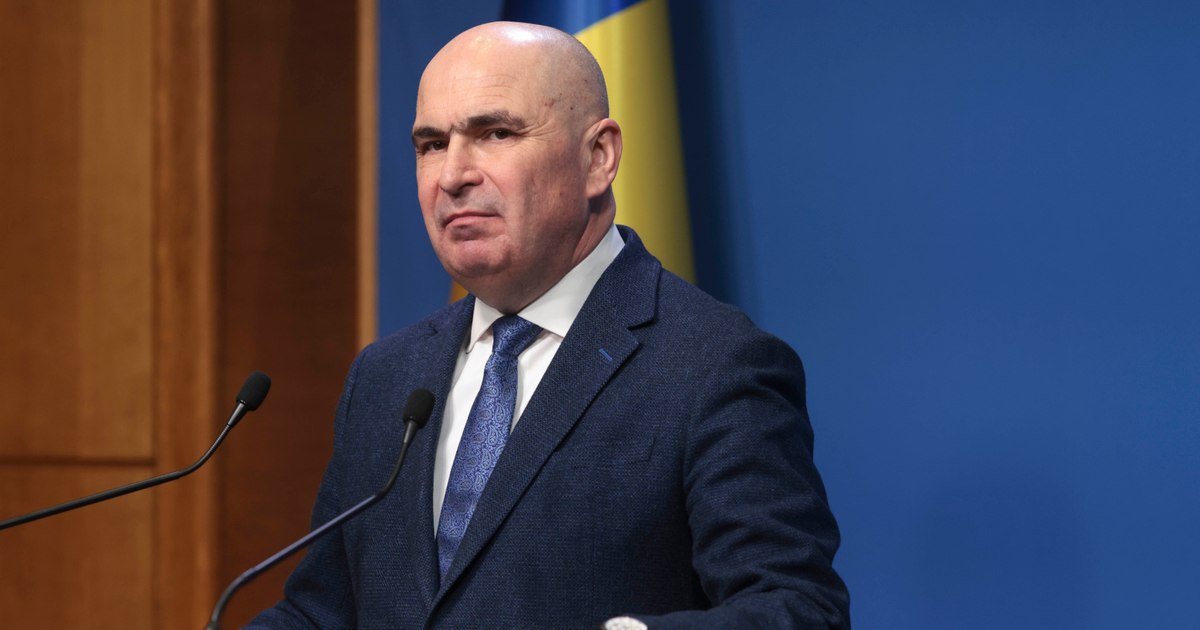
Russian President Vladimir Putin/PHOTO: AFP
In May 2025, during talks between the United States and Ukraine on a “minerals for aid” deal, Moscow pointed out an obvious fact: Russia's rare earth reserves are far greater than Ukraine's. By December, elements of this argument had come to be reflected in US President Donald Trump's peace plan, which included major US investments in Russia's rare earth and energy sectors.
Amid signals from Europe about a possible resumption of dialogue with Russia — Italian Prime Minister Giorgia Meloni recently joined French President Emmanuel Macron's call for the reopening of diplomatic channels with Vladimir Putin — Moscow sees an opportunity to once again exert its influence.
At the heart of this strategy is the Angara–Yenisei project, a future processing center in Siberia valued at $9.2 billion. The project is coordinated by Serghei Șoigu, secretary of the Security Council of Russia and former minister of defense, considered close to Putin. Through this project, Russia hopes to increase its share of the global supply of rare earths from 1.3% today to 10% by 2030, writes analyst Kirill Shamiev for the European Council.
Moscow interprets European calls for the resumption of dialogue as a sign that economic pragmatism is coming back to the fore. Europe's growing demand for rare earths gives Russia a pressure tool and risks testing the cohesion of the European Union.
China's control
Russian officials are aware of the West's strategic vulnerability: massive dependence on China's rare earths. Beijing controls about 60% of the global extraction and almost 90% of the refining of these materials. Its influence is not limited to production, but also includes regulation and informational control.
New export licensing regimes force Western companies to disclose customer lists, inventory levels and production forecasts. Thus, the Chinese authorities know exactly which factories would close after a week without supply and which firms have no viable alternatives. In 2023, China placed 12 of the 17 rare earth elements under export control, and in November 2025 it temporarily suspended the export of five of them.
Meanwhile, EU imports of rare earths have increased from around 11,000 tonnes in 2019 to 18,000 tonnes in 2022. Almost all leading industries depend on these materials: every electric car contains up to two kilograms of rare earths in magnets and catalysts, and wind turbines, robotics, precision industry and modern defense systems rely on them.
If Beijing were to restrict exports, an economic ecosystem valued at trillions of dollars could be severely affected. In 2024, with the introduction of Chinese export licenses, EU imports of rare earths fell by 29% in a single year.
When Europe doesn't buy from China, it already turns to Russia. Estonia, home to Europe's largest rare earth processing plant—at Narva, right on the border with Russia—imports 88 percent of these materials from the Russian Federation. According to the director of another plant in the country, “if the supply to Russia is cut off, Western Europe will no longer have a defense industry.”
The factory's location on the Russian border symbolizes Europe's dilemma: proximity offers logistical and economic advantages, but exposes the continent to political pressure.
The Siberian alternative
The political importance of the Angara-Ienisei project is underlined by the fact that Serghei Șoigu coordinates it, and the Deputy Prime Minister Denis Manturov, responsible for Russia's industrial policy, chairs the board of directors.
Moscow is betting heavily on this project, offering special economic zone status, tax facilities and infrastructure support. At least eight companies are set to open processing facilities for materials for lithium batteries, germanium — a key metal for microelectronics that Russia does not currently produce — and aluminum powders used in 3D printing.
The energy and transport infrastructure would be completed by mid-2026, and the first companies could become operational in 2028.
Șoigu's appointment also reflects his political resilience after his difficult departure from the Ministry of Defense. Over the years, he has promoted Siberia as the center of Russian development, including being known for organized fishing trips for Vladimir Putin in the taiga. Manturov, for his part, is the main architect of the Kremlin's industrial policy, including in the military sector.
The reality test
The success of the Angara-Ienisei project depends not only on Russia's ability to build it, but also on the willingness of foreign investors to get involved. Although Russia's proven reserves of rare earths — about 28.7 million tons — are among the largest in the world, the country lacks the most advanced extraction and processing technologies.
Chinese partners are reluctant to transfer them, and Western sanctions further complicate the situation.
Currently, few European companies are willing to invest in Russia without legal and financial guarantees provided by national governments. Moscow appears to be betting that Europe's dependence on China, poor economic prospects and strained relations with the Trump administration will push European capitals to provide that support.
Some European leaders may be tempted to present economic deals with Russia as a “European solution” to the war in Ukraine or as a shield against US pressure and Beijing's constraints.
To resist this temptation, European leaders will need a clear strategy — including refusing to tie economic cooperation to concessions on Ukraine and rejecting the idea that trade relations with Moscow are a shortcut to strategic autonomy.
The size of the Angara-Ienisei project means that, even in case of results below expectations, it satisfies the interests of influential ministries, state companies and industrial elites, thus contributing to the stability of the Russian regime.