A European country wants to ban political lying by law. However, parliamentarians face a problem


A bill that would make lying during election campaigns illegal has passed the first stage in the Welsh parliament. Although the idea of the law is supported by all politicians, the details and the speed with which it should be adopted have generated growing anxiety, writes The Conversation. Wales will hold an election in May this year.
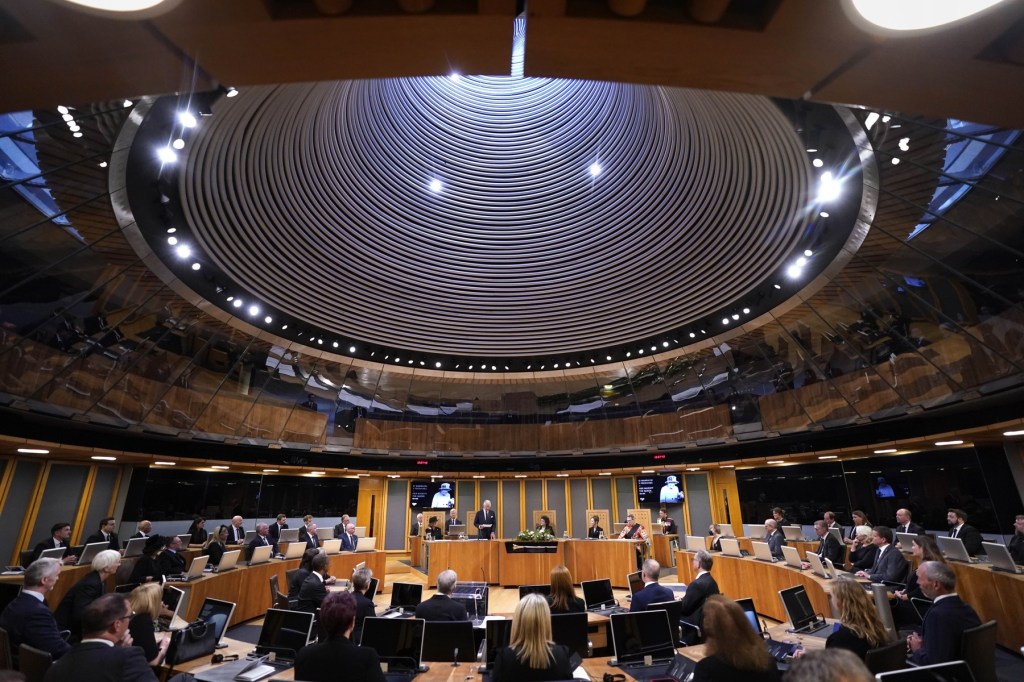
“Lying thrives in politics because we can get away with it,” says Jane Dodds, leader of the Liberal Democrat Party in Wales and MP in the local Legislature, quoted by the BBC. This frustration has turned into legislative action, writes The Conversation, after a bill that would ban false or misleading statements during election campaigns passed the first stage in the Senedd, the Welsh parliament.
If passed, Wales could become the first in the world to ban political lying.
The purpose of the bill is to combat the deliberate lying of politicians, in order to rebuild the public's trust in democracy. But the legislative initiative has put the Welsh parliamentarians in front of a new challenge: how can they combat the lies of politicians without restricting freedom of expression?
What does the law mean?
In Wales, it is already illegal to make false statements about a candidate's character or personal conduct during an election. The new proposal, however, goes further. The bill under debate in the Welsh parliament focuses strictly on statements made during election campaigns and does not introduce a blanket ban on politicians lying once elected.
The legislative project first appeared in public debate two years ago, being proposed by Adam Price, the former leader of Plaid Cymru, the party that represents Welsh nationalists and now holds 13 of the 60 seats in the Senedd.
The idea arose in the context of a survey which showed that 98% of respondents believed that “lying or intentionally misleading parliament should be able to be identified as 'defying parliament'. In addition to the obligation to present a public apology, MPs who break this rule should be fined or otherwise sanctioned”.
The press in the Kingdom shows that, if the parliamentarians find a consensus, the draft law will not be able to enter into force earlier than the elections in 2030. Wales is holding elections in May this year.
What do those who oppose say?
Opponents of the project say that the legislative text does not clearly define what a “false or misleading” statement means, and some members of the Welsh parliament fear that politicians could avoid controversial topics by simply not speaking, in order not to risk prosecution. “Political debate often involves quick thinking, interpreting incomplete information, or presenting only one side of a complex argument. These are not the same as deliberate lies. But critics argue that without precision, the law may have difficulty distinguishing between intentional deception and legitimate disagreement,” reports The Conversation.
The bill has spawned two highly critical reports from two cross-party Senedd committees. The Legislation Committee warned that the way the bill was drafted created the risk that a future government could “severely impede the full and fair exercise of democratic discourse during an election campaign”, reports the BBC.
The Senedd's standards committee, which the Welsh Government asked to examine the proposal, responded that it was “not convinced” that the introduction of a new criminal offense would restore public confidence and warned that “the risks and unintended consequences currently outweigh the benefits”. Among these risks is the already existing pressure on the judicial system. There is also the difficulty of proving that a statement is objectively false and possible conflicts with free speech.
When politicians fear that honest mistakes, strong opinions presented as facts, or strategic campaign arguments might later be deemed false, debate itself would suffer. This could weaken democracy, not strengthen it, The Conversation also points out.
What can happen to political debates?
Proponents of legal enforcement argue that these risks can be managed, but only with a much stricter definition and stronger safeguards. They emphasize that any crime must be about deliberate, factual deception designed to influence voters, not political opinion, rhetoric or forecasting.
“Drawing that line, however, is easier said than done. Would competing interpretations of economic data be criminalized? But optimistic promises based on uncertain forecasts? If such speech were caught in law, open political disagreement would be harder to put into practice,” writes The Conversation.
Thus, the publication continues, the challenge facing the Senedd is a delicate one: it must decide whether it can create a law narrow enough to target intentional deception, robust enough to withstand legal scrutiny and flexible enough to preserve the rigor and spontaneity of democratic debate.
Wales is one of the four nations of the United Kingdom, along with England, Scotland and Northern Ireland. It has its own regional parliament, the Senedd, which decides policies such as education, health or local government. But the big decisions – foreign policy, defense and major taxes – remain in London. Legislative autonomy was introduced in the late 1990s as part of the decentralization reforms of the British state.