Bolesław Chrobry and Mieszko II were authoritarian rulers; Today, we would not like to have such presidents or prime ministers – stressed in an interview with PAP, historian Dr. Michał Bogacki.
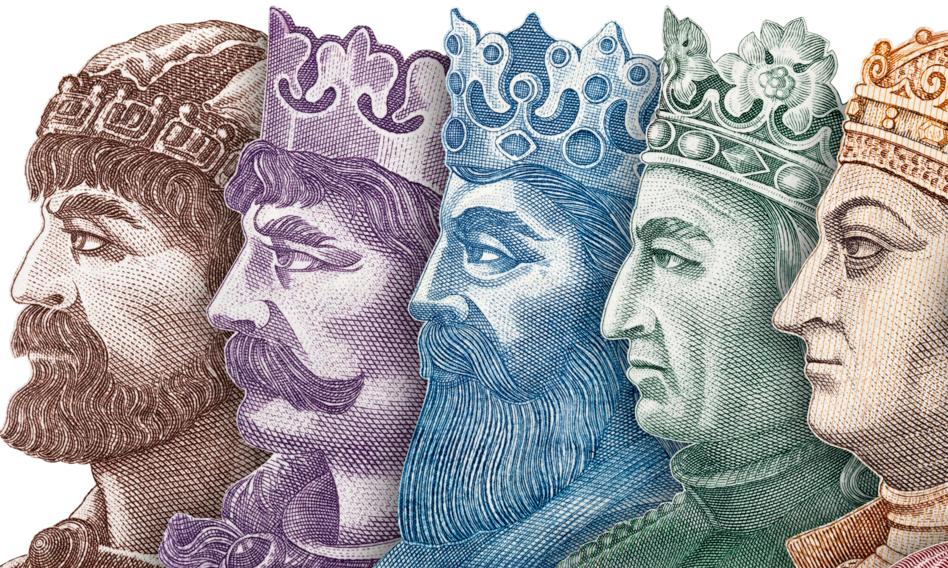
Children are already learning about the coronation of Bolesław the Brave as the first king of Poland, but – as Dr. Michał Bogacki, historian, director of the Museum of the beginning of the Polish State in Gniezno told PAP – the image of the first rulers passed at school is most often very symbolic.
The expert pointed out that “creating a certain symbol, the authority of the first rulers, in each country, is usually done by emphasizing only the positive features of data of the character. Sometimes there is even assigning specific advantages to them – and these were people of flesh and blood – people of their time, completely different from ours.”
The historian emphasized that the real, real picture of Bolesław the Brave and Mieszko II is difficult to determine. As he explained, the sources that would describe their characters if they had any phobias, habits, not many. And those that are very residual. It is also not known how the first kings looked exactly.
“Today, saying a little jokingly, we would look into social media and we could find out many things about them. But Brave and Mieszko II did not have their profiles, e.g. on Facebook. They probably did not even have their own chroniclers who would record each step. In fact, historical sources that tell us anything about the first rulers we have very little. In addition – depending on what nationality they described their nationality, The descriptions were either favorable to them, or indicated some disadvantages.
The historian explained that these dependencies can be seen perfectly, e.g. in the chronicle of Gall Anonim, who – as the expert emphasized – “describes the entire Piast family as wonderful, and Bolesław Chrobry is already as if the quintessence of all this perfection of the family and the quintessence of the splendor of the then rulers of the then. I'm writing”.
“The images of the rulers at that time were described by the chroniclers so that if a ruler was hostile to my master, he had only disadvantages. In turn, if he was favorable to my ruler, friendly to him or was his ancestor – it was wonderful and wonderful. In this context, many things are convergent with today's times. Also that propaganda is not an invention, the invention of the 20th century.” Bogacki. In his opinion, “Speaking of the first kings, it should be remembered that these were the figures of their time, completely different than ours. Although we do not know many things about them, they were authoritarian rulers. Today we would not like to have such presidents or prime ministers, such rulers.”
Referring to Bolesław the Brave, the historian pointed out that it was rarely said, for example, that he had four wives, and the Princess Przedsława kidnapped and took it in 1018. The woman later became his concubine.
“Now it can be outrageous for us, and in those times such behavior was considered normal, there was permission to them,” he said. He added that in the “novel of the past years”, describing the history of Rusia, there is a record that “Chrobry was so fat a few years before his death that he could not get on the horse himself.” “But here again I would be careful with this source, the more that this chronicle was created about 100 years after the death of the Brave,” the expert pointed out.
The notes about Mieszko II – in other sources – say that he was a wise man. “Mieszko II apparently could read in Greek and Latin. The question was whether he could write, because it is not unequivocal. The fact that he had at least one of these skills we know from the letter of Princess of Swabian Matilda. As for those times it was really a skill of Mieszko II from other rulers in Europe,” said the historian.
The textbooks are often reproduced by a miniature showing Princess Matilda handing the Polish king a liturgical book. “However, we do not know the original miniature, because the one that is reproduced in the books has been exaggerated. There is still a second drawing, the second drawing of this miniature and it is completely different. In any case, the original miniature was lost with the entire Matilda code in the second half of the 19th century, and when the code was found again at the end of the 20th century – it was without this miniature.
“So we must demonstrate some caution in the criticism and interpretation of this source, because there is also the question whether the author of the original miniature has ever seen Mieszko II at all. Of course, the whole drawing is also purely technical, it is not a realistic reproduction to which we are used today. In any case, at this miniature, Mieszko II has a beard, short hair, but not sharpened on a hedgehog – so these are some elements. appearance.
Dr. Bogacki also noted that it is similar with the image of Bolesław the Brave – nothing is known about him.
“All monuments, paintings of Matejko – all these are only the imaginations of artists about Bolesław the Brave. Even his image on the Gniezno door was created, like a monument itself, only about 150 years after his death,” he noted. The expert emphasized, however, that the first Polish kings – unlike e.g. French rulers – were not attributed to any special power, strength or magical abilities, e.g. healing of subjects.
“Despite this, curiosities about Polish rulers can be found. Mieszko II, for example, after escaping from Poland to Hungary, he was most likely castrated there – fortunately he had previously begun Kazimierz Renewor, so it did not miss the dynasty,” he said.
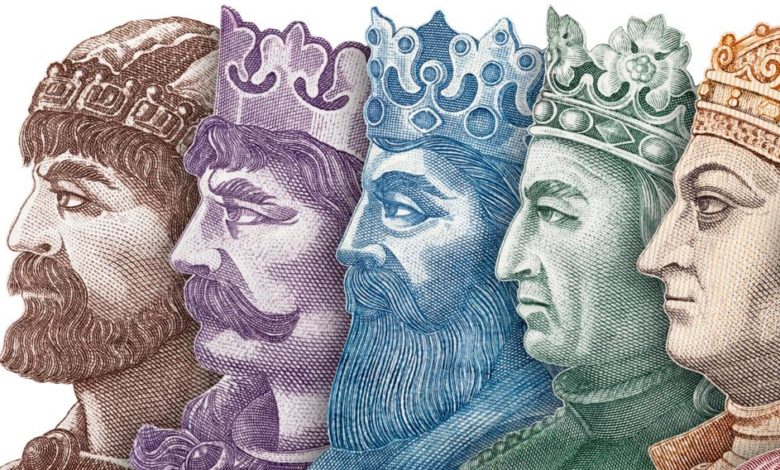
He added that Arab coins found from that period are another aspect. “This is complete proof of trade in slaves through Mieszko I, his predecessors, perhaps to some extent by Bolesław the Brave. It was the reality of those times, but also a kind of shadow on these symbolic first rulers who are so glorified today, and their images occur, for example, on our banknotes,” said Dr. Bogacki.
Anna Jowsa (PAP)
AJW/ ASZW/