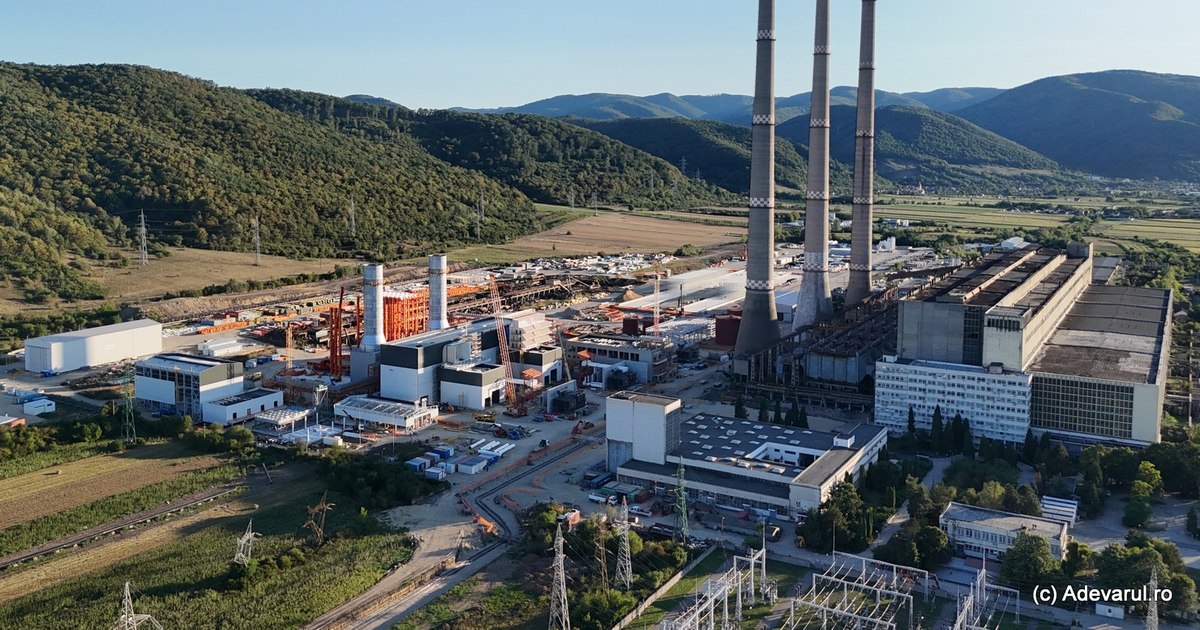
Blackout in Murmansk Oblast. The Soviet-era poles failed the Russians


Four of the five electricity pylons in the Murmansk Oblast, the collapse of which led to a blackout at the main base of the Russian Northern Fleet, were over 40 years oldas reported by the local Investigative Committee.
Investigators specify that this is the maximum period of use after which structures should undergo technical inspection every five years. Two poles were installed in 1966, two more in 1982, and the last one in 1988.
Currently, investigators are checking whether technical inspections were carried out on time and of what quality they were. The activities of Rossiieti are also being analyzedresponsible for maintaining high-voltage lines in the region, including cleaning poles from ice deposits and rime. At the same time, the Investigative Committee found no signs of “external interference by third parties” in the structures. Criminal proceedings were initiated for failure to fulfill official duties.
Soviet equipment failed in 2026.
On January 23, five power line poles collapsed 7 km from Murmansk. Rossieti indicated heavy snowfall and gusty winds as the cause. As a result, Severomorsk, a closed city where the main base of the Northern Fleet is located, was left without electricity. Warships switched to emergency generators.
The authorities turned off street lighting and appealed to residents to “reduce electricity consumption in their homes as much as possible” while the repairs are ongoing.
The blackout also affected Murmansk itself. According to residents, until At 1 p.m. on Sunday, there was still no electricity in most houses in both cities. Later, the governor of the Murmansk region, Andrei Chibis, admitted that it was not possible to restore the power lines: “the situation is complicated by unfavorable weather and very difficult terrain and steep climbs“Therefore, he introduced a state of emergency in the region.
Rosseti organized the transport of new poles from the Leningrad Oblast and Karelia. Czibis previously announced that the repairs would last at least 24 hours. On January 24, the crisis team announced planned power outages, stating that energy would be supplied alternately for 6 hours, but the schedule was not published.
Residents complained that “this system doesn't work.” They claimed that the electricity was turned on for several hours late at night and cut off again in the morning. Due to power supply problems, trolleybuses stopped running. Moreover, due to the failure, pipes burst in several places, and repairs were announced only on Monday, January 26.
Moscow sent equipment to Kamchatka. “Getting to the street is a real ordeal”
The authorities of Kamchatka had also previously introduced a state of emergency they could not cope with the effects of a powerful cyclone and turned to the capital for help. On the evening of January 24, an An-124 aircraft belonging to the Ministry of Defense delivered them a road machine and two excavators, as announced by the governor of the region, Vladimir Solodov. As he clarified, the equipment was provided “free of charge”.
“The machines will be put into operation on the routes in the shortest possible time,” Solodov assured and added that further batches of equipment are on the way; are to be delivered by plane of the Ministry of Emergency Situations and by sea. In addition to Moscow, Sakhalin and Primorsky Krai also provided support.
This year's winter in Kamchatka brought the heaviest snowfall in 60 years. According to the regional hydrometeorology department, 370 mm of snow fell in Petropavlovsk-Kamchatsky in December 2025, i.e. more than three times the monthly norm. In the first half of January, it was one and a half times normal (163.6 mm). Snow cover reached 1.7 m, and in some areas even 2.5 m.
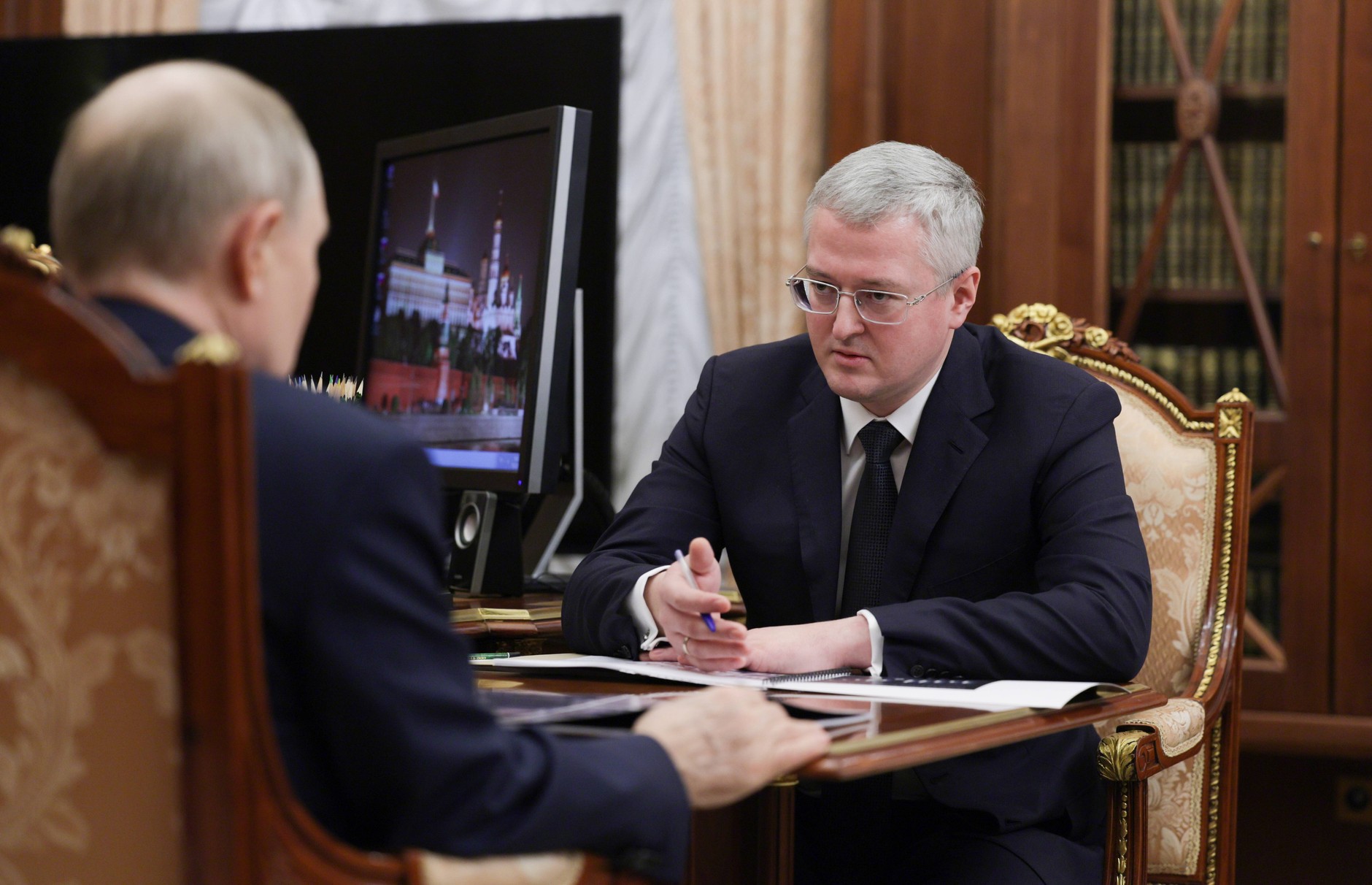
Vladimir Putin, President of Russia, talks in the Kremlin with Vladimir Solodov, Governor of the Kamchatka Krai. Moscow, February 17, 2025EPA/MIKHAIL METZEL / SPUTNIK / KREMLIN POOL / PAP
On January 15, two people died under heavy snow, and a state of emergency was introduced in the city. The region was unable to deal with snow removal on its own. On January 21, Russian President Vladimir Putin ordered the Ministry of Construction to get involved in eliminating the effects of the disaster in Kamchatka.
Meanwhile, residents assess the situation as “extremely difficult”. — Main roads are still cleared of snow, but you can't drive between blocks of flats at all. People move among the snowdrifts on narrow, unpaved paths, which is dangerous. The fire brigade and ambulances cannot reach the houses and provide help. There have already been several fatal fires, reports one of the residents. As he adds, students switched to remote learning, but kindergartens operate normally. You have to carry your own food from the main streets.
Another resident of Pietropawłowska-Kamczacki did not notice any improvement after the arrival of additional snow removal equipment. – Maybe the main roads are being widened, but there are still mountains of snow in the yards, and there are no pedestrian crossings… Reaching the street is a real challenge, there are cliffs almost everywhere – she emphasized.
In her opinion the situation is further complicated by seismic activity. For example, on the night of January 24-25, as many as four aftershocks with magnitudes ranging from 4 to 6.4 were recorded. The woman also complained about overflowing garbage bins that garbage trucks cannot reach.