Europe urgently needs a united front against Trump. Meanwhile, sparks fly between Berlin and Paris. The EU engine is choking

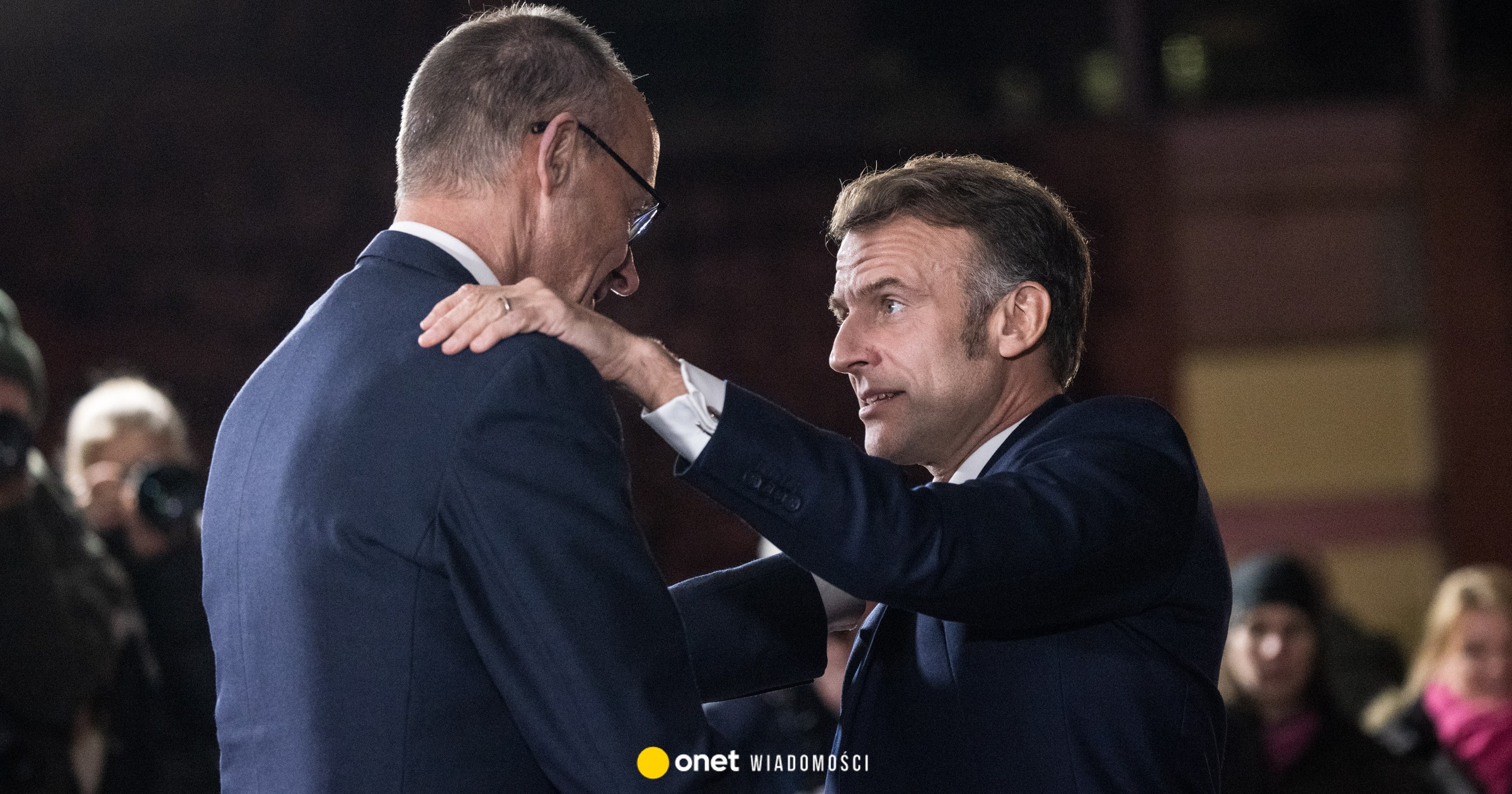
German Chancellor Friedrich Merz is vowing to form a united front with his French counterpart Emmanuel Macron in the coming days – reviving the key Rhine alliance often described as the EU's engine – to achieve a breakthrough in relations with Trump.
However, building what Merz calls a “common position” with Macron is not easy. Both sides will have to put aside months of frustration, suspicion and resentment.
French diplomats are concerned about the growing assertiveness of Berlin, which is trying to present itself as the dominant player in Europe. In turn, Germany is fed up with the French because of the blocked program to build a joint fighter, their opposition to the trade agreement between the EU and Mercosur and the postponed plan to use Russian assets to finance aid to Ukraine.
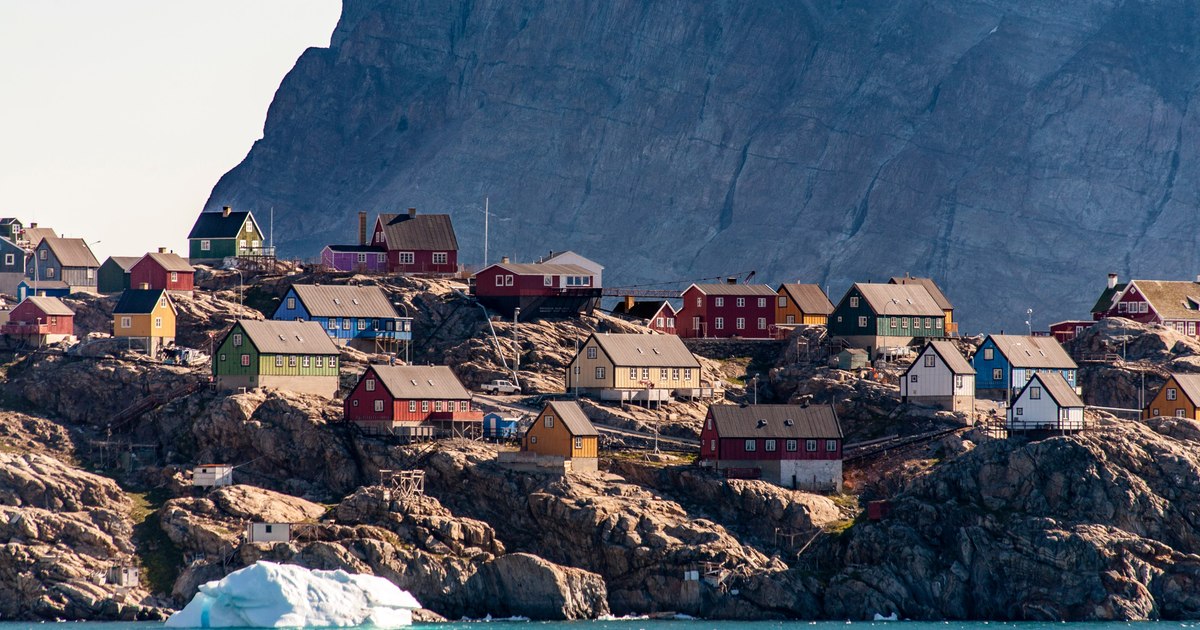
There was also a contrast between the French and German leaders' approaches to Trump clearly visible in their reaction to the US president's threat on Saturday that he will impose tariffs on EU countries that opposed the US takeover of Greenland.
Macron, who often invokes a militant Gaullist tradition of independence from the US, immediately vowed to respond strongly to Trump using the EU's trade arsenal. A gentler Merz, a staunch transatlanticist, considered the possibility of persuading the US president to reverse his decision.
On Monday, Merz publicly admitted that Germany differs significantly in tone from France, which “she wanted to react a bit more harshly than us” because Paris is less exposed to the effects of an all-out trade war with the US.
For the French, a vexing obstacle to reaching a unified position with Berlin is the internal division within the German coalition government. While Macron is considering the possibility of using the EU's trade 'bazooka' – an anti-coercion instrument – as a retaliatory measure against Trump, Germany's position is unclear
— Different German politicians say different things – complains one European diplomat. “If you listen to the German Finance Minister, he says we should do it,” he adds, referring to Lars Klingbeil's support for Macron's approach. Others, including Germany's foreign minister, expressed much less enthusiasm after “a few days ago the ambassador told colleagues that [bazooka] should be taken into account,” notes the diplomat.
Although Merz is confident that he will reach an agreement with Macron this week to resolve the Trump-led crisis, the difficulties plaguing Germany's relations with France are deeper and will likely take much longer to resolve.
— In the last six months, the Franco-German engine has not delivered anything, says one EU official anonymously.
The changing balance of power
Paris has long wanted Germany to play a more ambitious role in supporting France's grand ambitions for Europe, but Berlin it is now showing greater diplomatic power than France expected. Germany is on track to build a much larger military than its neighbor and is expected to be the only EU economy in the world's top ten by 2050.
While Macron is paralyzed at home by massive public debt and government instability, Merz is increasingly at the forefront of European politics. At the Berlin Summit late last year, where progress was made on security guarantees between Ukraine and the United States, strengthened his position as chief negotiator on Ukraine.
Merz also tried to play a leading role in talks with Trump, even though he did not always present himself as a model European. He told reporters that if the US president “can't reach an agreement with Europe,” he could “at least make Germany his partner.”
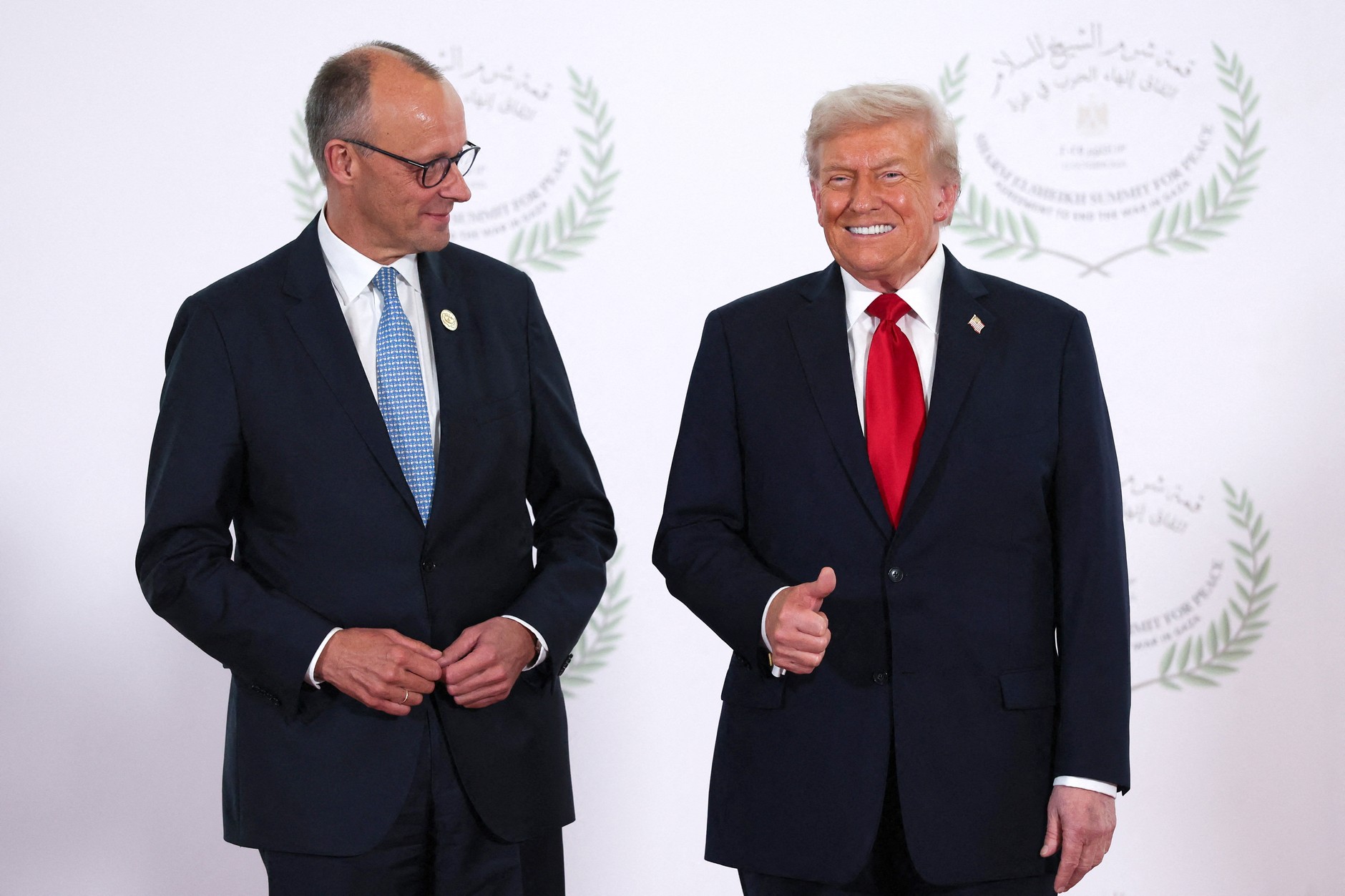
German Chancellor Friedrich Merz and US President Donald Trump in Sharm el-Sheikh, Egypt, October 13, 2025.Suzanne Plunkett – WPA Pool/Getty Images/Getty Images
The suggestion that Berlin can act on its own does not sound very good to the French. — Germany is much more active, Merz wants to play a greater political role, notes another European diplomat. — And this annoys the French – he adds.
Germans believe that the French talk beautifully about great European projects, but they are unable to meet expectations. Berlin is irritated that Paris promotes independence from the United States and then blocks a landmark trade deal with South America. He is also irritated by the fact that France is seeking to take an important role in the Ukraine matter but is contributing much less to Kiev than Germany.
German frustration over support for Kiev erupted this month during a debate over how a 90 billion euro (PLN 381 billion) EU loan to Ukraine should be used to support Europe's arms industry.
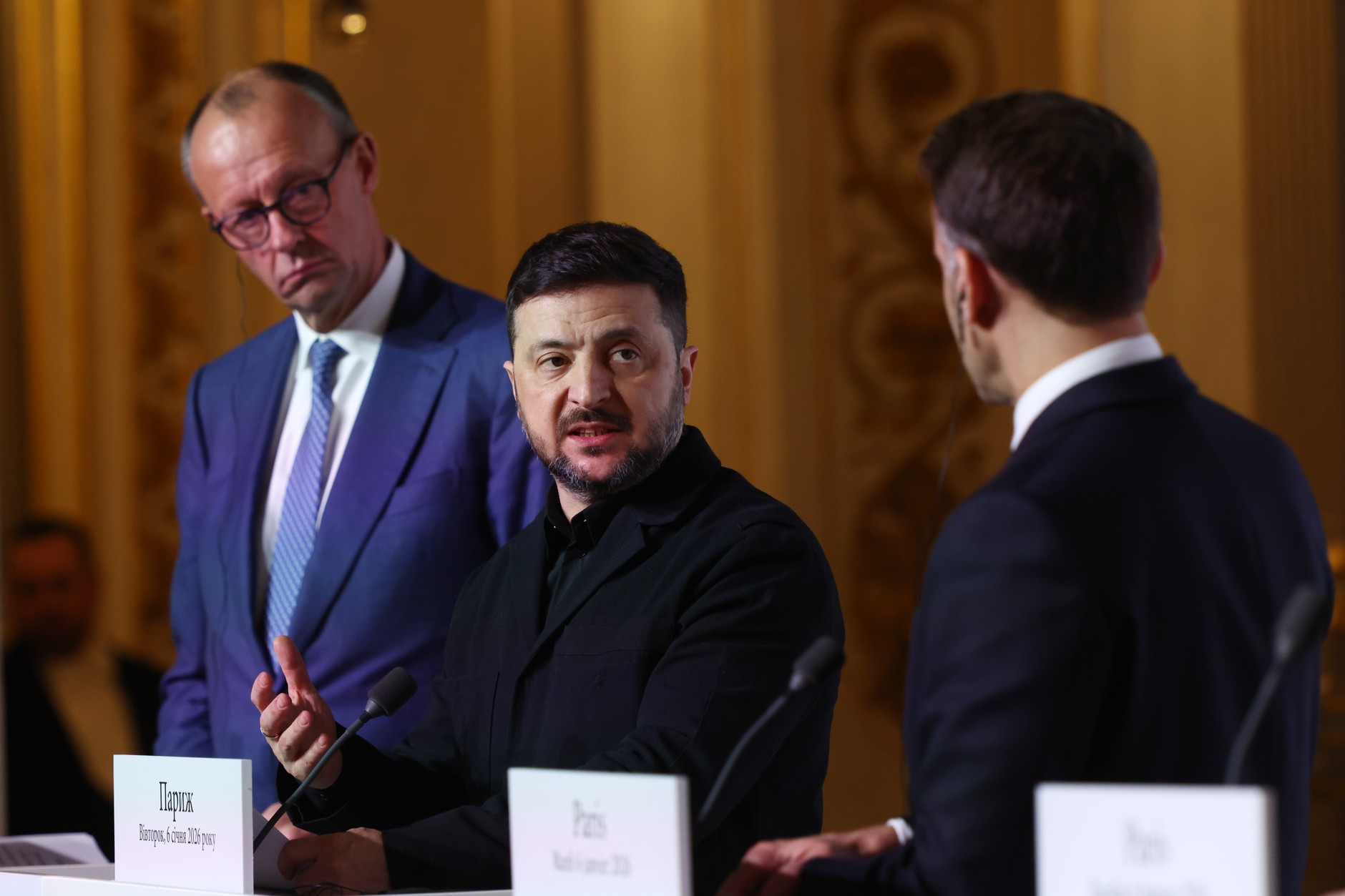
German Chancellor Friedrich Merz, Ukrainian President Volodymyr Zelensky and French President Emmanuel Macron attend a press conference during the Coalition of the Willing meeting in Paris, January 6, 2026.Tom Nicholson/Getty Images
The French presented their traditional proposal that the money would be used to buy European weapons, which would in turn support French industry. The Germans countered that preferential treatment should be given to companies from countries that have made the greatest contribution to Ukraine, thus helping German industry.
— Considering France's slowness in helping Ukraine, this is quite clearly showing the middle finger to Paris, says a third EU diplomat.
— Regarding Ukraine, the Germans believe that they are the ones making all the efforts, so when the French say they want to conduct operations [wojskowe]Germans believe that this is enough, says Michel Duclos, a researcher at the Institut Montaigne and former French ambassador to Syria and Switzerland.
— There is a fear in France that the German defense budget will at some point be twice as high as the French one it would be a historic change for Paris – he adds.
Duclos also notes Germans' irritation with Mercosur. “If we want greater strategic autonomy, we need new partnerships, including a trade agreement between the EU and Mercosur,” he says. — The Germans think we don't take the matter seriously.
Flash points
When it came to finalizing the long-delayed trade deal with Mercosur, Berlin initially wanted to persuade Paris to cooperate by giving in to French demands on various issues, but ultimately gave up. — The country is on the verge of chaos, says one German government official of Macron's inability to withstand strong internal opposition, especially from farmers.
Another serious problem turns out to be the joint Franco-German FCAS fighter project.
The project worth EUR 100 billion (PLN 423 billion) is currently in limbo, after Paris and Berlin last month they did not reach an agreement on further action. According to Peter Beyer, a foreign policy MP from the conservative Merza party, French companies are exerting “enormous pressure” and “even the French president is apparently unable to see it.”
– Currently, the project is even being considered without France's participation, which in my opinion would be a disaster, but there is no progress for now – he notes, referring to the suggestion that Germany is considering developing the fighter without the participation of the French manufacturer Dassault Aviation.
All these discussions about how far Germany wants to go in arms cooperation with France are currently colored by the far-right National Rally (RN) party, which is leading in polls ahead of next year's French presidential elections.
— The prospect of the NS coming to power is already having a major impact on Franco-German defense talks, adds Jacob Ross, a researcher at the German Council on Foreign Relations.