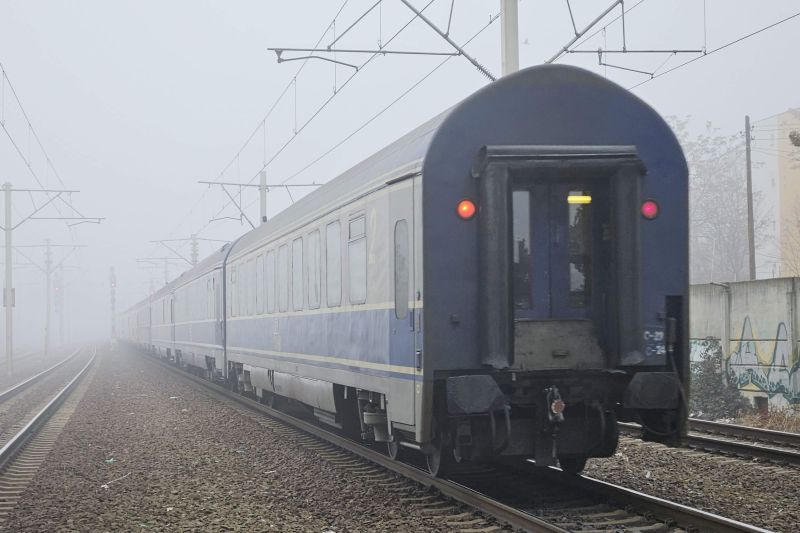
CFR Calatori wagons (photo Vlad Barza)
In the night from Monday to Tuesday, the train CFR Călători IR 1658 Vatra Dornei – București Nord traveled more than 15 hours, after accumulating a delay of six hours. CFR Călători says that the towing locomotives broke down, and the operator refers to the extreme weather conditions that “represented the factor generating rolling stock failures”.
IR train 1658 left Vatra Dornei at 20:10 and should have arrived in Bucharest at 5:35, after a journey of 564 km and 9 hours and 25 minutes. The train arrived at its destination only at 11.48, after more than 15 hours.
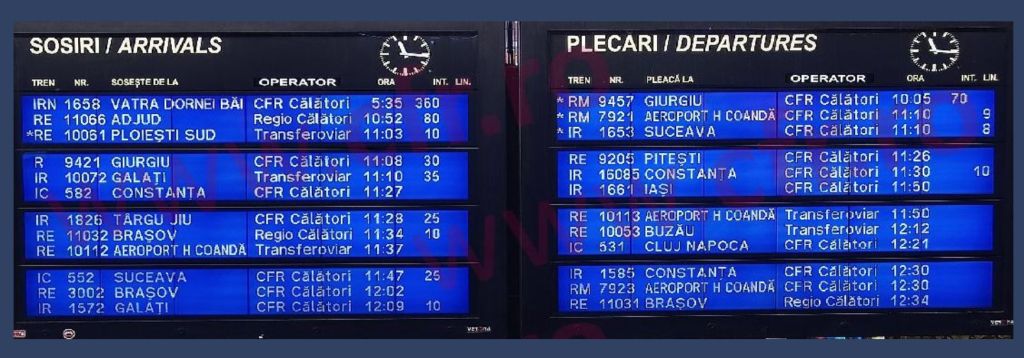
The train was 46 minutes late when leaving Pașcani and, after the breakdowns, it was 244 minutes late when leaving Roman, according to data from Infofer.ro. At Adjud, the train ended up being 318 minutes late, and at Ploiești Sud it was over six hours.
CFR Călători blames the frost for the broken down locomotives.
“The 373-minute delay recorded by the train IR 1658 Vatra Dornei – Bucharest on January 19/20, 2026 was mainly caused by the failure of the traction locomotives and by the extreme weather conditions in those areas, namely frost with very low temperatures that made technical processes (replacing the locomotive and attaching the auxiliary one) difficult, as well as the running times of the train.”
The operator also says that the locomotives broke down due to the frost.
“Without ruling out that the main delay of train IR 1658 was caused by the failure of the traction locomotives, the extreme weather conditions existing at that time in those areas cannot be ruled out, which, in addition to being the factor generating rolling stock failures, also led to the timing of the technical processes of replacing and attaching the auxiliary locomotives to the train.”
The delay continued to increase even after the locomotives were replaced
“Following the change of locomotives, the delay also increased as a result of the need to insert the train into the traffic schedule updated by CFR SA. At the same time, the duration of the journey was also influenced by the speed restrictions along the way as a result of problems with the railway infrastructure”, says CFR Călători.