“That was the custom: let's not talk about it in public.” What convinced a 24-year-old woman to offer free lessons on health and sex education to teenagers

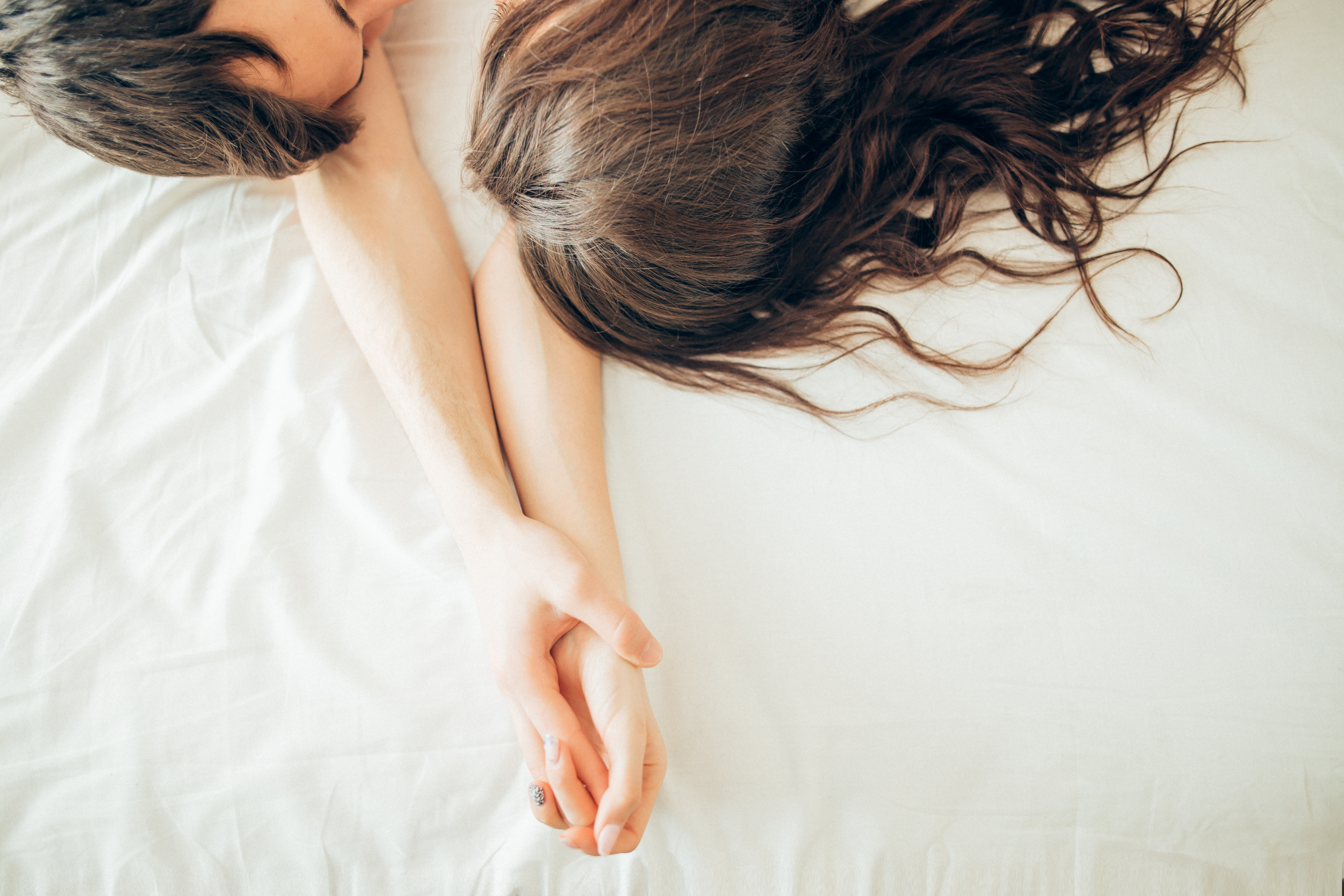
“The reality is that teenagers have sex. They should at least have information to protect themselves,” says Ana Niculescu. She is 24 years old and a student in her last year at the University of Medicine in Bucharest. Since the age of 18, she has been holding workshops on sex education in schools, through the faculty's student association. And the six years of classes reinforced his conviction that such lessons are necessary.
- This article was made within the cross-border project PULSE by Ștefania Gheorghe (HotNews, Romania), Marina Kelava (H-Alter.org Croatia, Lisa Nimmervol (Der Standard, Austria), France (Voxeurop), Ieva Kniukstiene (Lithuania, Delfi), Desislava Koleva (Bulgaria, Mediapool), Giota Tessi (Efsyn, Greece)
Ana Niculescu says that she was an informed child in terms of sex education. When she was in grade school, her classmates would ask her about menstruation. Later, she ended up explaining to other girls about the problems they may face during menstruation.
The 24-year-old is now doing her internship at the Bucharest University Hospital, in the specialty of gynecology, where she says she meets hundreds of women with cervical cancer. Many of them did not get their anti-HPV vaccine, considered the only effective way to prevent cervical cancer and related diseases.
Just as many have never had a Pap test, a screening method that allows early detection of precancerous or cancerous cells on the cervix.
“Sexuality is not about the sexual act, it is about many things. Which, mainly, belong to adults – which you should learn from an early age, so that you can apply them in your adult life”, says Ana Niculescu.
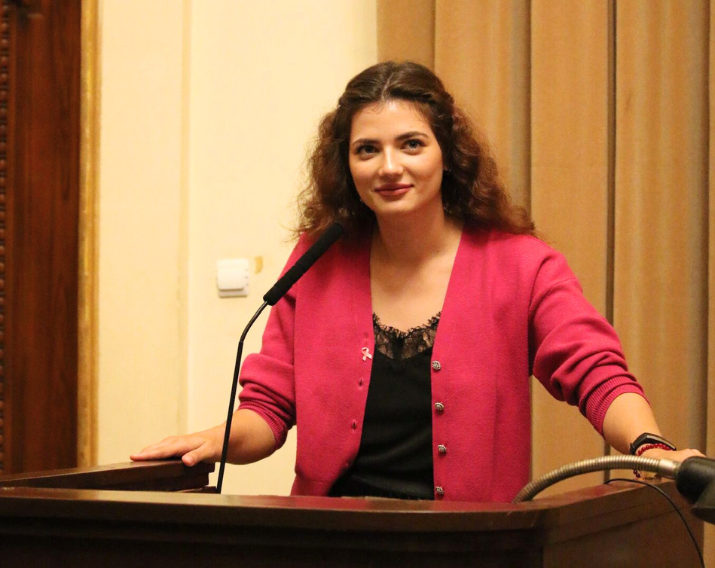
In addition to practice, Ana goes to schools, where she answers teenagers' questions about sex life. But not only about that. He held trainings several times a month, sometimes even weekly. Now, she only does it if she has to, due to her busy schedule in her senior year of college.
“When you search for information about sex, you don't come up with an NGO's classes”
“Teenagers are having sex. They should have information to at least protect themselves,” she says, recalling different experiences from her six years working with students.
According to a study carried out by the SECS Contraceptive and Sexual Education Society, in Romania, 22.5% of teenagers have their first sexual contact before the age of 15, writes the Pagina de Psihologie website.
And in the absence of an environment in which to ask questions, because sex education is taught little or not at all in schools in Romania, but also because they are ashamed to talk to their parents, the students end up looking for their answers on the Internet.
“When you look for information about sex, you don't get YouTube courses from an NGO. You get the porn industry, which is highly marketed and sets unrealistic ideals. And what do you see there? You see that it starts (not sexual intercourse) and it's super fun, everything is perfect. And there are frustrations about the body, there are fears about intercourse,” she adds.
Shame is inherited
At the workshops, Ana Niculescu receives dozens of questions about sexual relations, about contraception, about sexual intercourse or about consent and abuse.
He tells, however, about the shame felt by the students who ask him questions. Many times students cannot find the words to describe what is happening to them or are ashamed to express themselves in public.
Not infrequently, middle school boys came up to her at the end of class to ask her about episodes they had recently experienced, but which they did not understand. It is also the case of two boys who did not know about night pollution. They could not find the words and were ashamed to describe exactly.
And for that, says the young student, the parents are partly to blame. “At the time when they were young and teenagers, this was the custom: let's not talk about it in public, it's shameful, it's taboo, if we say the word “sex” our skin crawls. They are the people who today make the decision to learn sex education for children”, explains Ana Nicolescu.
Unspoken questions, only written
The sex education expert has found a solution through which teenagers can ask questions. At the beginning of the workshop, all participants receive tickets in the same color, on which they write the curiosities they have. No name, no standing up in front of the class, no distinct element.
“Everyone gets a post-it or a piece of paper that they write feedback or questions on. Then we read them out loud and answer them,” the student explains.
Romanian students are not the only ones who get information from the Internet
The lack of space for discussion is a problem that goes beyond Romania's borders.
According to a study conducted by the Croatian Institute of Public Health and the IPSOS Agency, children and young people in Croatia learn about sexuality from the Internet in more than 80% of cases. Sex education is not part of the school curriculum.
However, in Croatia, municipalities can introduce optional subjects in schools. The city of Rijeka has introduced sexuality education as a pilot program from the 2024-2025 school year. It is taught in the health education class, as an optional subject. Zagreb is also proposing the same thing starting with the 2026-2027 school year.
Sex education NGOs Status M and CESI have been campaigning for two years for the city of Zagreb to introduce sex education as a separate subject in schools.
“We advocated for comprehensive sexuality education, because it is a completely different concept from health education. We will try to make sure that all components of sexuality education are included: gender equality, gender violence and sexual violence, consent, which is extremely important, so that not only health aspects are represented. We understand that in primary schools the focus will be more on puberty and the body, but we hope that this second component to be consolidated in secondary schools”, says Sanja Cesar from CESI.
In Romania, sex education is taught in a few hours as part of the optional subject “Education for health”. Approximately 48,000 students followed this optional, in the 2024-2025 school year, according to the Țoala9 publication.
In Austria, the subject is taught from primary school
At the opposite end to Romania and to other European countries is Austria, which introduced sex education in primary school – integrated within the “health and exercise” subject. It is, however, covered in other compulsory subjects such as biology, religion, psychology and philosophy, and she studies between six and ten hours a year.
In 2015, the Austrian Ministry of Education affirmed the importance of sexuality education and argued that “young people and children should receive the necessary information and skills to behave responsibly with themselves and others”.
The subject is taught by teachers or experts accredited by the ministry, and eight out of ten teachers address sex education topics in the classroom.
There are also more interesting areas for students. While girls have an interest in the menstrual cycle, boys want to know more about contraception and sexually transmitted infections.
The father of an 11-year-old boy tells Der Standard that the information in this subject is explained in a “child-friendly” way and that no one feels “embarrassed” in the classes.
However, 72% of young Austrians would like to have even more knowledge about sexual and reproductive health.
What Romanian students learn in sex education classes, how many opted for this optional and why the young expert believes that the subject “makes the difference between life and death”, in the second part of the article.

The PULSE project is a European initiative to promote cross-border journalistic partnerships, co-financed by the European Commission (DG CONNECT) within the Multimedia Actions through grant agreement LC-02772862. HotNews.ro collaborates within the project with other prestigious publications from Europe: Delfi (Lithuania), Deník Referendum (Czech Republic), the largest Austrian newspaper Der Standard (Austria), some of the largest publications in Greece – EFSYN, El Confidencial – Spain, the largest Polish newspaper Gazeta Wyborcza, the oldest Bulgarian analytical and information site Mediapool, one of the largest independent Hungarian publications HVG and Italian economic profile newspaper Il Sole 24 Ore, one of the oldest and most powerful publications in the Peninsula.
Three renowned transnational media organizations – OBCT (Italy), N-ost (Germany) and Voxeurop (France) will coordinate the project activities.