The major projects that energize western Romania in 2026. Investments in energy, railways and highways, at the end

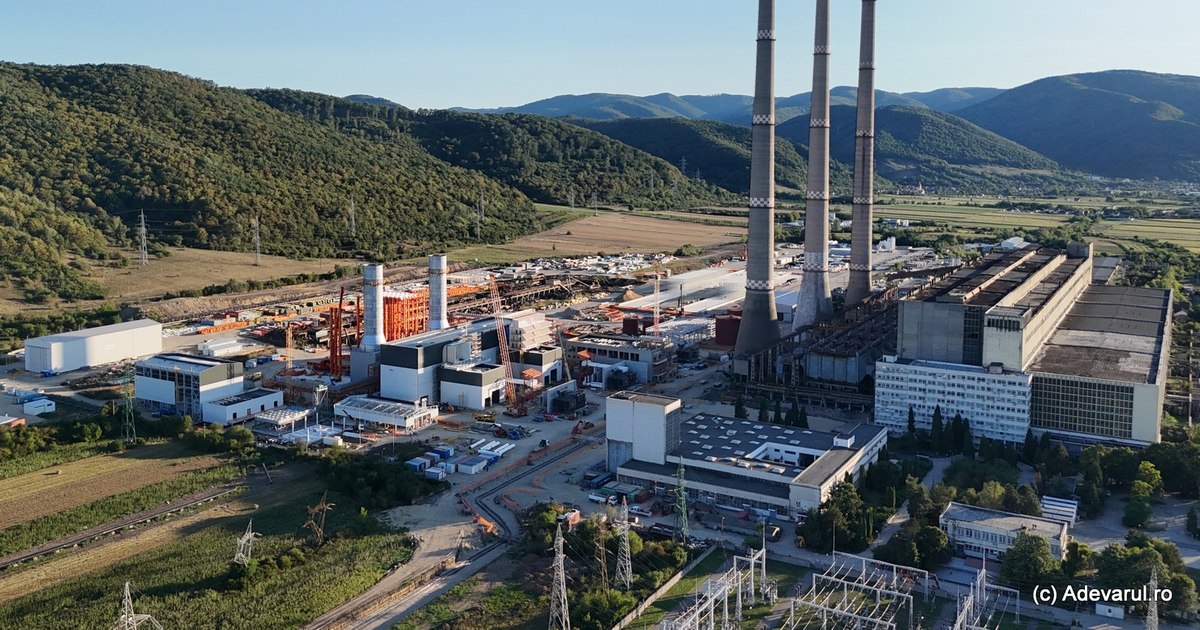
Three major projects in energy and transport infrastructure, whose completion is expected in 2026, will contribute to the revitalization of the western region of Romania, affected in recent decades by the decline of industry, emigration and depopulation.
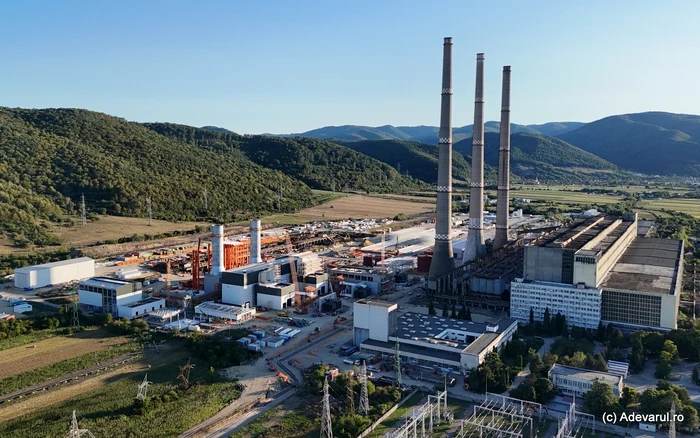
Mindia thermal power plant. Photo: Daniel Guță. TRUTH
In the western region of Romania, Hunedoara and Caraș-Severin counties were, for decades in a row, two important industrial poles of the country, thanks to the natural resources (forests, coal, metals and minerals) and the tradition of mining and metallurgy.
Energy production and heavy industry supported their development in the 20th century, but the economic decline was steep and left behind many cities on the brink of bankruptcy and depopulated towns.
Located on the western border of Romania, the counties of Timiș and Arad have benefited from their proximity to the West and direct connections with Central Europe. Since the 19th century, Arad and Timișoara were directly connected, by rail and road, to Vienna and other European capitals and, through other highways, to the other regions of the country. After 1990, business parks, private investments and foreign companies, together with the European funds attracted here and the economic “engines” of Timișoara and Arad, facilitated their development.
From 1992 to the present, Caraș-Severin and Hunedoara counties together lost almost 200,000 residents from the resident population, many families leaving the localities where they worked to settle in other areas of Romania or outside the country. In Arad, the demographic fluctuation was reduced, with the county currently having approximately 30,000 fewer inhabitants than at the beginning of the 90s.
Even though it is the only county in the west where the resident population continued to grow after 1990, especially due to the economic impact of Timișoara, Timiș County was affected by the demographic changes of the last decades. These brought its old German communities to the brink of extinction due to migration.
The Mintia thermal power plant, the most anticipated energy investment of 2026
Three large investments, due for completion in 2026, could energize the western region of Romania. One of the most anticipated concerns the energy field and will have an important impact on the country's energy production. In 2026, five years after the final shutdown of the old Mintia thermal power plant in Hunedoara County, the renovation works of the former energy complex are nearing completion. From the 70s until 2021, when it definitively ceased its activity, the thermal power plant in the vicinity of Deva operated using coal, coming from the mines of Văi Jiului and from imports.
In 2022, the Romanian state sold it, through the judicial liquidator, for over 91 million euros, to a private investor from Mass Group Holding. The new owners soon began an extensive renovation process to transform the former thermal power plant into a modern energy complex with an installed capacity of over 1.7 GW, based on natural gas and state-of-the-art equipment supplied by Siemens.
The total investment in the modernization of the Mintia Thermal Power Plant is estimated at more than 1.4 billion euros, and the company's representatives estimated from the beginning that the new plant would become operational in the period 2025–2026.
“In July 2026, we will have all 1,734 MW in production here”declared in 2025 Sebastian Burduja, then Minister of Energy.
The refurbishment of the Mintia Thermal Power Plant was designed in such a way as to allow, in the medium and long term, the transition to hydrogen-based energy production technologies. To become operational, the new thermal power plant must be connected to the national natural gas network. In 2024, Transgaz began work on the pipeline that will feed the plant. This is carried out on the Sântămaria-Orlea – Mintia route, with a length of 57 kilometers, and will connect the thermal power plant to the BRUA natural gas main (Bulgaria-Romania-Hungary-Austria). The work is in its final phase and should be completed in the first part of this year.
In Hunedoara, the best-represented county in western Romania in terms of energy production, thanks to the 150 MW Paroșeni Thermal Power Plant and the hydropower facilities with a production capacity of over 500 MW, other important energy investments are expected, such as the re-engineering of the Paroșeni Thermal Power Plant and the Retezat Hydro Power Plant.
Simeria – Arad high-speed highway
The four sections of the Simeria – Arad railway highway (km 614), on which passenger trains will be able to travel at up to 160 kilometers per hour, have a completion date of 2026. The highway in western Romania, which crosses Hunedoara and Arad counties, is 141 kilometers long and entered the construction site in 2017-2018.
In 2025, two of its segments were completed. The first, 17 kilometers long, on line II, connects the towns of Bârzava and Vărădia in Arad county and includes the Bata Tunnel (603 meters), the first tunnel completed on the highway construction site. The inauguration of the Bârzava – Ilteu section, with a length of 36 kilometers, is estimated at the beginning of this year.
The second completed single-track segment is six kilometers long and was built from scratch, on a completely new route, which includes three bridges over the Mureș River, with a total length of 1.3 kilometers. These are part of Section 3 Gurasada – Simeria, 41 kilometers long, whose completion is expected in the spring of 2026.
Also at that time, the completion of the works on the section Arad (km 614) – Bârzava, in length of 42 kilometers, is also estimated. By the end of 2026, the most difficult section of the Simeria – Arad highway, 22 kilometers long, between the towns of Ilteu and Gurasada, is expected to be completed. It includes 1.2 kilometers of tunnels built on the left bank of the Mureș River, between the towns of Tisa and Sălciva. According to CFR estimates, the works will be completed in December 2026.
The new Simeria – Arad railway crosses Hunedoara and Arad counties on the Mureș Valley, partially replacing the route of the first railway line in Transylvania, Arad – Simeria – Alba Iulia, inaugurated in 1868.
The project required the construction of 60 kilometers of completely new route, the construction of some tunnels, as well as the construction of nine bridges over Mureș, given that the only bridge over the river on the old route, the one at Brănișca, was decommissioned. After the modernization of the infrastructure and the reconfiguration of the route, the speed of the trains will be able to increase up to 160 km/h. Nine railway stations will be modernized along the route, the most spectacular of them being the Simeria railway junction. The restoration work of Simeria railway station, which dates back to the 1900s, is in its final stages.
Also in the west, the modernization works of the Caransebeș – Timișoara – Arad railway, with a total length of 162 kilometers, are nearing completion. They were divided into four lots, all on site, with a completion date of summer 2026.
Highway with tunnels, expected in 2026
Less than ten kilometers of highway are under construction in western Romania, but the A1 Holdea – Margina segment, located on the border of Timiș and Hunedoara counties, will complete the missing link of the highways connecting the cities of Timișoara, Arad, Alba Iulia, Sibiu, Cluj-Napoca and Târgu Mureș.
Until September 2026, the builders of the 9.5 kilometer “highway with tunnels” in western Romania have a deadline to complete the segment between Holdea and Margina, to which a four kilometer section is added (Section D, in the Margina area).
The works on the section shared between Hunedoara and Timiș counties started at the beginning of 2024, and on the difficult section, of 4.5 kilometers, in the fall of 2024. This section includes two tunnels, whose four galleries total 4.6 kilometers, and three passages, one of which exceeds one kilometer.
At the end of 2025, progress on the Margina – Holdea construction site, the only unfinished segment of the A1 Lugoj – Deva highway, reached 50 percent, according to the Timișoara Regional Directorate of Roads and Bridges.
By 2028, the completion of two sections (lots 1 and 2), totaling 73 kilometers, between Oradea and Chișinău Criș, of the express road DEx16 Arad – Oradea, with a total length of 134 kilometers, is expected. The execution contracts for them have been signed, but the period when the works will start is uncertain. The third section is in the bidding phase.