Former South Korean President Yoon Suk Yeol could be sentenced to death for 2024 coup attempt


South Korean prosecutors have sought the death penalty for Yoon Suk Yeol, accused of orchestrating an insurrection and illegally imposing martial law in December 2024, actions that have sparked one of South Korea's worst recent political crises.
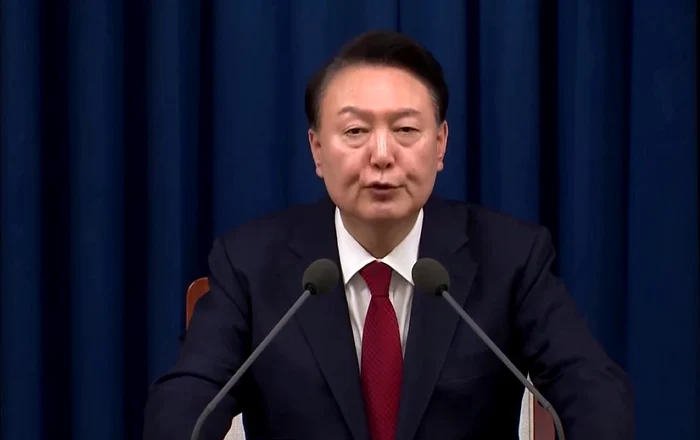
Yoon Suk Yeol faces the death penalty. PHOTO: video capture
In December 2024, 65-year-old Yoon Suk Yeol declared emergency martial law and mobilized the armed forces to maintain power amid tensions with Parliament and opposition parties. Prosecutors claim that the former president's actions were unconstitutional, aimed at suspending the work of the National Assembly and the Electoral Commission and undermining the liberal-democratic constitutional order.
“Yoon… claims he instituted emergency martial law to protect liberal democracy, but the unconstitutional and illegal emergency martial law undermined the functioning of the National Assembly and the Electoral Commission… effectively destroying the liberal-democratic constitutional order,” stated the prosecutor in the final plea, on Tuesday, January 13, demanding capital punishment for the former president.
Prosecutors say Yoon Suk Yeol's plan, coordinated with his former defense minister Kim Yong-hyun, dates back to October 2023 and was meant to ensure his continued power.
“The defendant has not expressed genuine remorse for committing the crime … and has not properly apologized to the people,” according to the representatives of the law, quoted by Reuters.
Yoon Suk Yeol, on the other hand, denied the allegations, saying that as president he had the legal authority to declare martial law and that his purpose was to sound the alarm about the opposition's obstruction of the government.
What is the law in South Korea?
South Korean law provides for the death penalty, life imprisonment, or life imprisonment without forced labor for crimes of insurrection.
Although prosecutors have called for the death penalty, South Korea has not carried out a death sentence since 1997, and the last death sentence was handed down in 2016.
Recent history shows that South Korean courts can review the sentence sought by prosecutors: In the trial of former presidents Chun Doo-hwan and Roh Tae-woo, prosecutors had sought the death penalty for Chun and life in prison for Roh. The court handed down the death penalty for Chun, but it was later reduced to life imprisonment, and both were then granted presidential pardons after about two years in prison.
The court is set to rule on Yoon Suk Yeol's case in February 2026, and the final decision will be closely watched both in South Korea and internationally as it is one of the region's most serious constitutional crises.
The office of President Lee Jae Myung, Yoon's successor, expressed confidence that “justice shall decide … in accordance with law, principles and public standards.”