Don't we like Trump's arrest of Maduro? “But if Obama had also acted on time, maybe now we wouldn't have a war in Ukraine”

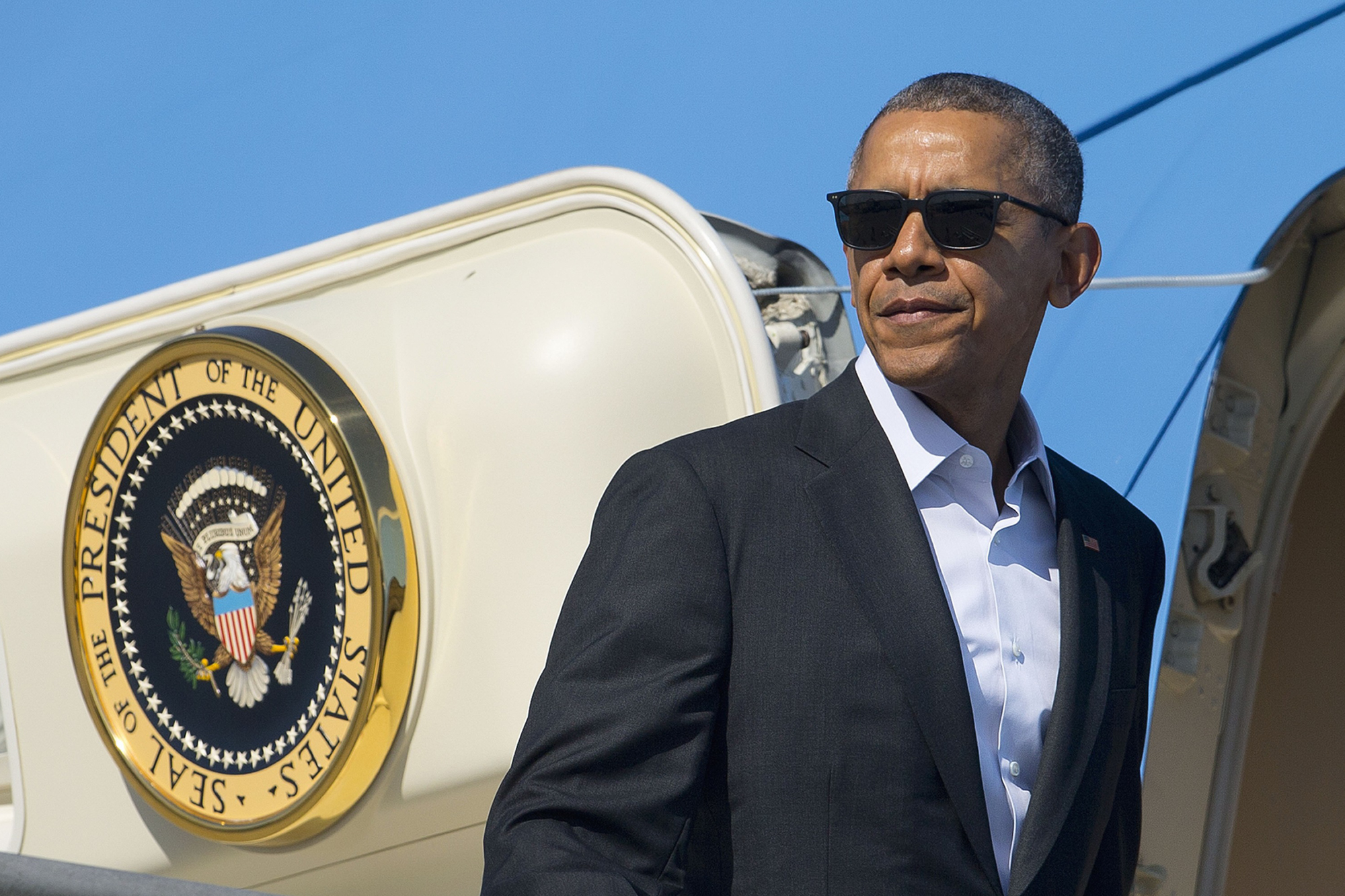
Barack Obama in 2016. Credit line: Pablo Martinez Monsivais / AP / Profimedia
The captured regime in Venezuela was beheaded. Let's not shed tears for him, writes Alina Mungiu-Pippidi in an opinion hosted by HotNews. She recalls that “dictators rarely fall without broken windows. What really matters is what comes next.”
Is this the end of the world's most corrupt regime? Of course we would have liked this denouement to come by other means (like, when the elections weren't free and fair?), with lower risks for an already fragile international order.
And yet, I hope this will be the end of the Chávez/Maduro regime and a new chance for Venezuelans to start over.
The Maduro Regime: When Corruption Takes the Country's Citizens Prisoner
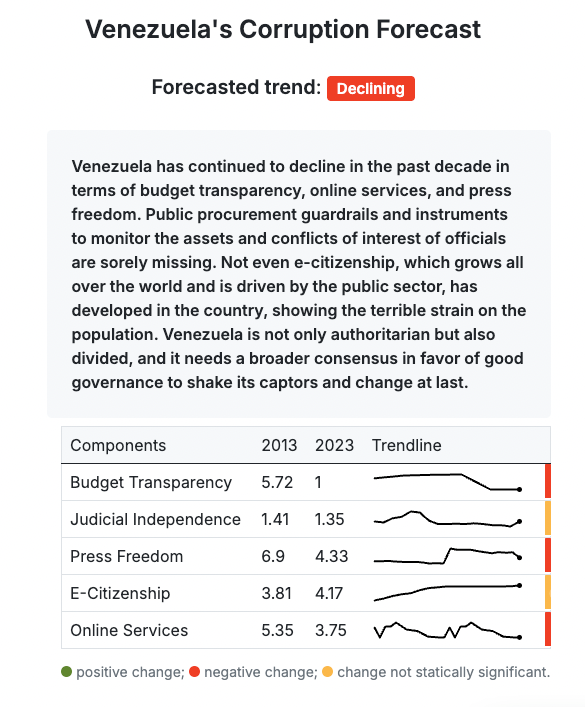
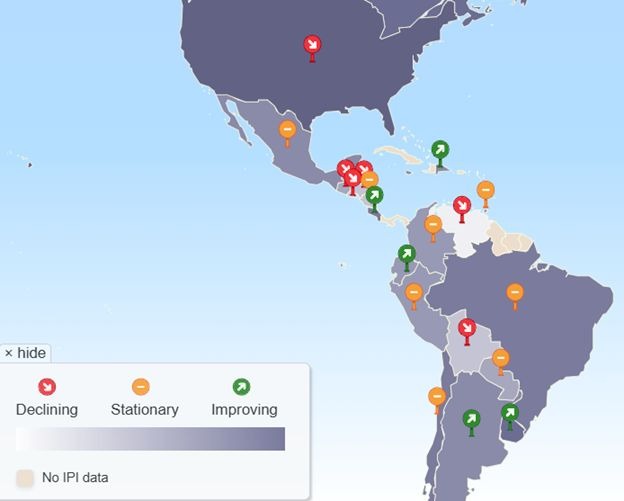
Venezuela is in continuous decline, as can be seen below and on corruptionrisk.org. It is the country with the largest gap globally between its human capital and level of corruption. In other words, there are a lot of people out there who deserve to be freed from state capture and be able to rebuild their own state.
We can't help but wonder what would have happened if President Obama, when he announced that the US would intervene in Syria, had taken a similar strike against Assad and followed through on his commitment. Maybe the invasion of Ukraine would not have happened?
How dictators fall
I leave it to others to debate who “broke” the international order – whether it was Putin, as many in the West claim, or the US, starting with the recognition of Kosovo's secession, as Putin claims.
The defense of international order is, of course, perfectly legitimate. But in recent years it has offered few prospects, especially after the Russian invasion of Ukraine.
Throughout my life I have witnessed – and reported, as a journalist and professor of democratic studies in Berlin – numerous “color revolutions”. I was also an actor in our own revolution in Romania in 1989. I remember how some observers with a strictly legalistic approach said, after the fall of the Serbian nationalist dictator Milošević in 2000, that the windows of the Serbian Parliament should not have been broken. But dictators rarely fall without broken windows. What really matters is what comes next.
Why civil society is important
So the real question for Venezuela is how can Venezuelans win their country back without simply going from one captor to another?
Destabilization is only beneficial if it leads to the end of state capture. And a captured state can just as easily be controlled by international oil interests, drug cartels or ideological dictatorships.
The approach that has worked largely in Eastern Europe – in Budapest, Prague, Warsaw, Bucharest, the Baltic states, Georgia and sometimes even Kyrgyzstan – has been civil society.
When a regime collapses, a roundtable must follow:
- in which various interests are represented,
- in which political and civic actors sit at the same table,
- in which the social and political fabric is rebuilt from the bottom up.
The day when all of Romania was in the streets
When Ceaușescu fled, the entire country was on the streets in less than two hours. That massive, decentralized mobilization made the fall of the regime irreversible.
In Romania, we were less organized than Central Europe, but what followed was essential: the removal of communist leaders at all levels and their replacement by people chosen from schools, factories, hospitals and local communities.
That's how change becomes real.
US intervention may help catalyze events, but Venezuelan civil society should not wait to see what others plan to do. Responsibility and opportunity lie within the country. Civil society must act now.