Devices that use electricity are much more efficient than those that use fossil fuels. Greater efficiency means lower prices and, in addition, no need to buy gas and oil from people with whom we do not particularly want to have anything in common. To make this possible, we must change the way we produce and consume electricity.
For years, decarbonization of the energy sector has been presented as an end in itself. We were supposed to use green electricity, take care of the environment and support the fight against climate change. The goal was to make every megawatt hour emission-free, regardless of its price. It is no wonder that enthusiasm for the transformation has finally waned, with society and industry looking primarily for low energy prices and reliable supplies.
The goal should be to strive for the cheapest possible energy without compromising the level of security
Read also: Reducing energy prices divides experts. “Bull's-eye” or “wishful thinking” [ANALIZA]
This should be the goal of the efforts of the entire energy industry, politicians and administration – striving for the cheapest energy possible without reducing the level of safety. It can be achieved through electrification, i.e. using electricity to the greatest extent possible to provide heat, power vehicles or operate machines in industry.
We need renewable sources for this. They don't use fuel, so you don't have to buy them from sometimes moody partners. They are much cheaper to operate than conventional units and are not subject to failures like conventional power plants. In Polish conditions, the source with the best cost-benefit ratio for the system are onshore windmills. Let's hope that in 2026 it will be possible to eliminate legal barriers to their development.
Of course, renewable energy is not perfect. First of all, their work depends on weather conditions and not on customer demand. Therefore, we need sources that will work when the weather is unfavorable. The choice of technologies is not very large: taking into account applicable regulations and market conditions, the list comes down to gas and nuclear power plants. They provide a product that renewable energy cannot provide – power. We need it as soon as possible, because it provides protection against periods of low renewable energy generation. In Poland, we can buy power on the market, and in 2025 the last auction took place, under which new power plants were contracted.
In 2026, we will learn the assumptions of the new capacity market
Read also: The government's energy balance. Nuclear is a plus, renewable energy needs to be improved
However, this is not enough and that's why we need a new capacity market. In 2026, together with the Ministry of Energy, we will present its new assumptions. It will be much more effective than the current mechanism. It will consist of a flexibility mechanism for energy storage, a capacity market for dispatchable sources and a decarbonization mechanism supporting the replacement of existing coal sources with new low- and zero-emission units.
As an operator, we have high expectations for the energy storage facilities that will appear in the system in the coming years. They will not replace available sources, but they will constitute a buffer that will allow them to be used optimally. In this way, we will avoid a number of technical challenges related to the constant switching on and off of units and the associated costs that are ultimately charged to consumers.
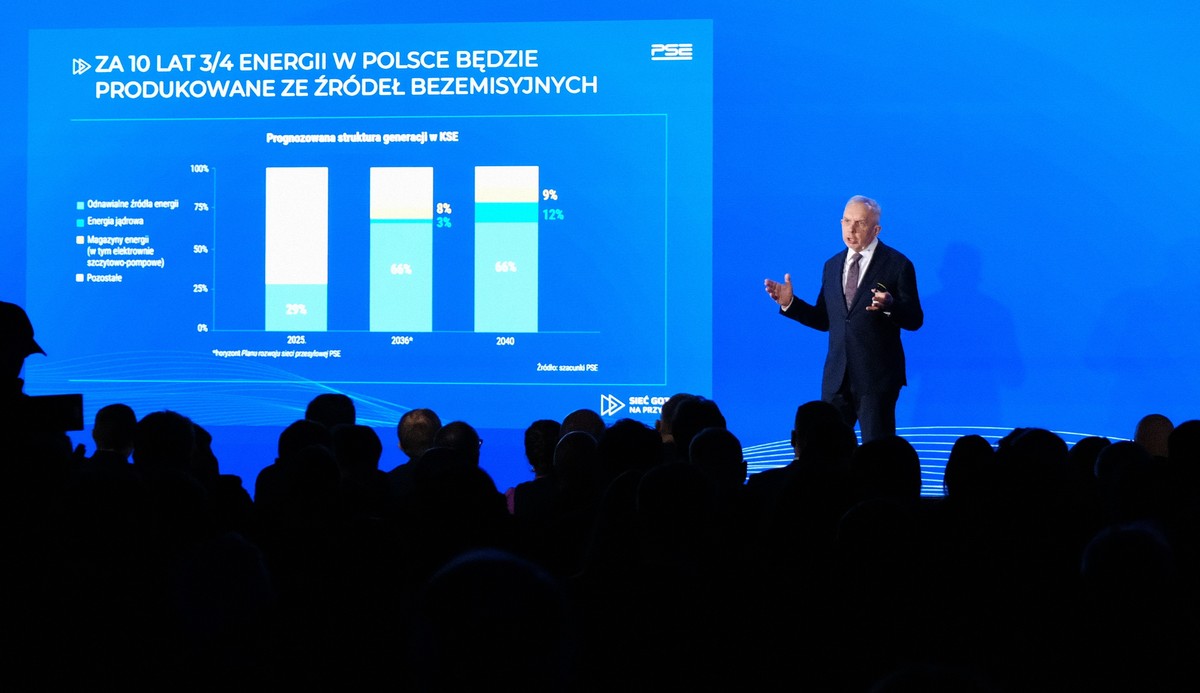
However, new sources and storage facilities are only part of the changes that are necessary for electrification. In the new PSE strategy until 2040, we show the scale of the challenges. The growing role of distributed energy means that the operator must have full knowledge of the operation of all sources in the system and be able to influence their operation, especially in emergency situations. This does not mean centralization, but the example of the blackout on the Iberian Peninsula showed that the system had become too complex for the operator to guarantee its safe operation without access to new tools. Just after the events in Spain and Portugal, at the request of the government, we prepared the so-called anti-blackout package, containing recommendations aimed at reducing the risk of a failure of this scale in Poland. We are already implementing some of the changes, some are included in the strategy. In 2026, we want to increase the observability of the system with new categories of resources. The main goal, however, is to prepare the system for safe operation when only renewable sources work. Such moments will happen more and more often, they will be longer and longer, and the stability of the network operation requires many technical parameters that are currently provided by coal and gas sources. We must be ready for the system to work reliably even when they are not working.
In 2026, PSE will publish the first edition of the “Electricity market roadmap”
The market should be the basic tool for managing the system. Prices are a carrier of information on the basis of which decisions should be made about the volume of energy production or consumption. The price reflects the needs of the system. For this to work, the information should be as clear as possible. Therefore, in 2026, we will publish the first edition of the “Electricity market roadmap”, in which we will present proposals for the development of the energy market and system services.
Contrary to the fears of many people, the development of the network – at least the transmission network – will not limit electrification. By 2034, we will be ready to connect nearly 80 GW of renewable sources, 15 GW of energy storage, 2.8 GW of nuclear power plants and 11 GW of available sources. We will use a more flexible and proactive approach to connecting new resources to reduce the risk of building infrastructure that may turn out to be unnecessary in the coming decades. In this way, we will avoid stranded costs, and we will be able to carry out investments with lower burdens transferred to recipients. At the beginning of 2026, we will present a new transmission network development plan.
What largely determines the transformation now is security. In the past, the operator understood it quite narrowly, mainly as system balancing. In our troubled times, however, this challenge is much broader. We must be ready for hybrid attacks, activities in cyberspace, extreme weather phenomena, as well as full-scale attacks on our infrastructure. We will not buy anti-aircraft systems, but we must cooperate more closely with the army and services. In December, we signed an agreement with the General Staff, which will significantly facilitate the exchange of information and joint activities. We will also purchase equipment that will make it easier to monitor our infrastructure and maintain communications, and, if necessary, will be compatible with systems used by other institutions. We also focus on flexibility in the implementation of investments and infrastructure repairs, which is why we are building our own contractor company that will allow us to quickly remove damage to lines or stations.
Read also: “There is chaos.” Minister of Energy on relations with the president [WYWIAD]
Our strategy is a response to the challenges we see now. It will certainly require updating, because the power industry is changing too dynamically to predict the pace and direction of development and the costs of individual technologies. So we'll definitely take on new initiatives along the way, but regardless the goal will remain unchanged – the lowest possible energy bill for the recipient and safe electrification.