In U.S.-Russian relations, Trump has made a turnaround that hasn't happened since Lenin's time


This is part of a more general shift in American foreign policy and worldview under Trump – a shift that involves abandoning alliances, rejecting international law and the principle of state sovereignty, abandoning current diplomatic structures and practices, and renunciation of key US values. The traditional American commitment to supporting democracy no longer exists. 2025 brought an abrupt end to the US-led world order and eight decades of alliance with European democracies.
Such a big change, which happens once every 100 years, was clearly signaled even before Trump took office in January, including: by selecting people such as Elon Musk, JD Vance or Tulsi Gabbard among their collaborators. We also cannot ignore Trump's own statements he has been declaring his desire for the United States to “reach an agreement” with Russia for over a decade.
European policymakers and many analysts have been reluctant to acknowledge this change, perhaps because it seemed too scary and completely different from their previous experiences. As a result, they reacted with a delay and were too easily calmed down by figures associated with the administration who were more favorable to Europe. However, the White House's antipathy towards Europe and its desire for good relations with the Kremlin have become impossible to ignore.
On Ukraine, Biden lacked decisiveness. Trump is just hostile
The main topic of American policy towards Russia this year was, of course, the war in Ukraine. The contrast with Biden's approach in the previous three years could not have been more stark.
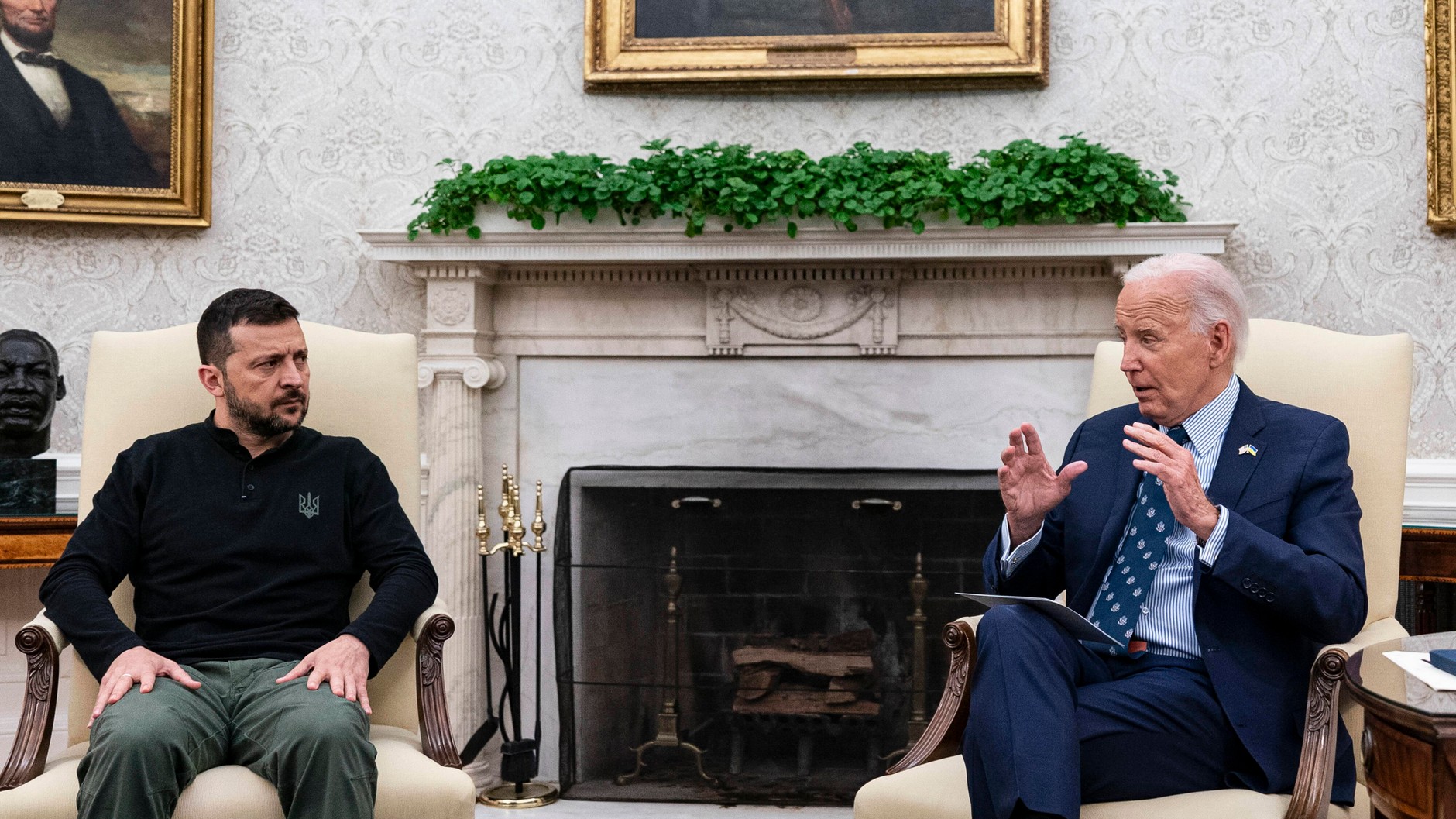
Volodymyr Zelensky, president of Ukraine, and Joe Biden, then president of the United States. Washington, September 26, 2024Al Drago/UPI Photo via Newscom / PAP
The previous administration acted extremely cautiously, fearing escalation. It often seemed like he wanted to prevent both Russia and Ukraine from losing at all costs. But clearly supported Kyiv and condemned the Kremlin's actions. Despite opposition from Republicans in Congress, the US provided significant aid to Ukraine in 2024, recognizing that support for its defense is crucial to the security of the United States, Europe and the entire world.
The Trump administration changed all that. The most visible change was the end of American financial support for Ukraine. The new military aid included in the National Defense Authorization Act passed by the Senate to Trump in mid-December covers only a fraction of what was provided last year.
Instead, the Trump administration decided to sell weapons to other NATO countries so that they would transfer them to Ukraine. The very fact that this purely commercial mechanism was considered a success for Ukraine and a sign of the administration's softening position shows how deep Washington's hostility has affected a country previously perceived as a partner.
The most striking example of this hostility was Zelensky's disastrous visit to the Oval Office in February. However, the Trump administration throughout the year put enormous pressure on Kiev to agree to a highly unfavorable agreement on strategic raw materials (a slightly milder version was ultimately signed) and to a ceasefire agreement that would benefit only the United States and Russia. The Trump administration's preferred solution to the war involved the US taking over Ukrainian resources and Russia taking over Ukrainian territories, leaving Kiev only the promise of some security guarantees, for which it would have to pay later anyway.
More patience for the aggressor than for the victim
Disturbingly, members of Trump's circle and his administration often repeated false claims about Ukraine and the war that sounded like they were coming straight from the Kremlin. Trump has repeatedly blamed Ukraine for starting the war — even though the Russian invasion was completely unprovoked — and avoided blaming Russia, just as he had been reluctant to condemn Putin for years for annexing Crimea in 2014. Trump and others claimed that the Ukrainian government was corrupt and acted undemocratically by failing to hold elections during the war — a favorite Russian accusation — even though Ukraine's constitution forbids it.
In contrast to the treatment of Kiev, The Trump administration did not put pressure on the Kremlin at allto give up maximalist war goals or stop committing war crimes in Ukraine. This was evident even despite the administration's persistent attempts to appear tough on Moscow by giving Russia several two-week “deadline” deadlines to advance peace negotiations — deadlines that were ignored without consequence.
The article continues below the video
Instead, Trump chose to recognize Putin as a friend and partner on an equal basis, providing massive diplomatic support to Russia in the form of a hastily organized summit in Alaska — a stark contrast to the White House's attempt to publicly humiliate Zelensky.
Instead of applying pressure, the White House focused on two goals: close economic cooperation and pressure on allies to normalize relations with Moscow, including by readmitting Russia to the G8 and – in accordance with the 28-point peace plan – “reintegrating” Russia into the world economy, i.e. lifting sanctions.
The Trump administration also appears to accept the Russian view that Russia has the right to influence the situation in its neighborhood, including blocking further NATO expansion. The administration's words and actions suggest that is ready to provide Putin with everything he expects — both in economic, diplomatic and security terms. This approach is confirmed by the Kremlin itself, which described Trump's new National Security Strategy as “largely consistent with our vision.” This would have been unimaginable under any previous US president.
The Kremlin seems to set the direction of the White House's policy
During the Cold War, Washington and Moscow were adversaries; for the next 35 years after its end, the US played a dominant role in these relations, setting the pace, scope and agenda of contacts and shaping the broader international environment in which they took place. By 2025, these relationships were improving or deteriorating depending mainly on the extent to which the United States was interested in Russia, and Russia avoided aggression abroad and violations of domestic rights. In the best of times, the US treated Russia as a partner or pretender to this role.
Everything has changed since Trump returned to the presidency. Currently, it is the Kremlin that seems to set the agenda and shape the White House's perception of Russia and Europe. Long-standing American aversion to Russian aggression was replaced by friendship and, often, submission. Hostility, however, was directed against Europe – this is another area in which the policies of the US and Russia are currently similar.
There is no precedent in recent history for the scale and pace of change in US-Russia relations since Trump returned to the White House. His administration seems give up not only the leadership of the West, but even from belonging to it – for ideological and economic cooperation with the Kremlin.
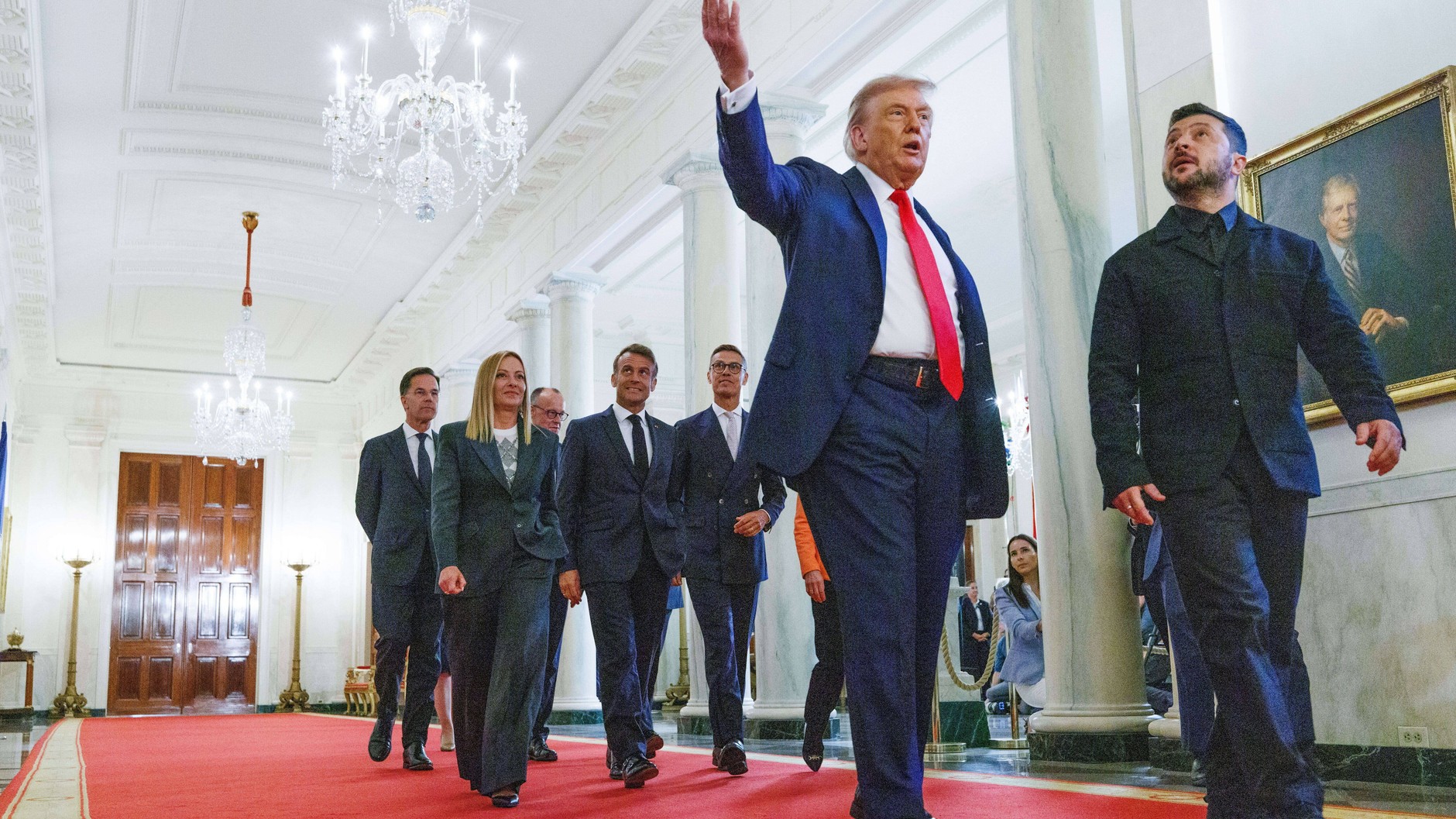
Donald Trump, President of the USA, and Volodymyr Zelensky, President of Ukraine, accompanied by European leaders. Washington, August 18, 2025EPA/Aaron Schwartz / POOL / PAP
Whoever succeeds Trump will have to deal with the damage to U.S. alliances and concessions to Russia, a country still deeply hostile to American interests. Meanwhile, Ukraine and the rest of Europe will have to learn to function in a world where the United States is no longer a friend. The coming year will show whether they can cope with this.