A breakthrough moment for the EU. A country that sympathizes with Russia adopts the euro

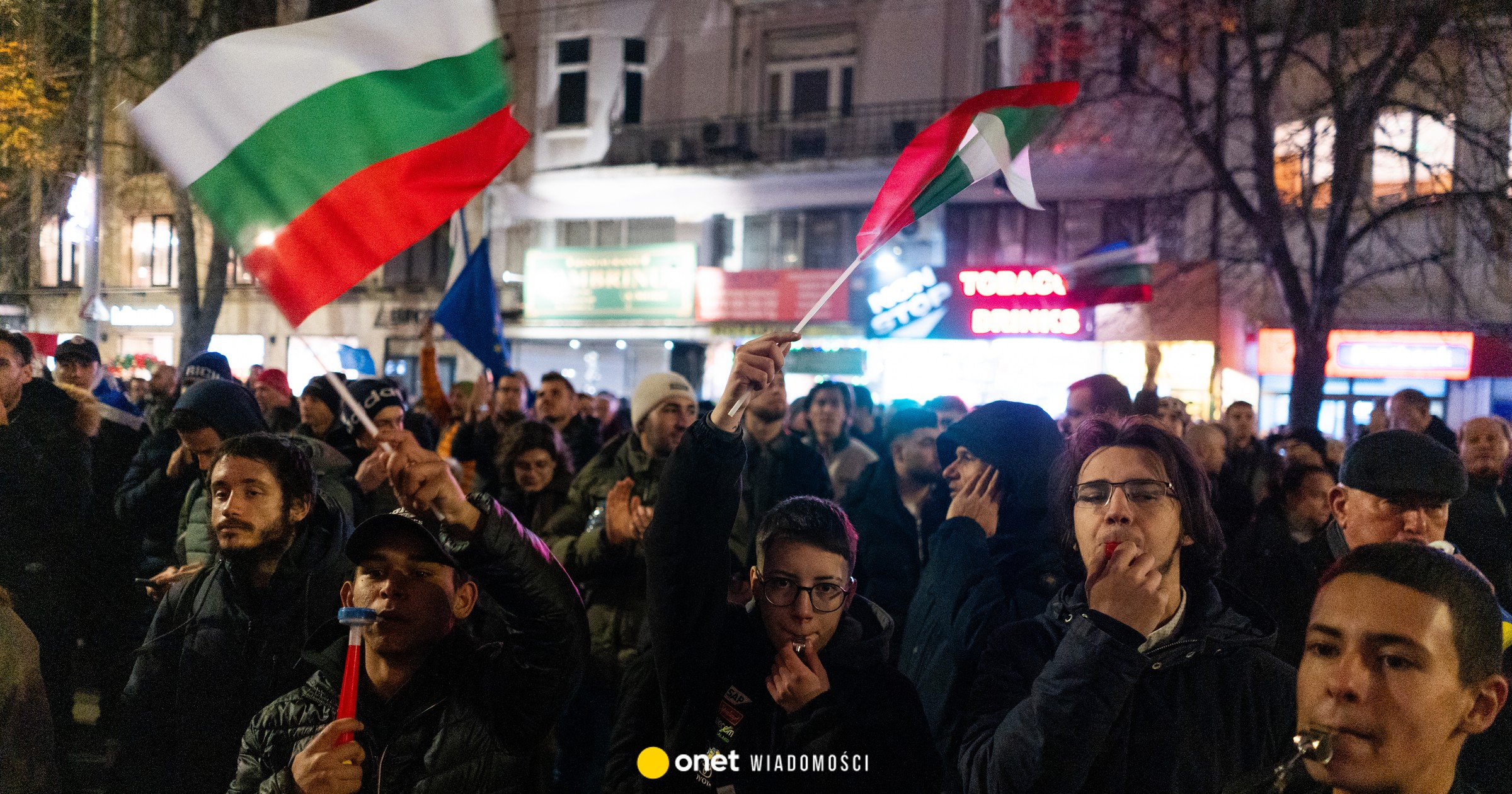
It's hard to imagine a worse moment to adopt the euro – on December 11, the Bulgarian government resigned after mass protests. Demonstrators accused him of corruption and expressed their opposition to the draft budget for 2026, which provided for a significant increase in taxes and social security contributions. The authorities justified these measures, among others: the introduction of the euro and European debt rules.
It is in these circumstances that the country will join the eurozone on January 1, 2026 – without a government or budget. And without overwhelming public support – in recent polls, almost half of the population was against this move. However, there is no turning back – preparations have been completed and the Bulgarian euro coins that will soon enter circulation have long been minted. And they well reflect the division in Bulgarian society.
The exchange rate for Bulgaria's current currency, the lev, to the euro will be 1.95583 lev per euro – exactly the same as the exchange rate for the German mark. This is not a coincidence – in the 1990s, Bulgaria linked its currency to the German mark. This followed a period of high inflation – in order to restore and consolidate monetary stability, the country's authorities decided to permanently link their currency to the German one. After the introduction of the euro in Germany, this link was transferred to this currency and continues to this day.
Bulgaria has pursued a prudent and frugal fiscal policy, as a result of which its debt is currently only 25 percent. GDP. It is therefore one of the few EU countries that remains below the officially permitted maximum of 60%. — even Germany has already crossed this border. It is not without reason that Bulgarians are traditionally considered the “Prussians of the Balkans”.
In other areas of economic policy, Bulgaria has also achieved considerable recent success – even though the country still ranks at the bottom of the EU rankings in terms of per capita income. This year, its economy grew by about 3%. and unemployment fell below 4 percent. Thanks to this, Bulgaria may even become an anchor of stability for the euro.
Opportunity or threat?
Some hope that adopting the euro may increase support for the EU in the country. The European Central Bank cites research showing that in the past, opposition to the euro tended to weaken significantly after its introduction – this was the case, for example, in Germany, Slovenia, Cyprus, Malta and Croatia. Many economists finally expect that the EU currency will give additional impetus to the Bulgarian economy. Rating agencies have already raised their ratings for her.
On the other hand, Bulgaria's accession to the euro zone may become a new destabilizing factor for it. Opposition to the euro results not only from fear of price increases, as was often the case in other countries. In Bulgaria, there is also a general reluctance to ties with the West and a preference for partnership with Russia. This is visible in the political situation in Bulgaria – it is currently headed by Russia-friendly president Rumen Radev, but before him the helm of government was held by pro-European parties.
This discrepancy between links with East and West, between Russia and the EU, between Orthodox tradition and Western modernity is also reflected in euro coins.
The article continues below the video
Their obverses, of course, look the same as all the others. However, the reverses were designed by Bulgaria, as was the case with all other eurozone members. Unlike them, the language of this country – like Russian – is written in Cyrillic. Therefore, the inscriptions on the reverses of new coins are also written in this alphabet. There is an inscription “БЪЛГАРИЯ” (Bŭlgarija), which is the name of the country in Bulgarian.
Additionally, there is a special feature that can only be found on Greek coins. Only countries whose language is not written in the Latin alphabet can place the name of the currency in their own language. That is why the inscription “ЕВРО” (euro) appears on the reverse of Bulgarian euro coins. This inscription also appears on euro banknotes.
The one-cent coin bears the inscription “СТОТИНКА” (stotinka). The latter name was also used to refer to the smaller coins of the former Bulgarian leva currency. The word comes from “hundred”, so stotinka is simply one hundredth. The plural that appears on coins with a denomination of two cents or more is “СТОТИНКИ” (stotinki).
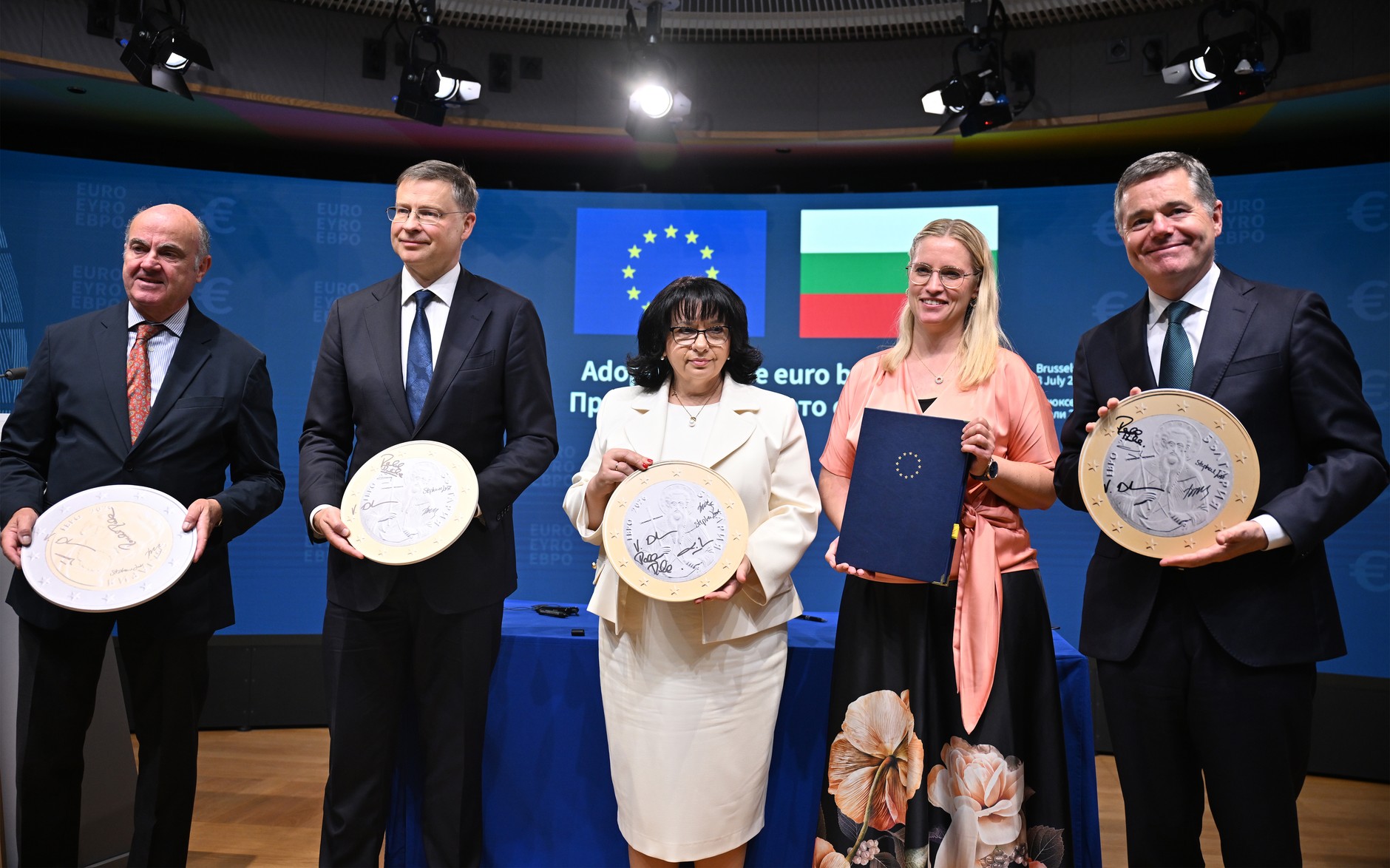
Vice-President of the European Central Bank Luis de Guindos, EU Commissioner Valdis Dombrovskis, Deputy Prime Minister and Minister of Finance of Bulgaria Temenuzhka Petkova, Minister of Economy of Denmark Stephanie Lose and President of the Eurogroup Paschal Donohoe at a signing ceremony celebrating the final stages of Bulgaria's accession to the euro area, Brussels, 8 July 2025.Anadolu / Contributor / Getty Images
On the edge of the two-euro coin there is also the inscription “БОЖЕ ПАЗИ БЪЛГАРИЯ” (bozhe pazi Bŭlgarija), which in Polish means: God save Bulgaria. This slogan has been used in this country for centuries as a symbol of national unity and proves that the Orthodox faith is deeply rooted in this country. This is in particular contrast with the inscription on German two-euro coins: “Unity, law and freedom.” Here a call to God, there a deeply secular expression of statehood.
This coin also depicts Paisius Chilendarski (1722–1772), a Bulgarian monk who became one of the most important figures of the Bulgarian National Revival in the 18th century. His “Slavic Bulgarian Historia” (Slavic-Bulgarian History), the first work of Bulgarian historiography, is considered the starting point for the rediscovery of Bulgarian identity and national consciousness. A national movement grew out of it, which finally triumphed in 1878.
It was then that the Russo-Ottoman War ended, in which Russia presented itself as the defender of Christians in the Balkans and occupied the territory of present-day Bulgaria – or, as the Bulgarians perceive it, liberated it from 500 years of Ottoman rule. This is what this country's special bond with Russia is based on to this day.
A bridge to the East?
The 1 euro coin depicts John of Rila (876–946), the most important saint of the Bulgarian Orthodox Church and founder of the Rila Monastery. He is also revered as the patron saint of the Bulgarians. His image with a cross and scroll once again refers to the deep-rooted role of the Orthodox faith in national culture and emphasizes the religious and historical specificity of Bulgaria. Depending on your point of view, this either separates Bulgaria from Western Europe or provides it with a bridge to the East.
All coins with denominations from 1 to 50 cents depict the so-called a horseman from Madara, a rock relief from the 7th or early 8th century, inscribed on the UNESCO World Heritage List. It is located on the Madara rock plateau in northeastern Bulgaria. It depicts a rider with a lion at his feet, which he has just killed.
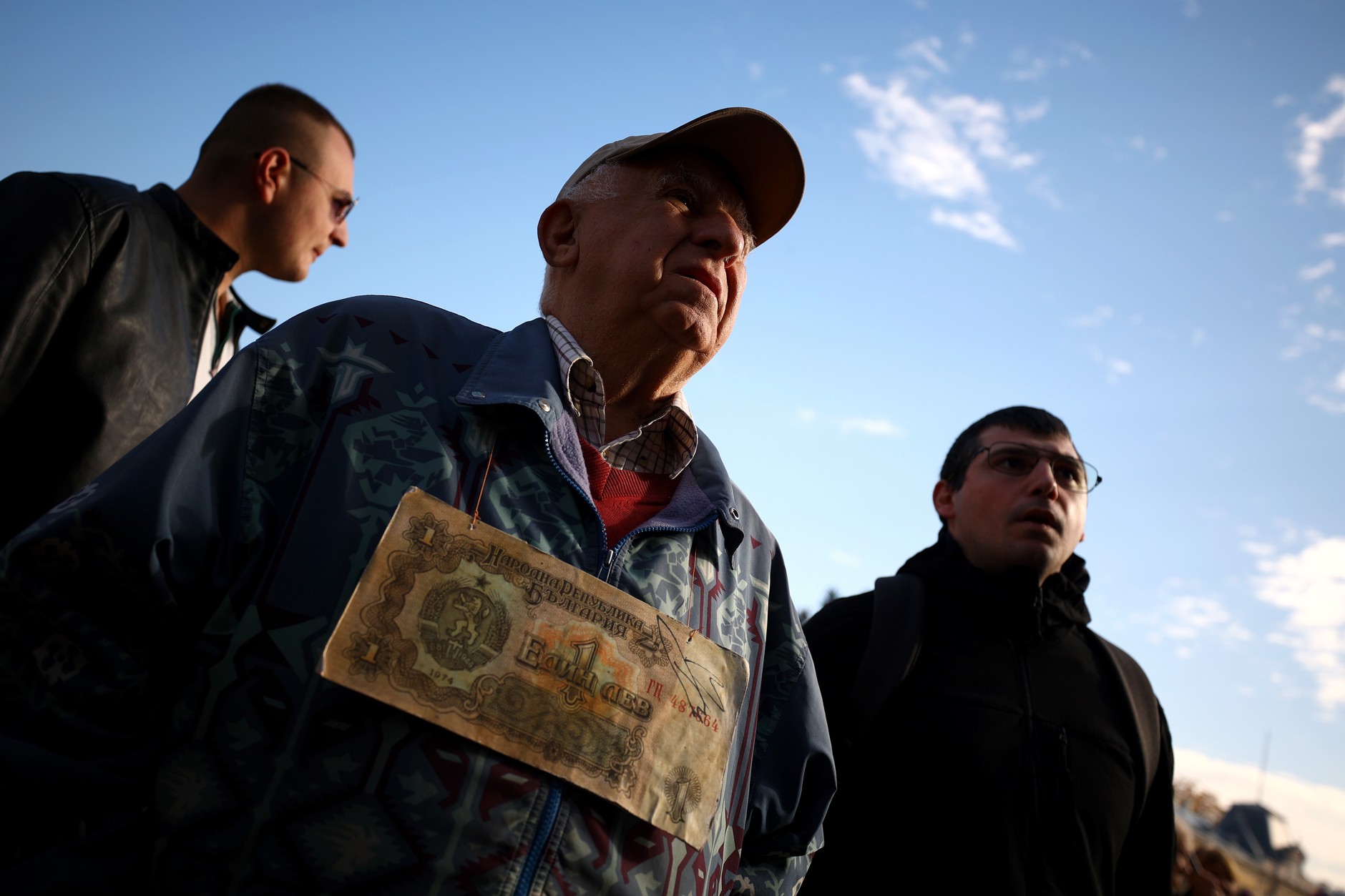
Participants in a protest against the adoption of the euro, Sofia, November 3, 2025.NurPhoto / Contributor / Getty Images
This motif is one of the most characteristic national symbols of Bulgaria and is perceived in this country as a symbol of the creation of the first state and the continuity of its history. And it has always been torn between East and West.
This continuity is also reflected in the fact that the design of the Bulgarian euro coins is practically identical to the existing leva and stotinka coins. The portraits are the same. For the country's citizens, this does not mean any major change, at least visually. How will further changes be received and what will their political consequences be? This will become clear in the coming weeks and months.