If someone really loves Europe, he or she must criticize the current European Union

There is no unity without prosperity. It was the Treaties of Rome of 1957 that gave birth to the European peace orderfrom which first grew the EEC, then the EU, and finally institutions such as the European Parliament. Only 12 years after the end of the devastating war, for which Germany is responsible as much as for the civilizational barbarism of the Holocaust, the idea of peace through prosperity was born.
In the course of this (successful) history of the EU, the principle of “the economy, stupid” was gradually lost – and led by increasingly bureaucratic EU staff it has become a growth suppression machinewhich, through its regulatory frenzy and careless distribution of subsidies, has undermined trust in free market mechanisms.
The EU in 2025 is working against growth rather than supporting it. EU leaders are locked in their information bubble almost as much as German elites. In times of global crises and comprehensive challenges, self-referential, almost autistic functioning, have emerged, which increasingly focus only on themselves. The number of officials is growing while the private sector is barely keeping afloat. This applies especially to Germany.
Like the nouveau riche addicted to consumption
For years, Germany has benefited from the internal market and the favorable euro exchange rate considering its economic power at that time. However, instead of reforming the country and the EU at that time, money was spent left and right, like extravagant nouveau riche. In a world obsessed with competition, this approach leads to failure.
The article continues below the video
Over the last 15 years, the US economy has grown much faster than the European one. The EU “scared away companies, investments, innovations” – said Jamie Dimon, head of JPMorgan Chase. If the EU does not undergo fundamental changes, the European economy will increasingly lag behind in global competition with the US and China.
The fact that after TTIP – the planned free trade agreement between the EU and the United States – last Friday the agreement with the South American Mercosur also collapsed, shows how detached from reality and arrogant are the decisions of decision-makers.
They are traditionally blocked by the French, reluctant to reform and self-absorbed, who pose serious problems for Germany – an export power. Unfortunately, so does Giorgia Meloni, who is mainly interested in obtaining an advance payment from the next budget of EU subsidies. The EU lacks both economic and economic competences true leadership. For now, there is no sign of any change for the better.
Given the terrible condition of the economy, bloated bureaucracy and helplessness in foreign policy, the authoritarian tendencies of the European Commission are even more surprising. Her planned surveillance of private conversations has already taken place dystopian dimension. Once implemented, such measures could “be systematically used in an autocracy against people with different political views and social minorities,” wrote the leftist newspaper Die Tageszeitung.
Despite growing shortcomings, advocates of the current state of affairs claim that harsh criticism of the EU is the domain of right-wing populism. According to this logic, this should also apply to the left-wing “Die Tageszeitung”who rightly wrote that our freedom is based “on the secrecy of correspondence and freedom of speech and press.”
A significant part of Europeans has already lost patience with the Brussels and Strasbourg bureaucracies. Support for Ursula von der Leyen's Commission is very low today. Liberal skeptics of the EU, such as the Dane Alex Vanopslagh, are not guided by any prejudice. He would like a Union that would, for example, be able to restore such an important economy as the British one to the community — also to strengthen free market thinking instead of a schematic redistribution policy.
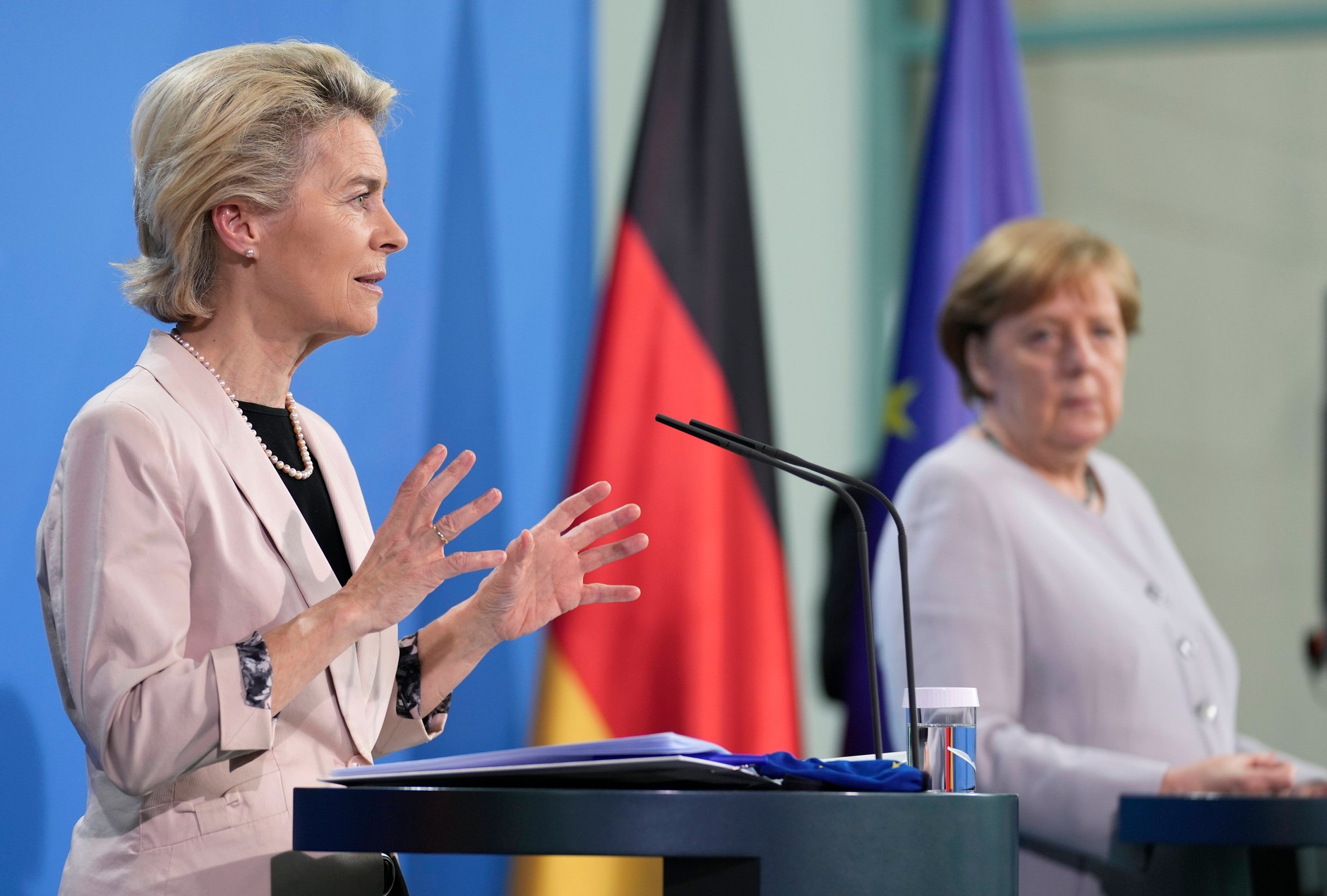
Ursula von der Leyen, president of the European Commission, and Angela Merkel, then chancellor of Germany, at a press conference in Berlin, June 22, 2021.EPA/MICHAEL SOHN / POOL / PAP
None of the great challenges of recent years have been addressed effectively by the EU. In migration policy – fueled by Angela Merkel's wrong decisions – the EU is internally divided and has not yet reached a common position. As a result, Europe has clearly turned right in recent elections and polls.
Climate activism was favored by the Commission President, and the European automotive industry was sacrificed in favor of trends. In retrospect, the Green Deal turned out to be the worst mistake of this Commission. During the pandemic, basic civil liberties were brutally restricted, and in the Ukrainian crisis, the EU failed to become a real player.
Moral arbiter? This is not a recipe for success
Assigning Europe the role of the moral arbiter of world history is grotesque. Too often, morality only serves to cover up our own failures. Pragmatists like Donald Trump, Vladimir Putin and Xi Jinping are guided by real powernot moral discourses – and these, as we can see, can be extremely ineffective and destructive. The Green Deal Deal strengthened Putin, not the EU. It helped China export cheap cars while the EU focused on solar energy – often to no great benefit to Europe.
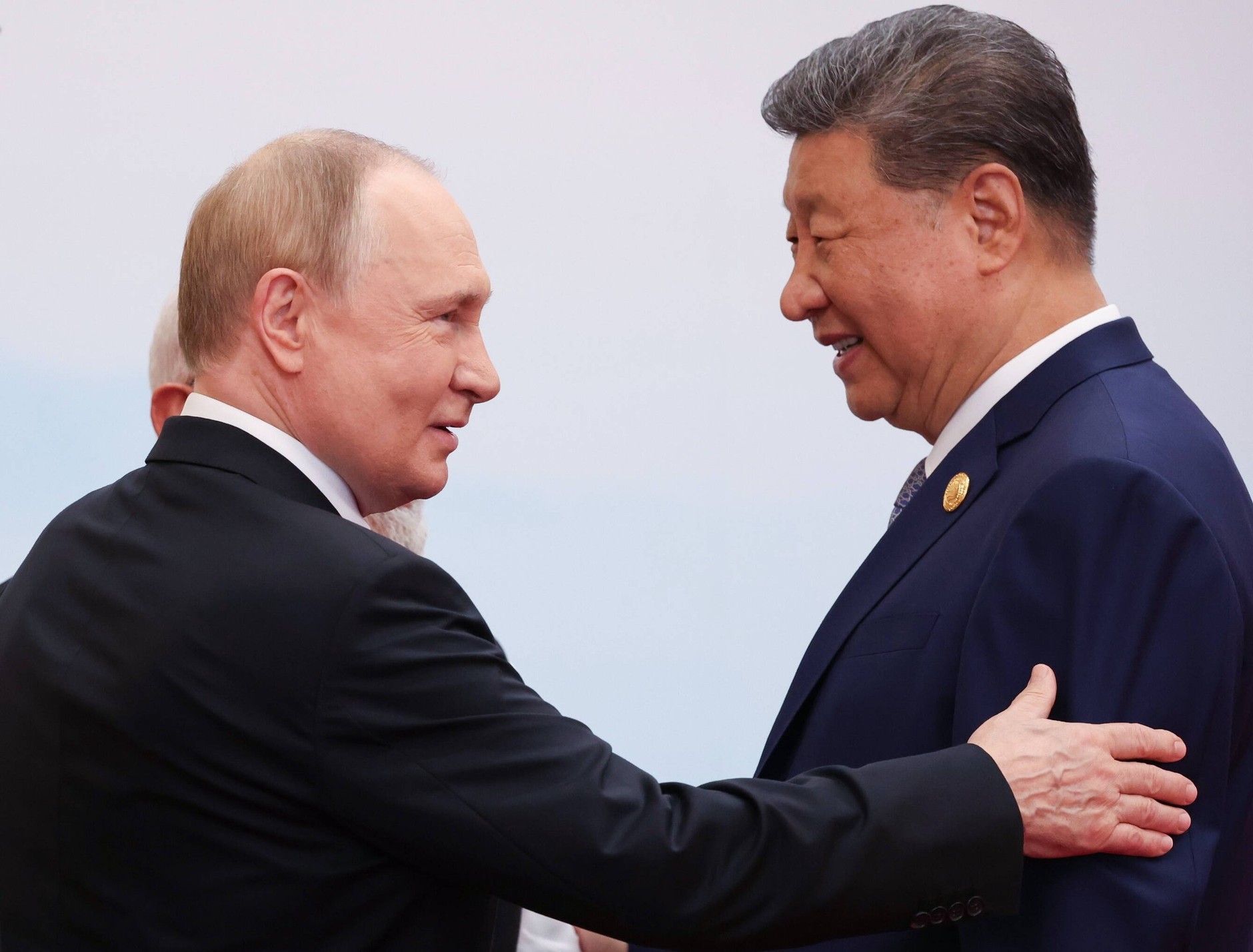
Vladimir Putin, president of Russia, and Xi Jinping, leader of China. Tianjin, September 1, 2025ALEXANDER KAZAKOV / SPUTNIK / KREMLIN POOL / PAP
Self-criticism in Europe is practically non-existent. The EU elites are extremely understanding towards each other. Withdrawing the ban on combustion engines is at least a small step forward and correcting an epoch-making mistake that caused gigantic losses for the industry and mass layoffs. And it will cost more. Thanks to the Prime Minister of Italy, Giorgia Meloni, the EU also decided to tighten its migration policy.
However, the problem persists, at least according to Palantir founder Alex Karp, who last week described how contemptuously leading American entrepreneurs look at Germany and Europe: — I'm afraid that in Europe, and probably first in France, people will say: I don't care what is written on paper about fundamental rights. I want my country to look like I remember it. – he said.
However, there is still no accountability for these wrong decisions. Instead, they are still trying to save the shaky structure with the “it will be somehow” strategy.
Who really chose Ursula von der Leyen?
Whoever criticizes the EU is immediately accused of repeating right-wing or populist narratives. Meanwhile, the truth is the opposite.
If someone really loves Europe, he or she must criticize the current EU. And we hope that a different EU will be created as soon as possible – led by people who understand anew the role of nation states, opponents of protectionism, supporters of new free trade agreements and broad deregulation. A fundamental change in democratic legitimacy is also needed. Because who really chose Ursula von der Leyen?
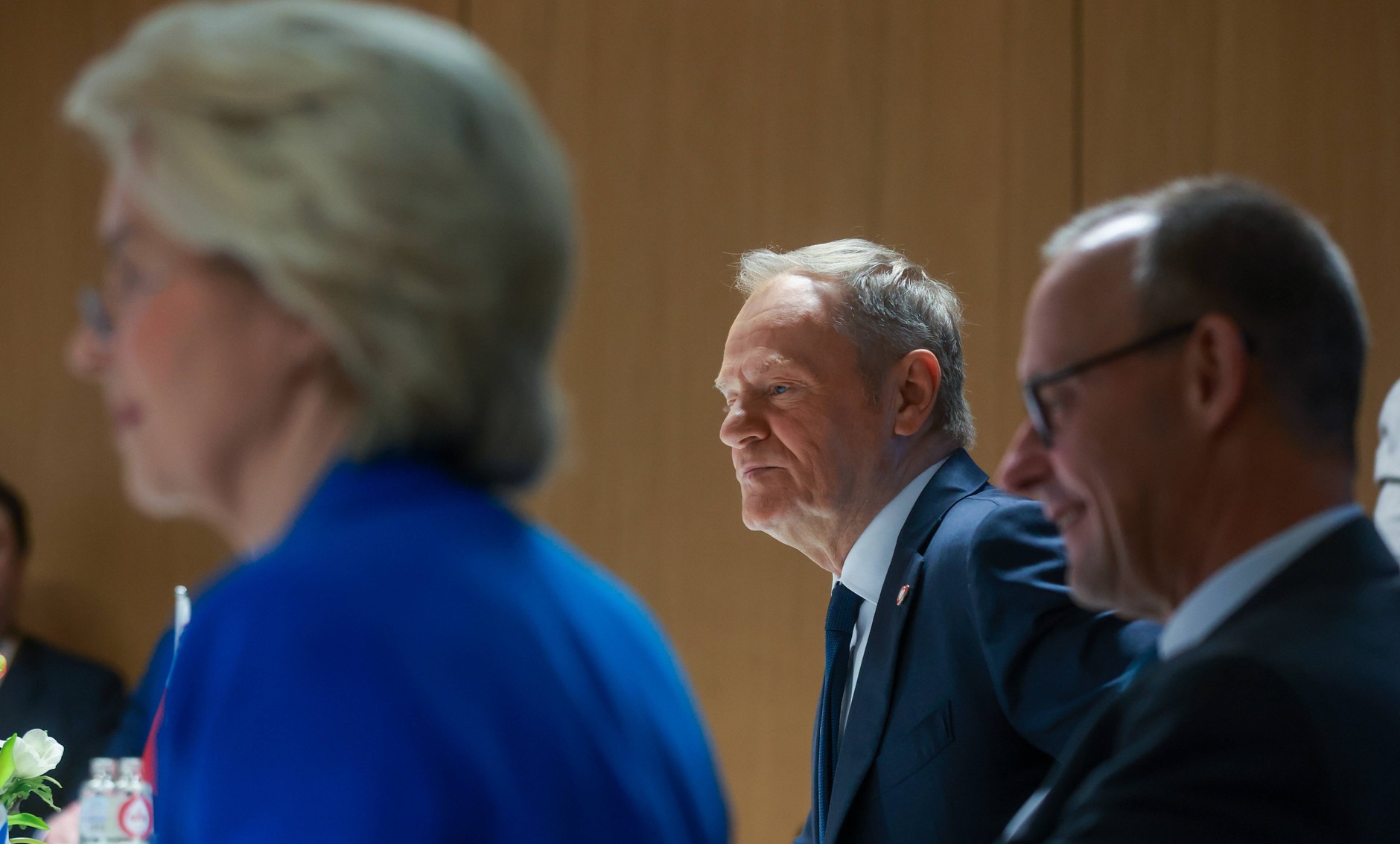
Ursula von der Leyen, President of the European Commission, Donald Tusk, Prime Minister of Poland, and Friedrich Merz, Chancellor of Germany, before the EU Council summit in Brussels, December 18, 2025.PAP/EPA/OLIVIER HOSLET / POOL / PAP
The European crisis, like the German crisis, has a common denominator: distrust of the market and the individual and a simultaneous attachment to authoritarian, statist structures and practices. The Treaties of Rome focused on growth because their creators knew that only in this way would freedom become a universal value. In a dynamically developing Europe, everyone who tries has a chance to succeed. Beautiful idea.