

There is a lot of talk about micro-studios, although they still occupy a niche part of the market. According to data quoted by Bartosz Turek, a real estate market expert, just a few years ago, premises up to 25 square meters accounted for 2-3%. rental offers. Today it is 4-5 percent.and part of this increase is due to investors dividing larger apartments into smaller units to maximize returns.
However, this is only one side of the coin. As Anna Pyzik, real estate agent at Inplus New Home, says, small apartments meet very real needs: — Small living rooms are not an emergency solution, but more and more often a conscious choice. (…) Both young people and seniors are looking for solutions that will give them independence and a sense of security, he explains.
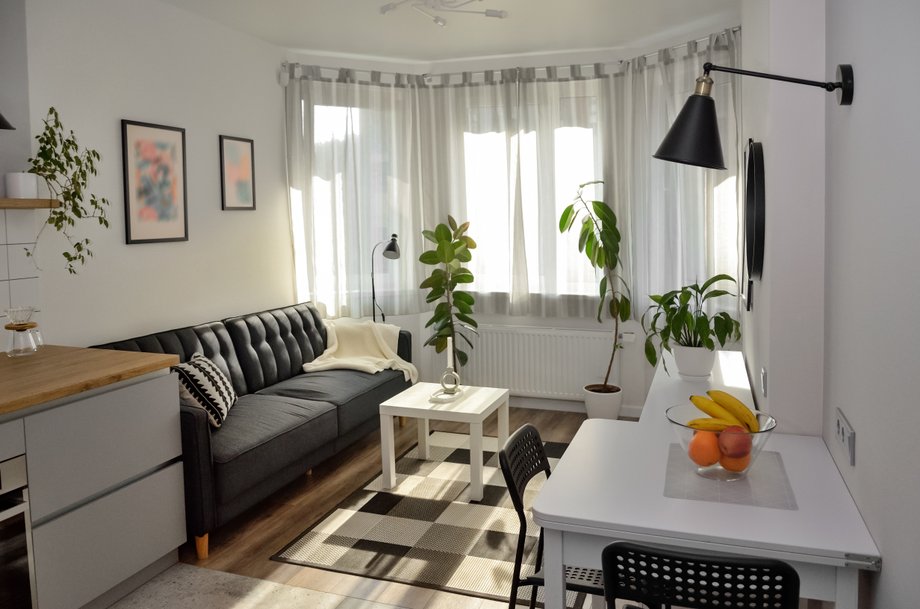
Micro-apartments are part of the market
|
JaySi / Shutterstock
See also: Saving in IKZE with bonds. See the strategies and how much you will gain [PORADNIK]
The expert also emphasizes that education is key – not demonizing “micro”, but understanding what such premises are for and what standards they should meet.
Who are micro studio apartments for? Investors are still an important group, but not the only one
In the opinion of Bartosz Turek micro-studio apartments are still purchased primarily by investors: for short-term or long-term rental or for running offices or offices. Their interest is also visible, especially at the end of the year, for tax reasons.
But – as the analyst points out – this does not mean that ordinary buyers do not buy them: – These premises are purchased for their own needs – for students by their parents, as the first “M” to start or by professionally mobile people who spend only part of the week in such a place – says.
In practice this means that micro-apartments act as a “safety valve”enabling:
- buying your first apartment instead of renting,
- cheaper accommodation for people working in large cities,
- running a business,
- avoiding sharing a larger premises with strangers.
Turek emphasizes that no one is confined to 20 square meters – this is one of the options, and the market itself regulates its scale: – If there are too many such micro-apartments relative to demand, they will remain empty. (…) The market will regulate this issue itself more effectively than top-down regulations, he argues.
High apartment prices increase the attractiveness of the micro-segment
What is happening recently is not a coincidence. Apartment prices in large cities are rising faster than the financial capabilities of the average household. Many buyers pay attention to every additional meter, and maintenance costs – despite energy-saving technologies – are increasing.
As Małgorzata Ostrowska, director of the Marketing and Sales Division of JW Construction Holding, notes: – Developers build premises that customers are looking for. (…) Customers are increasingly paying attention to every additional square meter, which is why most newly built premises are small apartments up to 40 square meters, he says.
Ostrowska also emphasizes that there is still room for very small units on the market – especially in the aparthotels and short-term rental segments. He adds that since they are willing to buy or rent premises with an area of 25 square meters, prohibiting them from doing so by increasing the minimum square footage is irrational.
Do Poles choose small apartments out of choice or necessity? Social “micro” context
Micro-apartments are a choice, but not always lifestyle-driven. Often, it is simply a rational reaction to real estate prices and limited availability of large premises.
Dr. Marta Skowrońska from the Faculty of Sociology at Adam Mickiewicz University reminds that Poles have been living in tight quarters for decades. However, the situation today is different from the realities of the Polish People's Republic:
- families are smaller,
- apartments are more expensive,
- the rental market consumes 40-60 percent. income,
- 27 percent society lives in the so-called rent gap — too rich for social housing, too poor to buy their own.
The sociologist notes that a micro-studio can be a choice for singles in big cities, for mobile people, for people who choose minimalism. — It is a necessity for people with low incomes, young adults staying with their parents, migrants and single mothers, he adds.
It also clearly points to a broader social context: housing has become a commodity and a financial instrument, and the micro segment often grows faster because it responds to the needs of tourists and investors.
Simultaneously micro-apartments are not a new phenomenon — many of them were built before the war by dividing larger premises. This is an element of the market adapting to the shortage of space and the rising costs of living.
Do small apartments affect demography and well-being?
Although many micro-premises are created consciously and respond to market needs, research also shows consequences of living in a small spaceespecially when it takes a long time and results from economic coercion.
Dr. Skowrońska indicates, among others:
- 29 percent people postpone the decision to have a child until their housing situation improves,
- long-term living in a microspace makes it difficult to rest and deepens stress,
- minimal space complicates remote work and increases the risk of burnout,
- Crowded conditions make social relations difficult, e.g. inviting guests.
However, this does not mean that small apartments always have a negative effect. The key factors are the standard, design, access to light and the way of organizing the space — it is this aspect that has been dynamically improving in recent years.
New apartment logic: not the size, but the function
In practice, a large part of the changes on the market result from the growing acceptance of alternative life models: professional mobility, project work, minimalism, conscious approach to the environment or preference for location over space.
As Bartosz Turek emphasizes, micro-studios are one of many 'safety valves' of the system, not the only path. — Without premises of modest size, many people would have to stay in more expensive hotels or share a larger apartment, he notes.
Urban-wise, “micro” is also a tool for increasing the availability of apartments in districts where prices for large apartments are beyond the reach of the average buyer. The market needs a housing ladder — from a small starter apartment to larger apartments at subsequent stages of life.
How to turn a micro-studio into a comfortable interior? An architect's guide
Finally, the most important question remains: How to make 25-30 sq m not just a compromise, but a full-fledged home?
Marta Wierzbicka-Patejuk, interior designer and owner of the In Element studio, emphasizes at the beginning that it is necessary distinguish micro-apartments (for short stays) from micro-apartments (min. 25 sq m and meeting the requirements for permanent residence).
— The minimum area that can be designed and called a 'house' is: approx. 34 sq m for a couple and approx. 30 sq m for a single person – he points out.
But the key is not just the number of meters. The most important elements of a comfortable “micro” are:
1. Illumination
– This is an absolutely key issue – emphasizes the architect. Lack of daylight is a quick way to deteriorate your well-being, so it is worth paying attention to exposure, the height of buildings opposite and the size of windows.
2. Using every centimeter
The designer says directly: – We plan such small apartments in great detail, we consider every square centimeter, we also take into account the height.
This means, among others:
- custom-made furniture,
- construction up to the ceiling,
- combining functions (e.g. sofa with storage space),
- hiding most of the items – “everything has to have its place.”
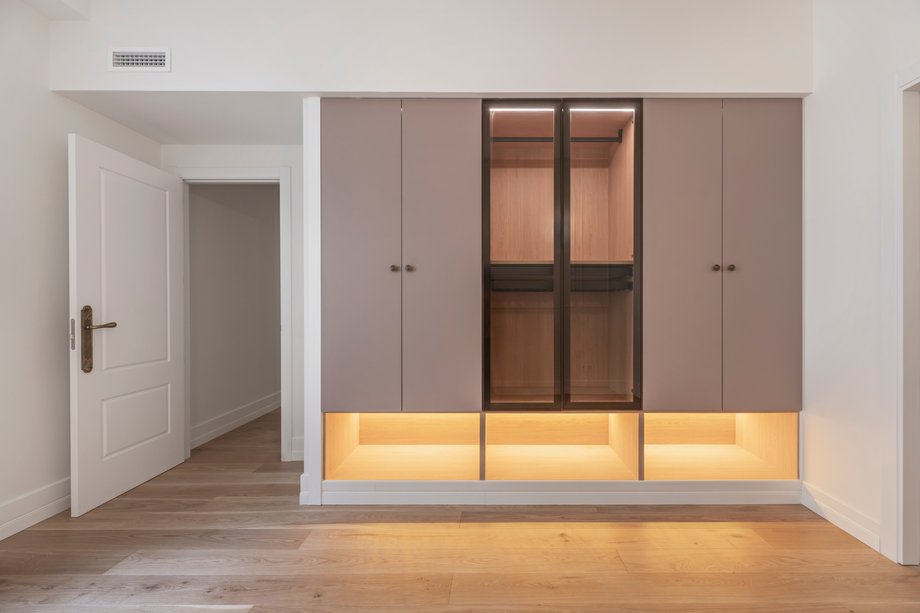
When arranging the space of a small apartment, you need to use every centimeter
|
Toyakisphoto / Shutterstock
Read also: The National Bank of Poland already knows what's going on with its finances. Adam Glapiński is not lucky [TYLKO U NAS]
3. Clear division of zones
This allows you to maintain a hygienic life: a separate zone for sleep, work, rest and cooking – even if these are micro zones separated by light, colors or a mobile wall.
4. Materials and detail
— Treating a small space with love and jewelry-like precision is a recipe for a beautiful place to live, says the architect.
Natural materials, good lighting, quality instead of quantity — this is what distinguishes conscious minimalism from economic coercion.
5. Inspired by Japan
The architect admits that she often draws on Japanese solutions: small spaces are treated there with great respect and used as consciously as possible.
Micro-apartments are not a fashion. This is an element of the market that cannot be ignored
Micro-studio apartments – although controversial in the public debate – fulfill a real function today: they ensure the availability of apartments in large cities, provide flexibility for mobile people, and allow investors to respond to the growing demand for rental.
They are not a solution for everyone, but they become one of many housing scenarios. And, as experts emphasize, it is worth talking about them without demonizing them: with an emphasis on standard, design, function and conscious choice.


