The general trained in the USA detonates the myths about the American strategy and the only Romanians approved by Trump

There are certain risks for Romania and the EU after the announcement of the new US strategy, but it is a mistake to think that the Americans are leaving us at the mercy of Russia, says general (r) Alexandru Grumaz. The expert contradicts the sovereignist groups, which consider themselves Washington's only partners, and explains the American vision of security and collaboration with political forces in Romania.
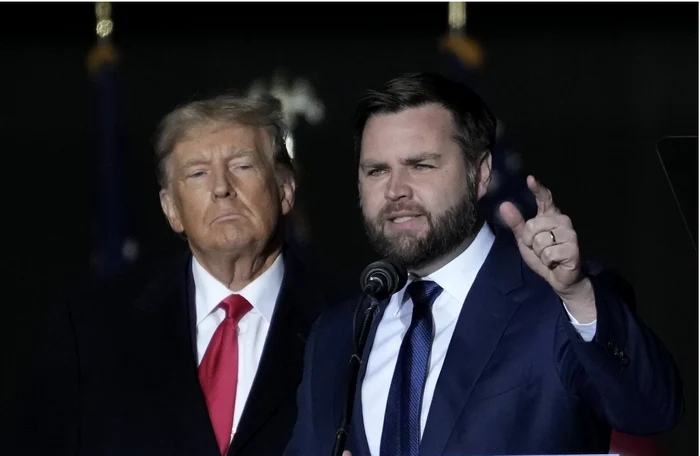
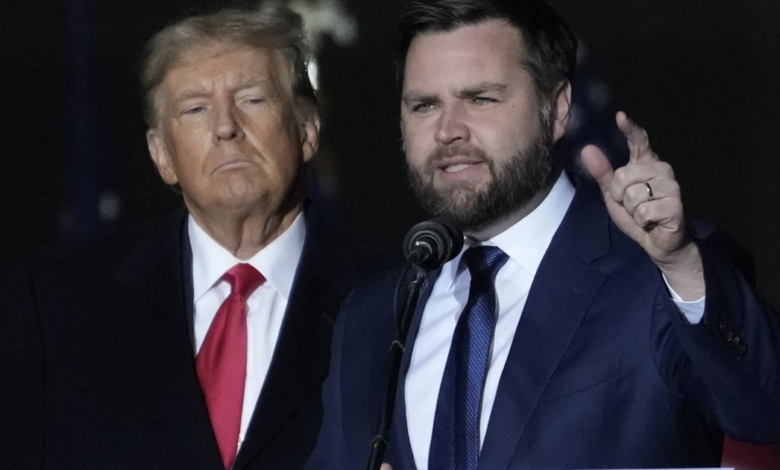
Donald Trump and JD Vance do not take kindly to the EU. PHOTO: X
General (r) Alexandru Grumaz, the first Romanian officer with studies at Harvard, military analyst well connected to the realities of Washington, analyzes, in an interview for “Adevărul”, the effects of the new American vision expressed through the new security strategy of the United States of America. The general also has some solutions for the Romanian authorities, through which certain risks arising from this could be avoided or at least reduced, and explains why the perception that Donald Trump is abandoning Europe in the arms of Vladimir Putin is deeply wrong.
The truth: The new US security strategy is causing waves and a lot of outrage in Europe. Is this a strategy by which the Americans practically put a cross on transatlantic relations?
Alexandru Grumaz: The new US security strategy takes an unusually critical tone towards Europe, arguing that the EU is failing to cope with global volatility, calling for a negotiated end to the war in Ukraine and handing Europeans primary responsibility for NATO's conventional defence, straining the transatlantic relationship. However, to interpret the strategy as an expression of direct hostility towards Europe would be an exaggeration. The document does not call into question the transatlantic partnership, but restates it on a different foundation: one in which the United States of America focuses primarily on its own domestic and regional challenges, and Europe is treated as an actor that must strengthen its own defense and response capabilities. Basically, what appears in the strategy is not a rupture, but a recalibration. America conveys that the era of unconditional guarantees is over, and Europe must assume greater responsibilities in the field of security.
Would it be too much to say that Europe is left at the mercy of Russia, practically abandoned?
Criticism is harsh, but it does not equate to abandonment. Rather, it marks the beginning of a relationship in which solidarity is no longer assumed, but must be maintained through real contributions and strategic maturation. This is the challenge of the moment: Europe must demonstrate that it can function as a security pillar in its own right, not just as a beneficiary of American protection. And Washington's strategy, as uncomfortable as it may be, sheds light on this very necessity.
Who decides America's strategy
There is a whole debate as to who the “fathers” of the new strategy would be, and many believe that Elbridge Colby would be the gray eminence. However, others claim that the strategy was not carried out by the Pentagon, but by National Security Council experts, and that Stephen Miller was able to impose his ideas on Colby. From the information you have, who are actually the “heavyweights” behind the new US strategy?
The controversy regarding Elbridge Colby's influence on the new National Security Strategy stems from the fact that the document combines two apparently different visions: a geopolitical one, focused on reducing American commitments in Europe, and a deeply ideological one, specific to the MAGA hard core. Divergent interpretations arise from here: some see in the text the imprint of Colby, the author of the “total pivot to China” concept, others say that the strategy does not belong to him, and the tone and real priorities indicate the dominance of the ideological advisers around Donald Trump.
Procedurally, it is true that the National Security Strategy is not the product of the Pentagon, but of the National Security Council—a body directly subordinate to the White House. This means that the president's advisers, not military strategists, have the decisive influence. In this small circle, the central figure is Stephen Miller, the architect of the immigration policies of the first term and the main voice of the ideological direction of MAGA. The tone of the NSS, heavily focused on homeland security, migration, and America's reorientation to its own hemisphere, indeed points to a victory for Miller's line.
On the other hand, the ideas of Elbridge Colby are not absent. The strategy includes key elements of his thinking — notably pushing for allies to take on a greater share of defense, reducing the US presence in Europe and repositioning global military capabilities to compete with China. These directions are too specific not to reflect, at least in part, his intellectual influence.
The most likely scenario, then, is one of synthesis: Colby influenced the document's geopolitical architecture, but not its internal tone or priorities. The final strategy is dominated by the ideological vision of the White House, not a technical think-tank approach. And the heavy emphasis on homeland security and the Western Hemisphere—elements not central to Colby's thinking—suggests that in the battle for strategic direction, Stephen Miller and the political circle around the president had the last word. In other words, Colby is not the architect of this strategy, but only one of its intellectual sources. Real control rests with the White House and its ideological advisers, who have given the document a far more politicized orientation than would have been the case in a traditional geostrategic strategy.
Where does the danger for Romania come from?
To what extent could Romania be endangered by this new strategy of our main partner?
Is the strategy a danger for Romania? Yes, to the extent that Romania is heavily dependent on American guarantees and does not yet have sufficient own capacity. No, in the sense of a direct rupture or abandonment of NATO.
And then where exactly does the real danger for Romania come from?
The real danger is not the American withdrawal, but the fact that Washington comes with new priorities, while Romania and Europe must adapt quickly. For Bucharest, the decisive answer is not panic, but accelerated modernization, the consolidation of European alliances and a fine diplomacy that maintains both American support and European cohesion. The new US security strategy does not attack Romania directly, but it radically changes the framework in which we based our defense. America is reducing the priority given to Europe and demanding that European states quickly take responsibility for their own security.
Does this mean that we can still talk about certain serious risks for Romania?
For Romania, this means risks: possible reduction of the American presence in the Black Sea, budget pressure for defense and uncertainties regarding the evolution of the war in Ukraine. At the same time, possible tensions between the US and the EU may narrow Bucharest's room for maneuver. However, the moment can also be an opportunity: Romania can gain influence if it accelerates defense investments and regional cooperation. The new strategy is not an immediate danger, but it forces rapid strategic maturation.
What solutions do we have?
What real solutions would Romania have and what solutions would the European Union have in the face of the shortcomings created by this new American strategy?
The new security strategy of the United States puts both Romania and the European Union in front of an uncomfortable reality: the period of automatic dependence on American guarantees is coming to an end. In this new context, solutions can no longer be postponed, and the answer must be formulated simultaneously at national and European level. For Romania, the priorities are clear. The country needs rapid investment in its own defense capabilities, including in the military industry, to reduce vulnerability to imports and to cope with a possible drawdown of the US presence in the Black Sea region. Maintaining and strengthening cooperation with the US remains essential — the Mihail Kogălniceanu base, surveillance systems and strategic infrastructure are assets that Bucharest must protect and capitalize on. In parallel, Romania must strengthen its alliances with Poland and the Baltic states, building an eastern security pillar capable of compensating for global uncertainties.
Europe as a whole faces the same challenge, but on a larger scale. The continent must develop its own coherent military capabilities that can support European defense without being entirely dependent on Washington. Joint arms production, integrated air defense and the use of frozen Russian assets to support Ukraine are concrete steps by which the EU can increase its resilience. At the same time, political unity becomes decisive: internal tensions or the fracturing of the European project would make the entire continent vulnerable to external pressures. In the end, both Romania and Europe have a rare window of opportunity. The new American strategy is not an abandonment, but a tough invitation to take on. If Bucharest and Brussels react with seriousness, investment and cohesion, this paradigm shift can turn a risk into a moment of strategic maturity. If not, current vulnerabilities will be exacerbated.
Who would be the Romanian partners of the Trump administration
It is known that you prefer to stay away from domestic politics, but I would like to ask you something that concerns many Romanians. Ever since Trump announced his candidacy for a new mandate, there have been voices that claimed that the AUR and the other sovereignist parties would be the only ones able to become dialogue partners and collaborate with the new administration in Washington. Now that it's almost a year into Trump's second term, what's the real situation?
The United States collaborates institutionally, not partisanly: with the Presidency, the Department of Defense, the Department of State, and any government that maintains commitment to NATO, support for Ukraine, and a consistent stance toward Russia and China. The interpretation that the US would be betting on a particular party does not reflect geopolitical reality, but rather a combination of speculation, propaganda and domestic attempts at political legitimation. Washington remains interested in the stability of Romania, not in the promotion of a particular party. In conclusion, there is no credible signal that Americans want to work exclusively with one party; on the contrary, the US is looking for partners who are predictable, pro-Western and committed to regional security—regardless of their political color.
Who is General Alexandru Grumaz?
General (r) Alexandru Grumaz is a graduate of the US Defense University with a master's degree in Defense Resource Strategy and the Senior Executives program in National and International Security, John F Kennedy School of Government, Harvard University.

General Alexandru Grumaz. PHOTO: Personal archive
Former consul general of Romania in Shanghai, the general held important positions in the Ministry of National Defense as head of the Directorate of Defense Resources Management, director of the Directorate of Integrated Defense Planning or Inspector for Armaments. Grumaz held the position of first assistant to the Director of STS, being a specialist in telecommunications.
He has expertise in strategic planning, international military and civilian relations, and experience in complex budget planning and management for an organization. He is a good connoisseur of political and military life in China and the United States of America where he spent part of his military and diplomatic career. He is currently the president of the Center for Analysis and Security Studies.