Lethal, Elite and Feared: How the Rubikon Units Became an Octopus Network Suffocating the Ukrainian Front

A development in the war is sending chills through frontline soldiers: Russia is erasing its initial advantage at an alarming rate. in the matter of Kiev's drones. From the first flimsy elite units, Russia scaled the lethal capability of drones in just a few months, culminating in the dreaded Rubikon, Kyiv Independent reports.
Russia has centralized what was originally a patchwork of volunteer groups, creating a state-backed system that trains pilots, ramps up production and specializes in hunting down Ukrainian drone operators and their support networks.
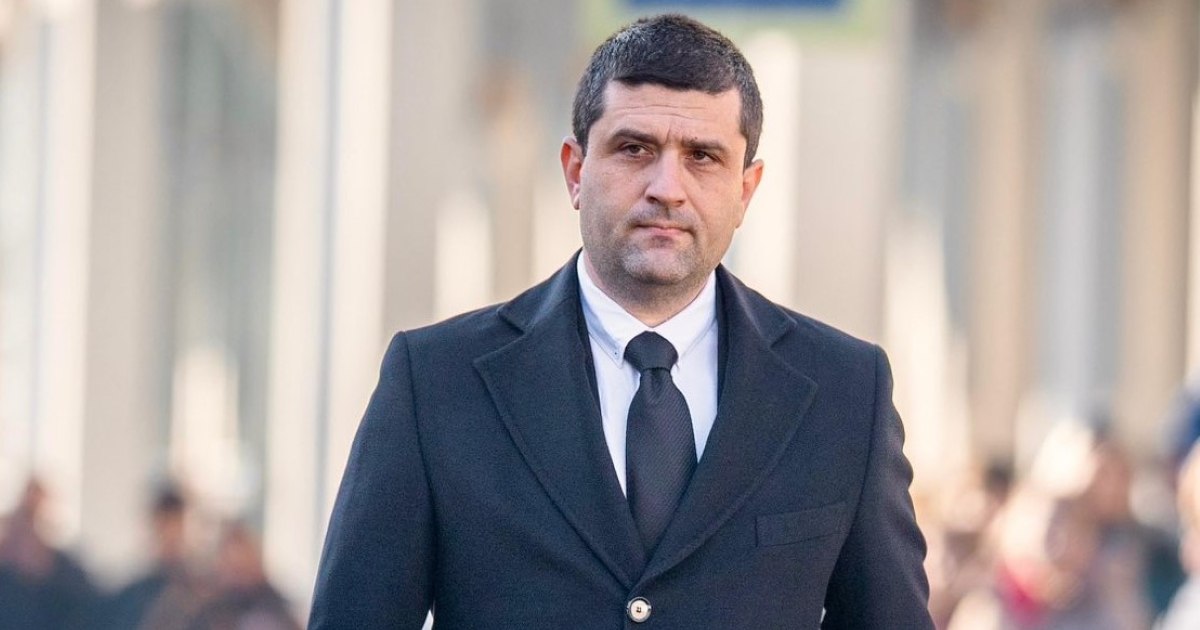
Komers, deputy commander of a drone unit of Ukraine's Safari Assault Regiment in the Donetsk region, reports that he vividly remembers the day last spring when two elite units appeared: “Day Judgment” and “Night Judgment.”
“At some point, maybe within two or three days, the tactics changed completely,” he says.
This development is rapidly eroding Ukraine's initial advantage in drone warfare and poses a growing threat to troops' ability to hold positions.
Komers' unit noticed this change almost instantly: the enemy's new drone unit was targeting with unprecedented skill.
“First of all, they hit our logistics and eyes from the sky. Unfortunately, these guys move from place to place. They can be in Pokrovsk, then in Kupiansk, then again in Pokrovsk, then in Toretsk and anywhere else,” he explains.
The problem is that Russia's new drone units are targeting all the means by which Ukraine supports its defense and attack – not just the logistics network, but also the Internet network at the base of FPV drone attacks – effectively striking at the ability to act on the front.
Currently, a constellation of new drone units is straddling the Russian lines. In parallel, behind the lines, new training and production facilities are emerging to supply them.
What were disparate units at first have been integrated by the Russian Ministry of Defense into its own network of increasingly centralized and professionalized drone units.
Until all this octopus became one entity – the dreaded Rubikon unit.
How Rubicon works
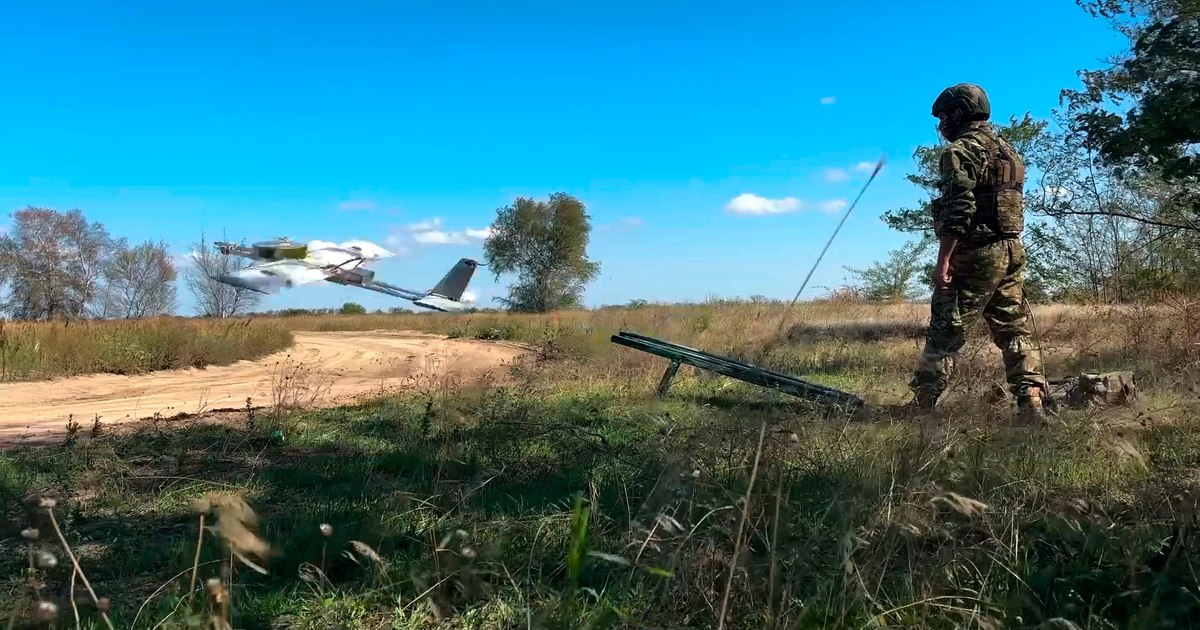
The unit specializes in hunting Ukrainian drone units – both the pilots and the drones themselves.
A favorite victim is the Baba Yaga drone – the heavy machines equipped with thermal cameras that until recently were the nightmare of Russian soldiers who were not properly equipped to defend themselves against their attack.
“Vulnerability to Baba Yaga has long been a sensitive point for the Russians. Especially at night, these drones dominated the skies,” Sam Bendett, a drone expert at the Center for Naval Analysis, told the Kyiv Independent.
The case of these unexpectedly outclassed drones is just one striking example in an overall massive explosion. If in January Rubikon published images with only 31 shots, the figure that grew rapidly in June, reaching 1,016. In November, it jumped to 2,246.
While these figures may be the result of information warfare, what is certain is that Rubikon has become not only a major threat to the Ukrainian military, but also the focus of Russia's drone strategy.
Perhaps more impressive than the downing of the flagship Ukrainian heavy drones is that the Rubikon strikes gained enough precision to hit the troops' communications infrastructure – from antennas to Starlink terminals on the ground.
How Russia managed to evolve so quickly in the field of drones
It all started with the “Archangel Project” – a volunteer unit that had a meteoric rise.
“The enemy has more quickly grasped the specifics and realities of the current war and has taken steps to expand its volume,” Project Archangel wrote in June 2024. Lamenting that Russia was generally on the defensive, the organization noted that despite decent production, equipment, training, and technical support in Russian units “limped.”
The founder, Mihail Fillipov, is originally from the east of Moscow. Ukrainian researchers dated the beginnings of the project to 2022.
Since then, the project has developed an anti-aircraft drone, organized mass training, including a combat camp in Berdiansk, and a veritable chain of schools for drone pilots in the occupied territories, from Crimea to Kherson.
Such groups are part of a phenomenon called the “People's VPK”, the Russian abbreviation for the military-industrial complex.
Rubikon emerged from an initiative by the Ministry of Defense to reproduce this type of volunteer organization in August 2024 – to become Moscow's flagship combat drone unit.
The Rubikon facility has received a lot of media coverage in recent weeks. But it is only the public face of a tendency of the Russian government to absorb such volunteer groups into its own structures.
“Most have ties to the Department of Defense,” Bendett said. “The military and the government are taking steps to coordinate and co-opt some of these efforts.”
Komers, for example, believes that these groups of drones are projects of the Russian Federal Security Bureau (FSB), although he says that this is only his personal opinion.
A great danger for Ukraine
Education and production projects like Archangel fuel the professional work of the Rubikon team, which has at least informally absorbed many other units – including Judgment Day. All of this is supported by Russia's easy access to Chinese supply chains, leading to increasingly well-piloted, coordinated, standardized and well-equipped Russian combat drones.
The professionalization of these units within the military is “very dangerous,” analyst Bendett says, with the culmination of these developments being the establishment of Russia's Unmanned Systems Forces earlier this month.
“The Russians are really expanding and this is the biggest threat,” Kate Bondar, a member of the Center for Strategy and International Relations and a former member of the Ministry of Finance of Ukraine, also appreciated for the Kyiv Independent. Bondar points out that non-RUSSIA drone buyers who want to buy from Chinese manufacturers are blocked by Russian orders that extend to May 2026.
“So imagine (Russia) will have more drones, more people, better software,” Bondar said. “I don't know if the Ukrainians realize it, because everyone only talks about the Rubicon.”
“The situation keeps getting worse. Unfortunately, the enemy keeps getting better. I mean, when someone says 'the enemy is an idiot,' he won't live long,” concluded Komers, the Ukrainian drone commander.