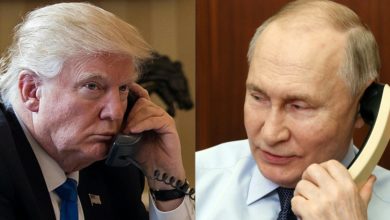
What happened recently should have surprised no one — except perhaps the Trump administration. Russian President Vladimir Putin rejected the latest “peace proposal” made to him in Moscow by Steve Witkoff and Jared Kushner.
In fact, he didn't just reject it – just hours after US envoys left the Kremlin, Putin launched a massive drone attack on Ukraine and canceled a planned meeting with President Volodymyr Zelensky.
It was a cold shower for Washington – proof that the Kremlin does not treat American envoys as talking partners, but as extras in its own game.
Trump dreamed of a profitable deal that would stop the war. Putin showed him that the only “deal” that interests him takes place on the battlefield.
Kremlin spokesman Dmitry Peskov is trying to convince the West that “it would not be appropriate to say that Putin rejected the US proposal.” Yet that's exactly what he did. The Russian 28-point plan by Kirill Dmitriev submitted to the Ukrainian side was supposed to be their “compromise” resulting from the alleged agreement reached during the Trump-Putin summit in Alaska in August.
These were not points for negotiation – they were conditions that Witkoff would simply hand over to Ukraine like a diktat.
The Kremlin's iron conditions
Among them, three were deemed absolutely not subject to concessions. As one Russian official said: “There are three pillars on which there is no question of compromise. The first is the territory of Donbas. The second is the limitation of Ukraine's armed forces. The third is the recognition of this territory by the US and Europe.”
On paper, both sides – Ukraine and Russia – speak with one voice, although their motivations are completely different.
For Russia, these are the foundations of future military operations, intended to significantly weaken the Ukrainian army and put Kiev at odds with its European allies.
For Ukraine, this is effectively a death sentence.
History repeats itself – just remember how the war between Russia and Chechnya ended. The loss of Donbas and the surrounding fortifications would open the way for Russia to inevitably invade the rest of the country once the Kremlin rebuilds its military. In particular, Kyiv and the key port of Odessa would be at risk.

A bombed street in the Ukrainian city of Myrnohrad on the front line in Pokrovsk, June 11, 2025.Maria Senovilla / PAP
Reducing the size of the army, making access to weapons and ammunition more difficult, and depriving Ukraine of NATO support would weaken it as much as possible. This is purely Russian military logic: make Kyiv surrender.
While Trump's team sees primarily an opportunity to do business – “let's make money, not fight.”
It is telling that the delegation lacked any military advisers. Neither the Chairman of the Joint Chiefs of Staff, Gen. Dan Caine, nor the Supreme Commander of NATO forces in Europe, Gen. Alexus G. Grynkewich, participated in the talks.
However, the outcome of the war in Ukraine has far more serious consequences for U.S. security than any potential economic gains.
The killing will end when Russia stops attacking, not when Ukraine is forced to stop defending.
The West with its hands tied
Despite reports that Trump is seriously considering recognizing the occupied territories of Ukraine and Crimea as Russian, he has no such authority. Paradoxically, he is limited by the law he signed – Public Law 115-44 of August 2, 2017. In the section on Ukraine's energy security we read, among other things, that:
- 1
The United States supports Ukraine in restoring its sovereignty and territorial integrity;
- 2
condemn and oppose all destabilizing actions of Russia;
- 3
they will never recognize the illegal annexation of Crimea or any change of Ukraine's borders by force;
- 4
they will deter Russia from further aggression.
Ukraine has learned the hard way that inviolable “security guarantees” are not worth the paper they are written on. Handshakes and ceremonial signatures rarely survive changes in governments and political priorities. The best example is the 1994 Budapest Memorandum without a formal treaty commitments to defend themselves turn out to be merely wishful thinking.
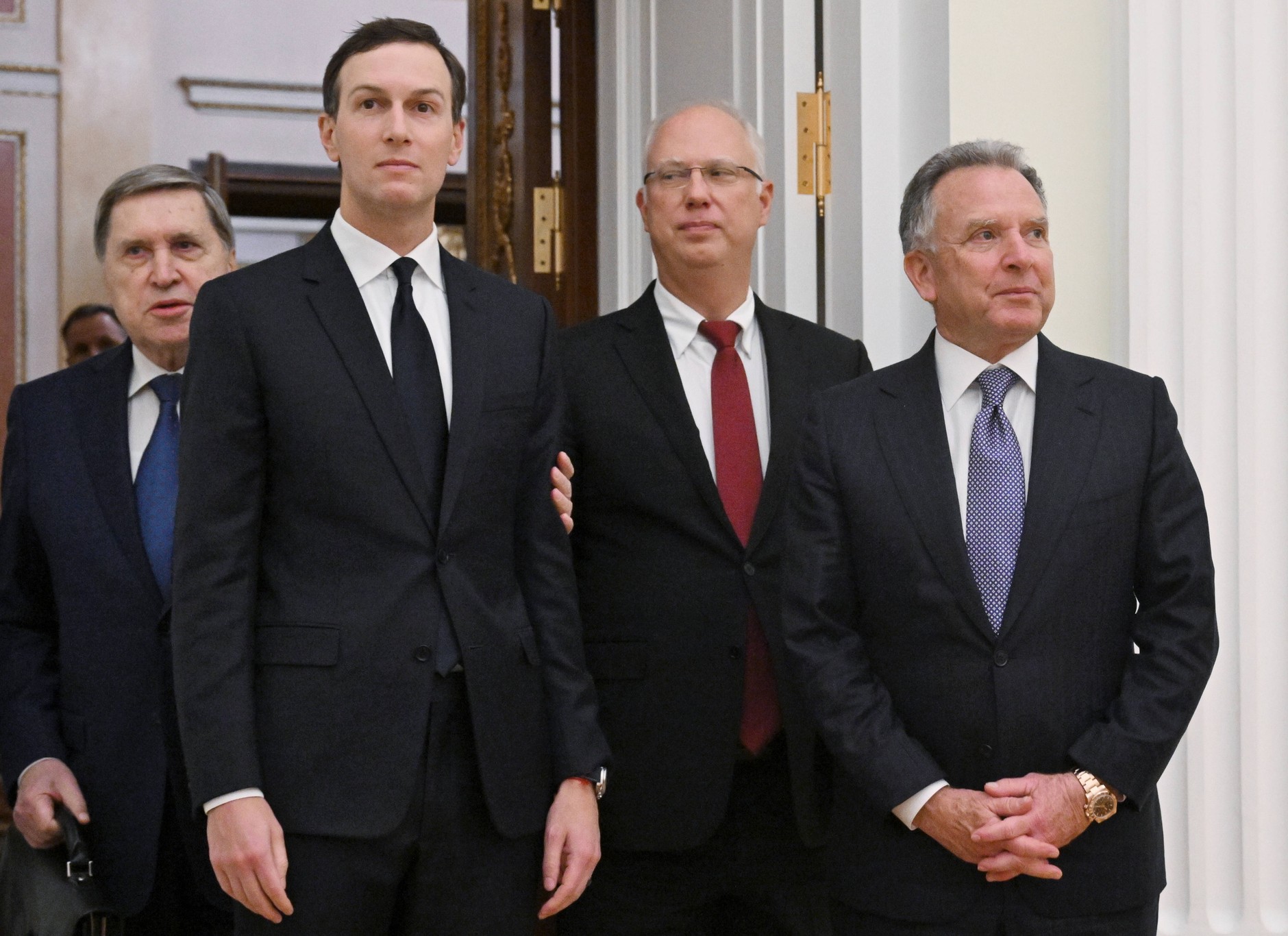
Advisor to the Russian president Yuri Ushakov, Trump's son-in-law Jared Kushner, special representative of the Russian president for investments Kirill Dmitriev and special envoy of the US president Steve Witkoff. Moscow, Russia, December 2, 2025KRISTINA KORMILITSINA / SPUTNIK / KREMLIN POOL / PAP
Meanwhile, Europe is preoccupied with its own problems with Russian aggression – hybrid warfare. In addition, countries such as Hungary and Slovakia are openly sabotaging joint actions to support Ukraine, driven by the desire to obtain cheap energy.
The vague “NATO-style security guarantees” that the US would offer to Ukraine in exchange for consent to the Russian peace plan also do not solve the issue. If these guarantees are to function like Article 5 – committing the entire Euro-Atlantic community to a joint response – then why not simply admit Ukraine to NATO?
In practice, the only security guarantee that would actually deter Russia would be the physical presence of NATO troops on Ukrainian territory. Even though Putin threatens that Moscow is “ready now” if Europe wants war, the Kremlin is unable to face NATO in Europe, much less in Ukraine itself.
NATO troops on the other side of the border will not deter Putin – he knows the slowness of procedures, the lack of political courage among many countries, and he calculates that he would have time to occupy Ukraine and impose peace conditions before the alliance would come to the rescue.
However, if NATO soldiers were stationed directly on Ukrainian territory, the situation would change dramatically – the reaction would be immediate.
Putin will never agree to this. And that should be enough proof for the Trump administration The Kremlin does not seek peace. Russia seeks to destroy Ukraine — and Putin openly says he is “in principle willing to fight to the last Ukrainian.”
Russia's path to invasion
The killing will end when Russia stops attacking – not when someone forces Ukraine to stop defending itself. Trump is right that Russia is losing 7,000. soldiers per week – a total of approximately 355,000. killed and injured during his term of office.
Now the key question is: what does the president intend to do to persuade Russia to stop its attacks? By giving the Kremlin extra time to “consider” the proposal or by dividing the entire plan into four parts, it will only achieve one thing – even more victimswhich he allegedly wants to avoid.
President Joe Biden's strategy was to weaken Russia — “to defeat it so decisively on the battlefield that it would never dare to engage in similar aggression again.”
Trump's “let's make money, not fight” strategy would effectively fill Russia's pockets with money, allowing it to rebuild its economy and military and become a threat to Europe's eastern borders for decades.
Washington must make difficult decisions this week. Will he decide to put pressure on Russia to stop the attacks? Will he listen to Europe? Will Generals Caine and Grynkewich finally be allowed to talk?
Or maybe Trump is willing to accept that Putin will win — at the expense of everyone else: Ukraine, the US and NATO allies.