Vegetable warehouses promised to Romanian producers, waiting for the money. Projects can start in the spring, but funding is lacking


Already promised for over two years, the vegetable collection-storage-distribution centers are back in public discussions. The director of Casa Unirea presented the vegetable growers with new data about the projects in which few farmers believe anymore.
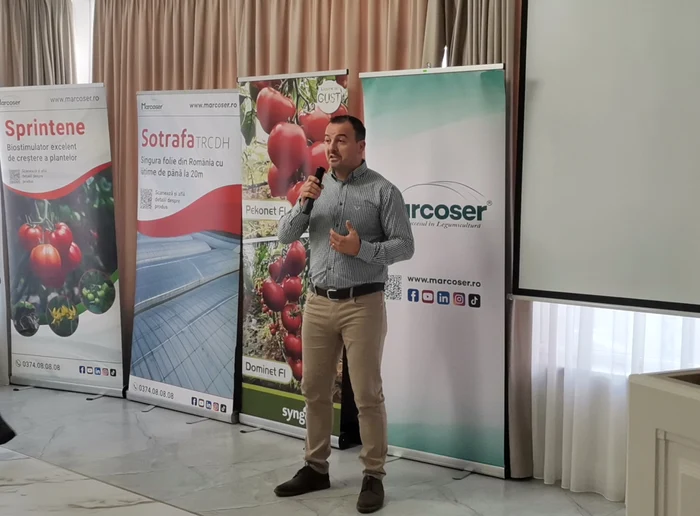
Victor Radu, the director of Casa Unirea, gave the vegetable growers new data about warehouses PHOTO: AM
There was talk again about the warehouses that the state, through Casa Unirea, promised to build in the large vegetable basins of the country and thus solve one of the big problems that producers have: sales.
The director of Casa Unirea, Victor Ionuț Radu, present in Slatina, at an event organized by the Olt Producers' Union attended by dozens of vegetable growers from several counties with a tradition of producing vegetables, stated that the project to build the first warehouses, now called collection-storage-distribution logistics centers, is very close to the construction phase.
The first five centers: in Olt, Dolj, Giurgiu, Braila and Mureș
“We are at an advanced stage with land acquisition and once the funding comes in, we can start building these logistics centers that have storage capabilities for periods of up to 60 days so that we can mitigate the shock of low prices. We can introduce significant quantities of tomatoes when they are 2.5-3 lei/kg and we can capitalize on them in the interests of producers when prices are higher. At the same time, we have quick freezing, baking, sorting-packing lines, everything is finalized, it covers an extensive area, we are talking about 1 hectare. These warehouses are energy independent, we also have distribution capabilities”, stated director Victor Radu.
In total, according to the new strategy, 15 such logistics centers will be built, but in a first stage it will start with five, located in the counties: Olt, Dolj, Giurgiu, Brăila and Mureș. The steps to establish the sites began more than two years ago, but not in all cases things were nailed down, in certain situations the legal status of the land or its structure did not allow, Radu stated.
“I know those slogans sound good in the market, but we still have a long way to go”
Compared to the originally stated plan, the way of working has also undergone changes. If there was a lot of talk about creating a network of own stores – and some were even established, generating losses -, now the strategy is to co-opt the big retail networks to take over products from Romanian manufacturers.
“I know that in the market those slogans that we should have our own networks, our own stores sound better. We still have a long way to go and I'm a fan of small but solid steps. And in this sense, I see collaboration with Romanian retailers as essential, because they know how to sell very well, and we, and with the help of our partners, know how to produce very well. And then it would be very good for us to focus on the production activity, and for the retailers to help us with everything that means capitalization”, Victor Radu told the farmers.
The vegetable growers will produce based on the negotiations with the large supermarket chains that will take over the production, and the strategy is to grow one – a maximum of two hybrids from each vegetable species, the vegetables will be prepared for sale in unique packaging and under the rigors of quality control and traceability, Radu stated. “It is enough that the Romanian producer has suffered over time, being addressed countless times with wrong labels, such as that he does not know how to produce, produces disorganized or does not produce quality. I contradict. I am also an active farmer, I still have vegetables in my solariums, I am convinced that you do the same. But I have a suggestion: organize yourself in cooperatives, because the big problem of the producer is the lack of organization and not the desire to work or the ability to effort. Organizing in cooperatives will be the way of working that will ease our responsibility, as a national company in the intermediation of agricultural products, towards the chain of large stores in the country”Radu also said. Concretely, the producers will enter into a contractual relationship through the cooperative, and the representatives of these cooperatives will be able to participate, together with the representatives of Casa Unirea, in negotiations with the big retailers.
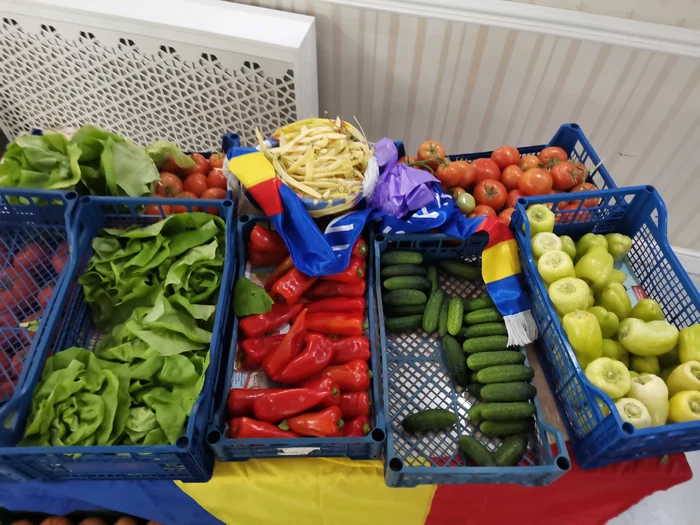
In the greenhouses of Romanian vegetable growers, vegetables are still being produced at the end of November PHOTO: AM
Casa Unirea would also provide consulting services and could also be involved in the negotiation of the value for the authorization of the wells, at this moment the authorization of these wells is also a major problem for vegetable growers.
“Casa Unirea, through the strategy we have outlined, will provide technical assistance, will also work with collaborators on inputs so as to ensure that we produce with the highest yield, because today, whether we like it or not, in the market we operate in a very dynamic competition, the fight is very fierce. And then we have to maximize the chances for profit, because I know that for many producers, like me, agriculture is a passion, but in the end it has to be seen as a business”, Radu also said.
Funding, the variable that could delay the project
The construction of the first five warehouses should start next spring at the latest. However, the most important element is missing at the moment: funding.
Each warehouse will cost between 5 and 7 million euros, depending on the equipment. While there is a unique design for the warehouses, they could eventually be adapted to meet the needs of area manufacturers.
“Where we consider it necessary, we can adapt them to the producers in the area. And if we are talking about Matca – Galați, where we know that mainly cucumbers are produced, surely it can undergo an adaptation of the sorting-packing line for the cucumber species. Almost all kinds of vegetables are grown in Olt. If we are discussing the Lungulețu – Dâmbovița area, where potatoes, onions, and carrots are mainly grown, then, I repeat, that line can undergo adaptations. But in general, the maximum storage capacity is the same, the technologies are the same, that is, we can keep the products in a fresh state for a long number of days”, stated the director of Casa Unirea, for “Adevărul”.