“Anyone who remembers the 1980s and 1990s knows that the economy has undergone a transformation. However, visible progress and rising wages hide a painful reality – part of society is left behind,” admits Joanna Sadzik, president of the Wiosna Association.
The extreme poverty line is approximately PLN 970 for a single-person household – representatives of the Wiosna Association explained in the program.
Poland is developing, but it has left people behind
The stereotype of poverty makes it difficult to see the problem. People living in extreme poverty do not always look like homeless people. “These are people we don't notice because there is still a living stereotype that a poor person looks a certain way, so if someone doesn't look like that, doesn't fit this image, even these people live in the same stairwell with us, and we don't realize that we have such a neighbor,” Sadzik emphasizes.
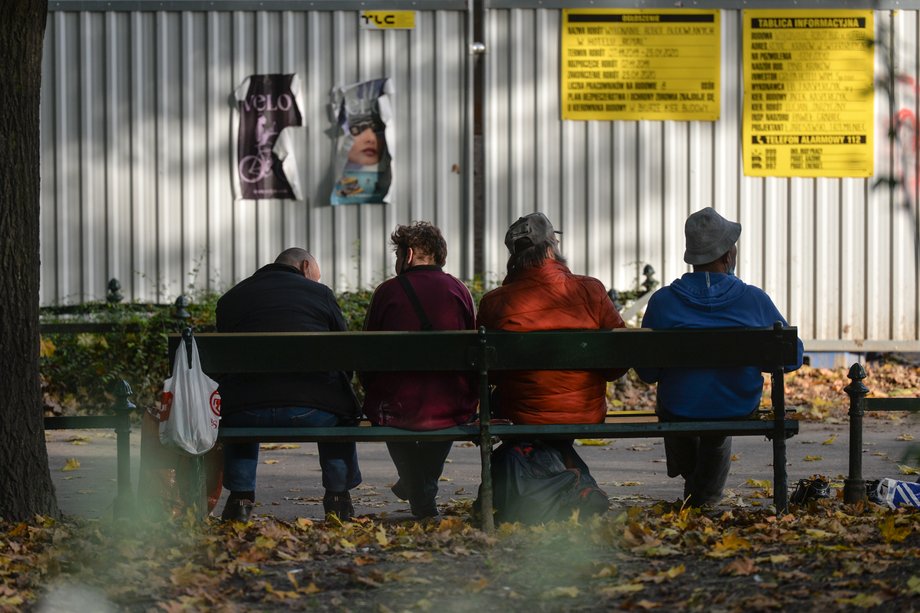
Poverty has many faces
|
NurPhoto/Getty Images
Poverty means dramatic choices every day
Living in extreme poverty every day is a series of exhausting choices. Magdalena Łukasik tells the stories of people affected by poverty. “These are stories about difficult choices, about whether to eat a warm meal today or buy medicines, about whether a child should have a jacket or appropriate clothing for the winter.”
The manager recalls a specific story that illustrates the drama of the situation: “It's a story about a boy who is a teenager and studies to become a hairdresser. And in order to buy equipment on which he will exercise, he sells his bicycle.” This is the only way for him to gain professional qualifications.
Mr. Adam and his eleven-year-old son. A family without a choice
Poverty in Poland has many faces, the interviewees admit. While each story is different, some are particularly telling. Joanna Sadzik emphasizes that the point is to give people living in poverty a voice.
Mr. Adam's story is an example of how one accident changes everything. “Mr. Adam had an accident. He uses a wheelchair, his two legs were amputated. The accident happened at work, but unfortunately it was at an illegal job. Because there was no other one in his area,” says Sadzik. So there was no insurance, no protection. Mr. Adam had to survive on his own. “He raises his son alone. This 11-year-old son actually became the head of the family. He had to grow up very quickly. He does small jobs for neighbors to earn extra money for his budget, which is very modest,” he says.
Mrs. Anna: the pension was enough until everything changed
Wiosna activists also told the story of Mrs. Anna. Her financial situation was not ideal, but stable. “Her pension may not have been high, but she says that PLN 2,500 was enough for everything. Until she became a foster family for her granddaughter Ania and until she had to take care of her lying son. Because he is paralyzed after two strokes, she basically has no contact with him. He was in hospital for some time, now he is at home,” says Joanna Sadzik.
This means that Mrs. Anna now has to support three people: herself, her granddaughter and her son – all from her pension, which was already modest. Half of her income now goes to take care of her son, the rest must be enough for three people.
Changing life for the better. Sometimes a little is enough
Activists of the Wiosna Association point out that sometimes a little help can fundamentally change the situation of people in poverty. The problem is often a broken washing machine or refrigerator, a hole in the roof or lack of fuel for the winter. “When asked what her dream was, Amelka, an eight-year-old girl, said that she dreamed that this winter would not be as cold as last year.. Her family can't afford firewood. And yes, these are very basic, very basic things. We believe that social solidarity can alleviate poverty, at least a little,” our interlocutors point out.
The entire program:
Szlachetna Paczka helps you get up
They also give examples where they managed to help. “We have a history of great successes. For example, we reached Mrs. Wanda, who told her story. She apparently needed food and cleaning products, but when the volunteers delved deeper into her story, it turned out that she had left her abusive husband, who was an alcoholic. He sold everything in the house, and she was left with a disabled daughter and couldn't afford to go to work and earn benefits,” said Joanna Sadzik. As she indicated, volunteers were looking not only for immediate help, but also for opportunities to permanently improve her situation.
“When asked what she had been doing before the birth of her daughter, it turned out that she was a seamstress and all she needed to do was deliver a professional sewing machine and her first order. The donors took care of that, and the next year she no longer needed the package. The package often includes things like a forklift course or a driving license course. These are the things that stay with these people permanently and allow them to get a new job. These are bikes that can be used to commute from a town that is not connected to a neighboring town where you could work.” – said the president of the Wiosna Association.
Onet Morning. Financially
“Onet Morning”. Financially is a weekly program in which Business Insider journalists talk to invited experts from the world of business and politics about current events and issues related to the Polish economy, public finances and the impact of politics on the wallets of every Pole.
The program can be watched every Wednesday at 10 on the main page of the Onet portal, and from 11 as a podcast on Onet Audio.