A news has gone around the world in recent days: there is a plan to end the war in Ukraine. The news itself is very positive, since in recent years Russian, American, European, Russian or Ukrainian diplomacy has not been able to reach any mutually agreed version of a peace plan. It had even reached the absurd situation where Ukraine was writing peace projects with European partners that only the involved parties agreed to, without being discussed with the Russian Federation.
Image from Ukraine PHOTO Profimedia
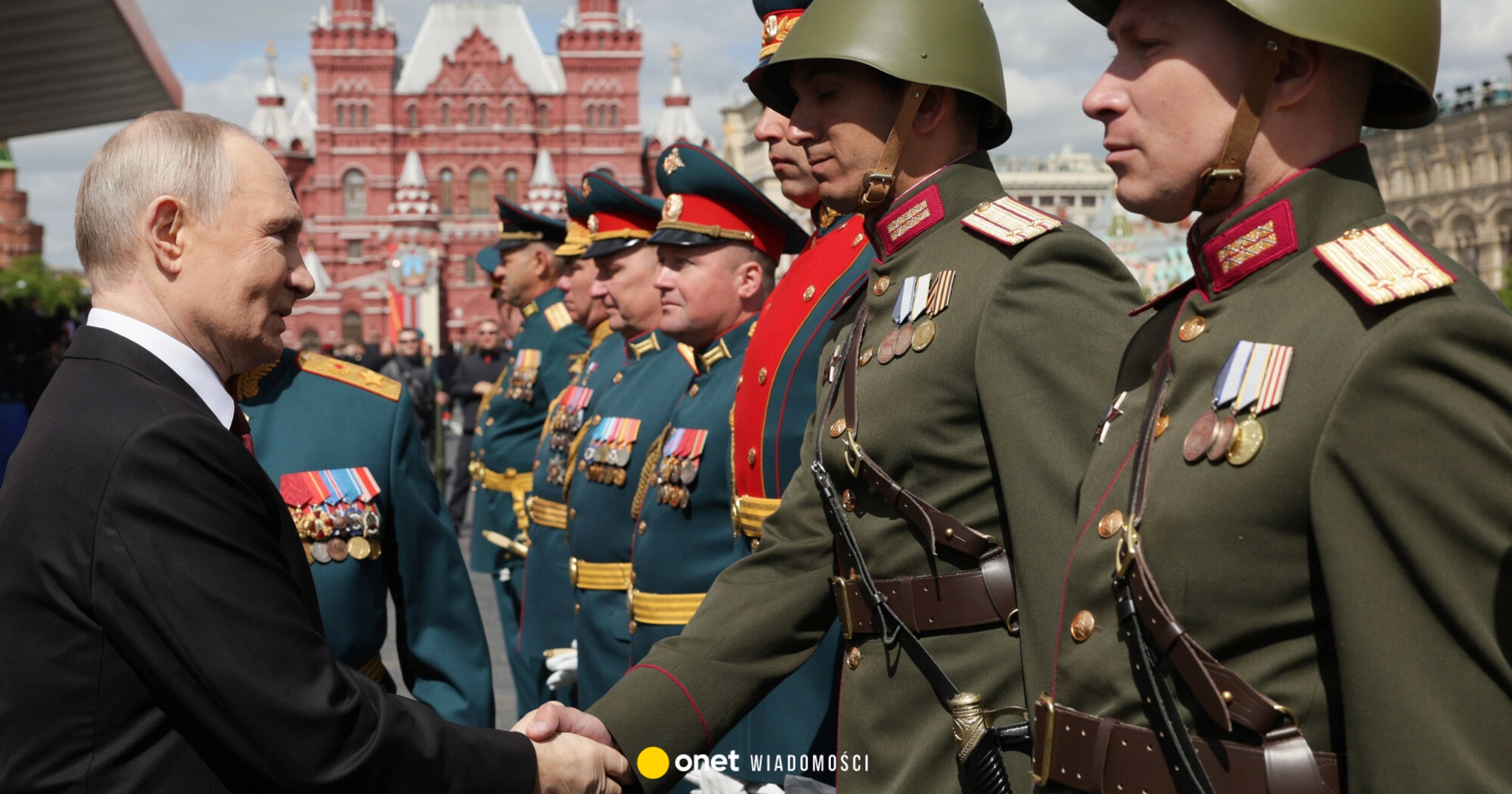
This happened because the Russian Federation established maximum objectives of the war in Ukraine from the very beginning: the capture of the entire territory of Ukraine, demilitarization, in the sense of reducing the armed forces of a future post-war Ukraine to a minimum, and obviously the absence of any NATO force on the territory of Ukraine, as well as denazification, in the sense of replacing the democratic regime in Kyiv with a puppet regime, totally controlled by Moscow.
The existence of maximum claims inhibited any attempt to resort to diplomatic negotiations. For its part, Ukraine has fought and is fighting for every centimeter of its territory, which makes engaging in peace talks extremely difficult as long as the situation on the front is undecided.
Peace negotiations cannot under any circumstances begin without a truce, an agreement to cease fire, even if it is partial, having been concluded beforehand. Since the Trump Administration started with the definition of an ambitious goal, the conclusion of a peace in the war in Ukraine, diplomatic negotiations have been restarted but very timidly, given that the Russian Federation wants nothing more than the achievement of the initial maximum objective. If we look back at the talks that began in February, we note that progress was made only in the direction of the exchange of prisoners and the bodies of dead soldiers held by both sides.
Suddenly, when no one expected it, a plan appeared, which we will call the Dimitriev Plan. Donald Trump does not approve of the institutional approach, he does not trust diplomats, nor officials in general, so he assigned Steve Witkoff as a “special envoy”. Its powers are not regulated, nor is the mandate from the White House clear. The problem is that Witkoff comes from the world of businessmen, he doesn't really understand the Russian-Ukrainian war, just as he didn't issue value judgments about the Gaza war to prove that he actually knows the subject.
For this reason, Witkoff was constantly “packaged” by the Russian side with all kinds of false arguments. The only one in the current Trump Administration who knows, somewhat intuitively, the subject of Ukraine is Secretary of State Marco Rubio. Donald Trump prefers to let the two face off so that no one but himself can claim to have a decisive say in matters of foreign policy.
This latent conflict led to disaster. Steve Witkoff met with Kirill Dimitriev at the former's residence in Miami. If Dimitriev undoubtedly had a very clear mandate from Vladimir Putin, the same cannot be said for Steve Witkoff. He did not inform Marco Rubio at all about the discussions with Dimitriev, much less about the content of the agreed agreement. It seems unlikely, but Rubio learned about the peace plan along with the entire public opinion.
The Dimitriev – Witkoff talks most likely went like this: Dimitriev stated what the Russian Federation wanted, Witkoff translated into English and put everything on paper. After this dictation exercise was over, the Russian side handed over the plan – in English! – Axios publication. It seemed in this way that the American side also agreed. To cover up, Axios contacted a Ukrainian MP, Oleksiy Goncearenko, and he published it on X – to make it look like it was just a
Leake from the American side to the Ukrainian side. In reality, the publication of the plan is 100% the initiative of the Russian Federation.
At this moment, Witkoff makes an amazing gesture: instead of publicly stating that this is the peace plan submitted by the Russian side but still not agreed to by Donald Trump, much less by Ukraine, he does the exact opposite: he lets it be understood that there was an agreement with Dimitriev on this option. Witkoff presented himself not as a scribe or translator – which he was – but as an author.
Why did the Russian Federation make this gesture? Wasn't it wiser to wait for Witkoff to present the plan to Trump and Trump to agree, then have Russian propaganda present it as a special achievement?
That would have been the rational thing to do, but the logic of the hybrid war is completely different. The Russian Federation made this gesture because international public opinion to get used to its maximum claims to Ukraine, not in Russian, but in English. Which is what happened. Everyone is talking about a so-called Witkoff – Dimitriev Plan. Including Witkoff himself. In fact, it is about the Dimitriev Plan.
What the Kremlin did not take into account was that there are also people who know exactly these methods of manipulation, such as Luke Harding or Christo Grozev, who immediately understood that the plan is a variant translated from Russian into English and in fact is published by the Russian side incompletely.
Marco Rubio was suddenly completely put on the wrong foot and initially stated the truth: he did not know about this plan, he does not represent the official position of the Trump Administration.
From this moment, a race against time begins in Washington. The publication of the plan by the Russian side had not been taken into account. The whole operation took him by complete surprise. The Trump administration was no longer in control of the situation at all. American senators and European NATO partners reacted. The Trump administration was forced to convene consultations in Geneva with European partners and Zelenski for today.
The entire episode has so far demonstrated that the US negotiating team is made up of amateurs. The Russian Federation correctly sensed that no one could invoke his guilt in his defense and that Witkoff would lie to save his position. The one who saved the day was Polish Prime Minister Donald Tusk who stated that it is essential to first see what the origin of the plan is and then to discuss it. The Russian side realized that its total manipulation action does not seem to have been 100% successful, so it spread a false information: Putin would not agree to this plan, it would be a starting point, etc. Manipulative perversity taken to the extreme: the plan was first agreed upon by all decision-makers in Moscow, presented by Dimitriev to Witkoff, and Witkoff only provided the translation services, but then Moscow publicly renounced its own plan! Obviously, only formally, so that no one will understand anything from this Russian charade. Witkoff was a medium, Rubio and Trump swallowed hard and had no other option than to say that it was the “US plan”.
The problem with this plan is ultimately not who drafted it and how it became public. The fundamental problem with this plan is: why, although drafted in Moscow, is it essentially agreed upon in Washington? We risk not seeing the forest for the trees. Witkoff is an amateur but an admitted amateur at the top.
This plan, though the brainchild of the Russian Federation, broadly corresponds to the Trump Administration's older position: Ukraine is in a bad position on the battlefield, will be in an even worse position, so making peace now may be much better than later.
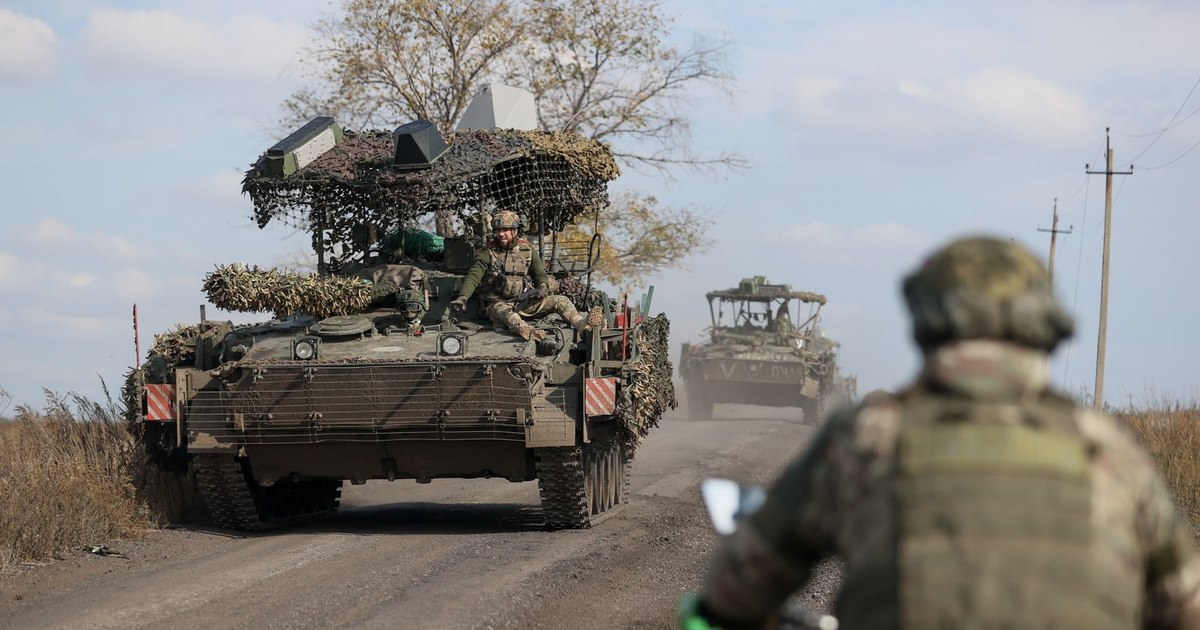
Does this position correspond to the actual situation? Unfortunately, there are more reasons to say yes than to say it isn't. The Russian Federation is gaining ground in several positions, constantly advancing, despite the heroic resistance of the Ukrainians. This happens, as I stated before, to the breaking of a strategic balance on the battlefield: fiberglass drones mark a technological advance of the Russian Federation over Ukraine. Actually, not of the Russian Federation, but rather of China which provides the technology and essentials to the Russian Federation.
Wasn't this known for the last few months? It was known but European leaders were reluctant to sanction China.
This was the last strategic mistake of the European leaders in the Russian-Ukrainian war. The first strategic mistake was at the beginning of the war, by refusing to close Ukraine's airspace. The second strategic mistake was to discuss sending peacekeeping troops to Ukraine and not act decisively on it. The third strategic mistake was not to have noticed in time the dimensions of the China-Iran-North Korea-Russian Federation supply chain and not to have acted accordingly. The fourth big strategic mistake was not to draft a peace plan and initiate talks directly with Sergey Lavrov. Finally, Europe's fifth strategic mistake was underestimating the Russian war economy and ignoring military gaps. To reach the level of arms production in the Russian Federation, the EU currently needs 5 – 10 years. The big problem is that any increase in the budget allocated to armament means an increase in the cost of energy in Europe today. Each additional percent for defense means a 0.5% increase in the price of energy. Europe can hardly take this step now, as citizens have been asked to bear increasingly burdensome energy prices for more than three years. The US does not have this problem, nor does the Russian Federation.
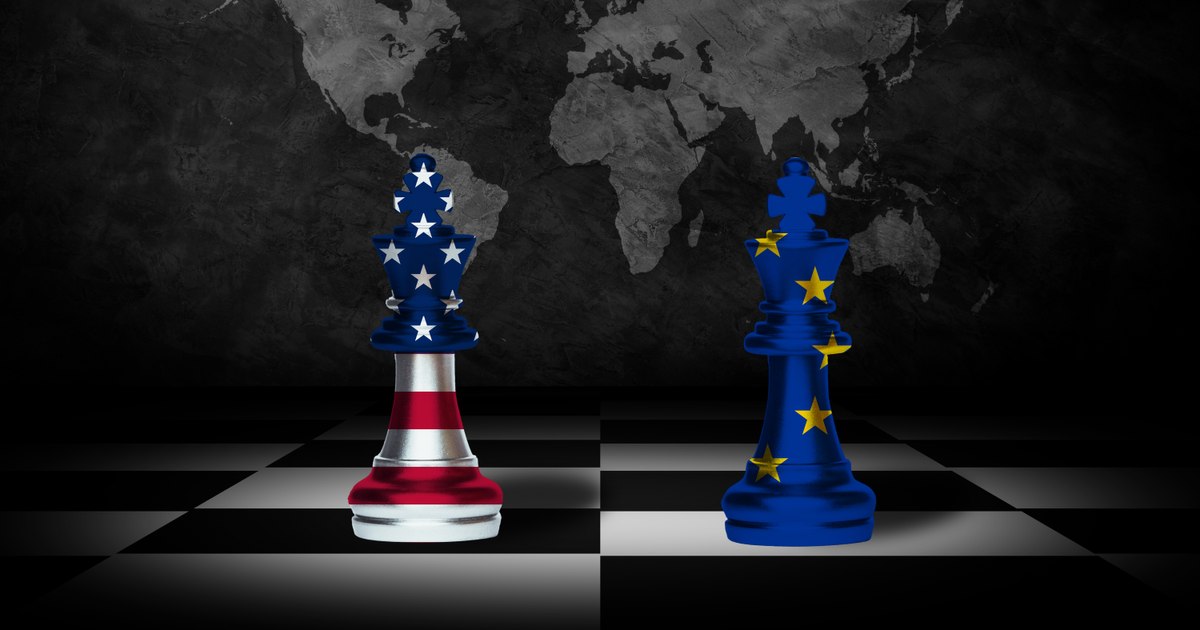
If you don't have the means of military coercion, can you resolve a war? Can you enunciate diplomatic solutions without the backing of robust armies and cheap energy? Precisely for this reason, European leaders have not gone all the way to propose a coherent plan for ending the war in Ukraine. The US and the Russian Federation have these advantages and that is why Dimitriev engaged in negotiations with Dimitriev and not Kaja Kallas.
How will the EU and the US get out of the trap skillfully maintained by the Russian Federation? Hard to say at this point. But one thing is certain: we are fast approaching an unjust peace that favors the aggressor, we will have to get used to the idea that the Russian Federation has won the war – even by the simple fact that there is no alternative to the Dimitriev Plan. We will have to learn from the mistakes of the past but also of the present, which will soon become the past, and prepare for the next confrontation: the one with the Russian Federation. It is very good that the Dimitriev Plan is criticized, maybe it will be adjusted in favor of Ukraine, but the lessons of the failure of not having supported Ukraine at the right time when it needed it will have to be very well understood in order not to be repeated.