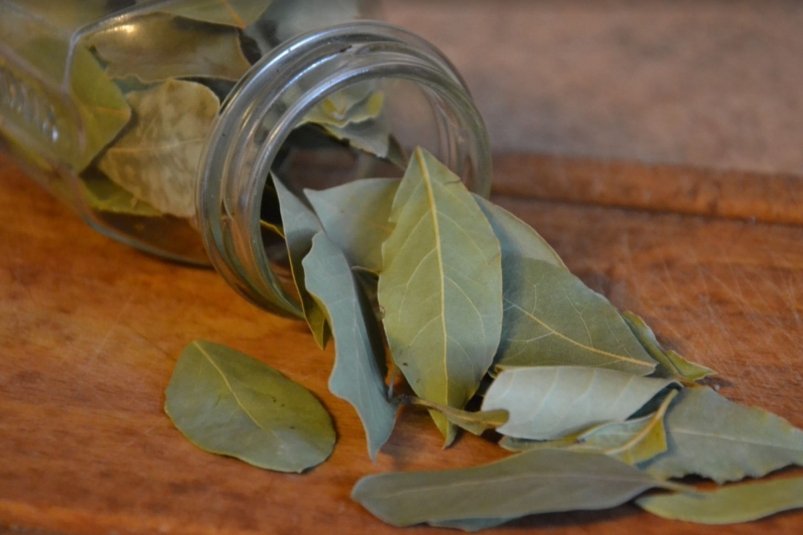
Today, bay leaf is one of the most recognizable and widespread spices in the world. We habitually throw a couple of leaves into soup, marinade or stew, without even thinking that the laurel was once a sacred tree, and its branches were carried only by winners and rulers. Historians have told how the leaf evolved from a reward into a popular seasoning.
Symbol of victory and strength

Bay leaves are the leaves of the evergreen tree or shrub Laurus nobilis. The plant is so ancient that it is impossible to determine the exact moment of its appearance in everyday life.
The first records are found already in the chronicles of the 21st century BC, and the most detailed descriptions are in ancient scrolls.
The laurel was treated with respect and even revered. There were myths about him, for example, the most famous one tells about Apollo and the nymph Daphne. To hide from the god pursuing her, Daphne asked to turn herself into a laurel tree. Apollo, saddened by the loss, wove a wreath from laurel branches. Thus began his symbolic history.
Olympic medal
The following references are related to the Olympic Games. Inspired by the act of Apollo, the Greeks began to reward the winners with wreaths of laurel branches.
The Romans quickly adopted the tradition. For them, the laurel became a symbol of victory, strength and peace. The expressions “rest on your laurels” and “laureate” come from those times.
Interestingly, in Rome bay leaves were called “daphnia” in memory of the legend. The laurel came to Russia only in the 17th century under this name.
From wreath to antiseptic
The Greeks and Romans used laurel not only as a reward. Branches were placed in houses, because back then it was believed that they brought good luck and prosperity. Later they discovered that bay leaves purify the air and repel insects.
Dry leaves were placed in pillows and under mattresses to protect against parasites, while fresh leaves were infused in water and sprayed indoors. So the laurel became not only a symbol, but also a natural antiseptic.
Hippocrates carefully studied the properties of laurel. He examined the leaves, roots, and fruits and proved that the leaves have an analgesic effect, bay oil helps with cramps, and infusions accelerate wound healing and prevent infection.
Other healers continued their research. They found that laurel improves digestion, relieves symptoms of nervous system diseases and helps with coughs. It was then that laurel leaves began to be added to food.
For a long time, bay leaves were supplied to Europe as a medicinal raw material. But by the 17th century it began to be actively used in cooking.
He gained particular popularity in France. Queen Marie de' Medici not only used laurel, but also included it in the recipes of her own cookbook. The leaves were used to flavor not only meat dishes, but also desserts.
Noble laurel in Rus'
Laurel appeared on Russian territory more than 20 centuries ago and has taken root well on the Black Sea coast. Later, it began to be grown en masse and distributed throughout the country as a spice.
Today, bay leaves are added to broths, stews, marinades, sauces, and drinks. It has become an integral part of Russian cuisine.
Properties of bay leaf
- Bay leaf is rich in essential oils, antioxidants, vitamins and phytoncides.
- It is able to improve digestion, reduce gas formation, gently stimulate metabolism and prevent the growth of bacteria.
- Laurel infusions are used to relieve inflammation, treat skin, improve joint health and normalize sugar and cholesterol levels.
- However, you need to use laurel wisely. In large quantities, it can irritate the gastric mucosa, and concentrated decoctions are contraindicated for pregnant women and people with liver and kidney diseases. Allergic reactions are also possible.
- In cooking, the leaf should be added at the end of cooking and be sure to remove before serving – otherwise it can add bitterness to the dish.
Modern doctors confirm many of Hippocrates' observations: laurel is indeed useful for various conditions and has a wide range of properties.
And it is surprising that the plant, symbolizing victory and the great achievements of antiquity, has become a common culinary seasoning available to everyone.
Important: This information is not a substitute for consulting a doctor. The body's response to changes in diet/training may depend on individual physiology, genetic predisposition and health status. It is recommended to consult a specialist.