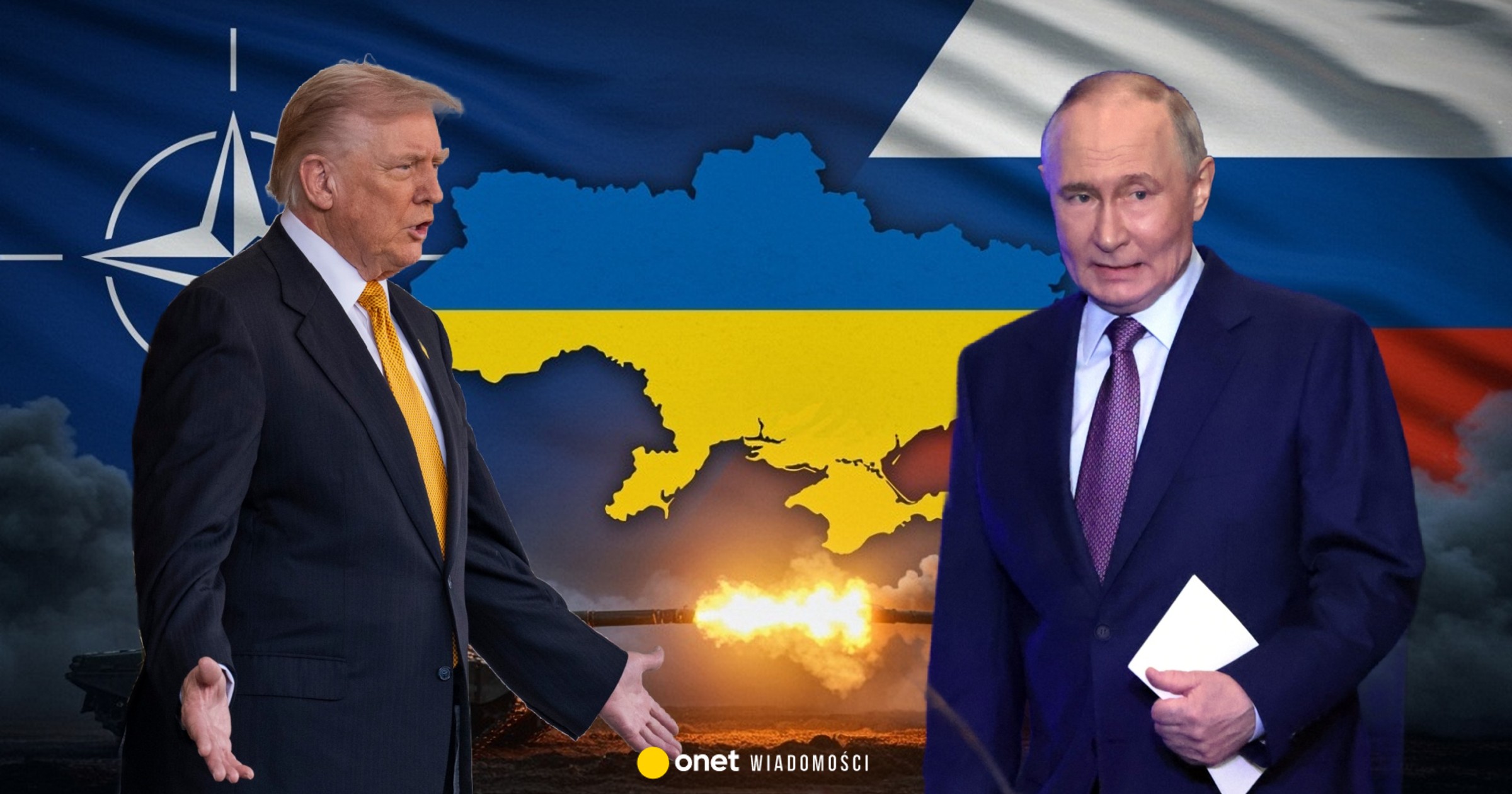
The talks in Brussels are hanging in the balance. The matter is extremely delicate and evokes extreme emotions, say anonymous diplomats interviewed by the website's journalists. A new 28-point plan to end Russia's war in Ukraine has fallen like a bolt from the blue for European officials who are working on a document that would allow them to use the frozen funds for a loan to the Ukrainian government.
The American proposal includes a competing idea of using the same assets for US-led efforts to rebuild Ukraine after the ceasefire. According to the document, the United States would receive “50 percent.” profits from this activity.
There is fury in the corridors in Brussels mixed with disappointment and fears that the plan pushed by the US leader and his people will thwart Europe's months-long efforts to push Putin to the wall.
European leaders of 27 countries hoped to finalize an agreement on the so-called “reparations loan” during key summit next month. A former French official says anonymously that Witkoff's idea “is obviously scandalous.”
Europeans are trying to find a real solution that would allow the assets to be used to the benefit of Ukrainians, and Trump wants to make money from them. This proposal will probably be rejected by everyone
– POLITICO's interlocutor is outraged.
“Go to a psychiatrist”
One senior EU official in Brussels ridicules the Americans' idea and emphasizes that no matter what Trump wants, he has no authority to unfreeze assets stored in Europe. — [Steve] Witkoff should go to a psychiatrist, he thunders.
The article continues below the video
The issue of using Russia's frozen assets is one of the biggest challenges for Ukraine's allies. There are many concerns about the potential legal, political, economic and security consequences. The most difficult issue is that these assets are mostly held in the Belgian institution Euroclear, co exposes Belgians to a disproportionate risk of retaliation from Russia.
The EU's idea is to use these assets to provide a loan to Ukraine that would only have to be repaid if Russia agreed to pay war reparations to Kiev after signing the peace agreement.
Belgium, however, is hesitant to approve the plan because it fears it will be held financially responsible if Russia tries to recover the funds. This is why Belgians disagree with other EU members who are pushing for faster action to support Ukraine.
This sounds like “classic Trump”
Diplomats and EU officials fear that Trump's new proposal will make it even more difficult to convince Belgium to join the plan. One EU government official says the US plan is an argument against continuing discussions on a reparations loan. The EU will be under pressure from Trump to unfreeze assets as part of the post-war agreement, leaving European taxpayers responsible for repaying Russia.
The diplomat adds that America's idea to profit from assets held in Europe sounds like 'classic Trump'.
The details of the US plan are far from clear. However, the full 28-point text clearly shows that the White House has plans for frozen funds, of which $100 billion. [368 mld zł, po obecnym kursie] is to be “invested in U.S.-led Ukraine reconstruction and investment efforts.” The document states that “the United States will receive 50 percent of the profits from this activity. Europe will add another $100 billion [368 mld zł]to increase the total amount of investment available for Ukraine's reconstruction. Frozen Russian funds held in Europe will be unblocked.
The remainder of the frozen Russian assets will be invested in “a separate U.S.-Russia investment facility that will be used for joint U.S.-Russian investment projects in sectors that enhance global stability and mutual economic interests.”
The 28-point plan sparked widespread concern in European capitals this week that Trump was preparing to force Ukraine to accept an unequal peace deal that would benefit Vladimir Putin.
President of Ukraine Volodymyr Zelensky warns that Trump's new plan puts his country facing one of the most difficult moments in history: a potential choice between the loss of “dignity” and the loss of a “key partner”.
On Friday, Zelensky held telephone calls with the leaders of Germany, France and Britain to coordinate next steps.
According to a statement released after the conversation, the Europeans assured Zelensky that they remain committed to a “just” peace. “They agreed that any agreement affecting European countries, the European Union or NATO requires the consent of European partners or consensus among allies,” the statement read.
I’m Ashley Davis as an editor, I’m committed to upholding the highest standards of integrity and accuracy in every piece we publish. My work is driven by curiosity, a passion for truth, and a belief that journalism plays a crucial role in shaping public discourse. I strive to tell stories that not only inform but also inspire action and conversation.