INTERVIEW. “Donors in Russia are afraid to support us.” Why the organization in Russia that helped more than 10,000 victims of domestic violence closed down


Known organization “No to violence” from Russia, which helps victims of domestic violence, has announced that it is ending its mission after being declared a “foreign agent” by Moscow authorities. “The activity has become impossible, due to financial restrictions – payment platforms refuse to cooperate with us – but also the fear of donors in Russia to support us”, says the founder of the organization, Anna Rivina, in an interview for the HotNews audience.
- Between 2022 and 2023, more than 2,200 women in Russia are estimated to have died as a result of domestic violence.
- The founder of the organization “No violence” says that it is more complicated to adopt a law against domestic violence in wartime in Russia, because there is an expectation that soldiers returning from the front will benefit from certain “facilities” from this point of view.
The center “Nasiliu.net” in Russia (translation from Russian – “Violencei.nu”) has helped more than 10 thousand victims of domestic violence, the vast majority of them women, since its establishment in 2015. The NGO recently announced that it is ceasing its activity:
,”This November, “Violence.nu” could have celebrated 10 years. We really wanted to celebrate this anniversary with you, to remember how much we managed to do and to feel the force to move forward: to talk, to help, to be with you. But, unfortunately, we no longer have this possibility. “Violence.nu” is closing.
In 2020, the Ministry of Justice designated the “Violence.nu” center as a “foreign agent”, and in 2023 it also included Anna Rivina, the organization's founder, in the registry: “First we were forbidden to organize events. Then – to carry out educational activities. More and more people were afraid to approach us, more and more services refused to offer help, blocking victims' access to support. The circle around our future was tightening, until when there was no space left for the activity. In September we were permanently deprived of donations from Russia”, reads the message of the organization posted on its website.
To find out why a country where domestic violence is very widespread closes such a center, HotNews conducted an interview with the founder of “Violencei.nu”, Anaa Rivina, through the organization's Communication Department.
“Donors in Russia are afraid to support us”
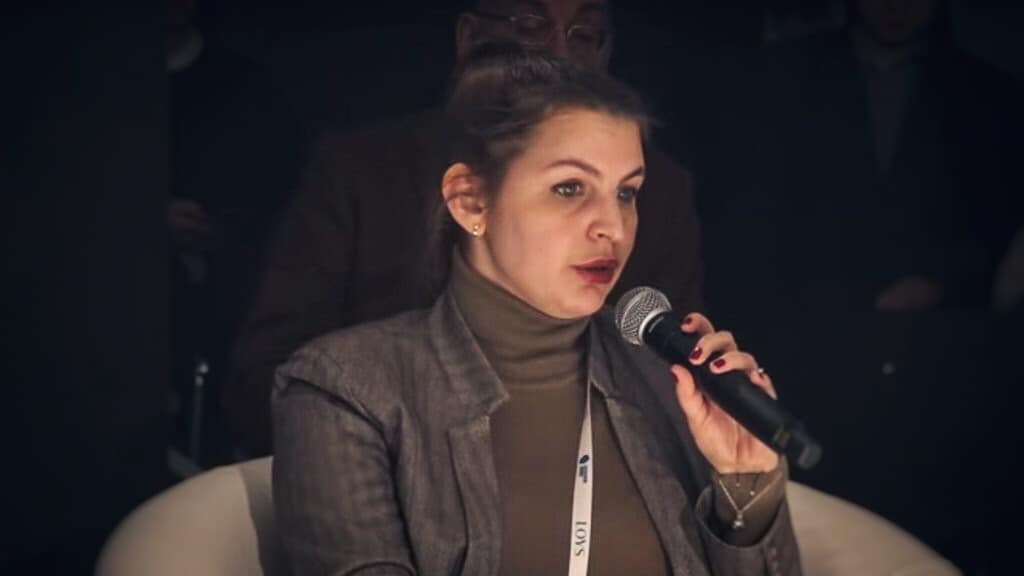
– First of all, tell us how the authorities explained the fact that your organization was designated a “foreign agent”? Were you able to appeal this decision?
– The official version was the alleged receipt of foreign grants. In reality, however, the Center did not receive any grant. Unofficially, the real reason was the active involvement of the Center and its founder, Anna Rivina, in the case of the Khaciaturian sisters (no – this is a famous case in Moscow in 2018, when three girls, who were beaten, tortured and sexually abused by their father, killed him with a knife, a hammer and a tear gas spray), as well as participation in the debates on the draft law on the prevention of domestic violence in Russia.
– Why, in your opinion, do the Russian authorities not want the organization to continue its activity?
– We are not the only organization declared a “foreign agent” in Russia. The decision to close is ours, but it was caused by the conditions currently created for “foreign agents”.
The activity has become more and more difficult, if not impossible, due to financial restrictions – payment platforms refuse to cooperate with us, but also the fear of Russian donors to support us.
For 10 years, the project Насилию.нет (“No to violence”) defended the rights of women and victims of domestic violence. We have constantly spoken about the need for a domestic violence prevention law. Probably, today such a position is considered unpopular, and the state interprets it as a political activity, although our organization has never positioned itself as a political one.
– What should a law against domestic violence look like, in your opinion, and why do you think the authorities oppose the adoption of such a normative act?
– If the drafting and adoption of a law on domestic violence begins, it would mean, in fact, officially recognizing, at the state level, that the problem of domestic violence exists and that it is a systemic one. In the current context, when Russian officials talk a lot about “traditional values”, about the role of the family, etc., such recognition directly contradicts the ideological line of the state.
For example, the chairman of the State Duma Committee for Family Protection, Nina Ostanina, said last year that such a law “cannot be adopted in the Year of the Family.” This is the first reason.
The second reason is related to the current context: many human rights organizations consider it inappropriate to adopt such a law while military actions are underway.
It is clear that in such a situation there could be some “facilitation” for today's so-called elite, for example, for servicemen returning from war zones.
In addition, the drafting of such a law should involve not only state officials, but also specialists who have been working with this problem for years, NGOs, human rights defenders, psychologists, lawyers.
But, after some of the centers active in the field were practically destroyed by being labeled as “foreign agents” (Насилию.нетAnna Center), and others barely survive, it is obvious that no one will be invited to participate in such a discussion.
Regarding the content of the law, there is no unified vision among human rights defenders either. Our center, for example, insisted for years on the need to at least “push” a version of the law that clearly defines the term “domestic violence” and establishes its types, psychological, physical, economic.
Only through this definition could effective legal work begin: victims could appeal to the police and to court. Of course, the content of the law also matters. For example, the proposal submitted last year by the Liberal Democrat party did not mention physical violence (which has been decriminalized in Russia since 2017) at all, and it was the victim who, according to the proposal, was to be evicted, not the aggressor.
However, it is not enough just to have a law. Education and awareness are needed at all levels: talking about domestic violence in schools; women to be informed in polyclinics and hospitals; to work with the police, who often refuse to receive complaints; to prepare prosecutors and judges; to openly discuss this issue in the mass media; to create crisis centers and support funds; to work also with the aggressors, not only with the victims.
Only a systemic approach can truly improve the current situation. And the law should clearly stipulate the rights of the aggrieved person, the liability of the aggressor and the obligations of law enforcement institutions.
More than 10,000 victims in Russia were helped
– In almost 10 years of activity, how many cases have passed through the organization? What is the profile of the beneficiaries? How many employees did you have and are there people who stayed in Russia? Are their lives in danger?
– The project has existed for 10 years, of which 7 years it dealt directly with helping the victims. During this time, our specialists have provided support to more than 10 thousand people, through psychological counseling, support groups and legal assistance.
The beneficiaries are very different, but most of them are women, of various ages: from young women under 30 to women over 50 who have lived for years in abusive relationships. Financial situation or social status does not exclude the presence of domestic violence – we have even had successful business women who asked for support.
Over the years, the team has varied between 30–40 people and only a few members during more difficult times. Currently, about 15 key employees continue to work, some of them in Russia. From a legal point of view, their activity is not prohibited, and the organization has always respected the law precisely to avoid any risk to the team.
– What are the most difficult cases in which you can no longer offer help due to the closure of the organization?
– The hardest decision was the suspension of the “SOS accommodation” program, which offered refuge to victims in danger of life. Women could come to our shelter with their children and stay there temporarily, safely. Today, we know, and even the authorities admit, that crisis centers and shelters in Russia are overcrowded, there are no more places available.
Many women cannot leave abusive relationships precisely because they have nowhere to go, no housing or money for temporary rent. In these conditions, a shelter offers not only physical safety, but also a moment of respite and reflection on the next steps.
– Is there a possibility to continue the activity in another format? What are the plans for the future?
– For now, the Center has no concrete plans to continue in another form. As for the Center's founder, Anna Rivina, if she initiates a new project, she will announce it on her social networks and in the press. As he has said in several interviews, time will tell what comes next; currently the priority is to fulfill all its commitments to the people who requested help. The center will continue its work until the end of December.
10 years of activity
The project “Насилию.нет” (“Violence.no”) started working in 2015 as a volunteer initiative. Three years later, it obtained the status of an autonomous non-commercial organization. The founder of the organization is jurist and political scientist Anna Rivina. The center presented itself as the only non-governmental organization that could be called upon “from any corner of the world” to receive “complex assistance without bureaucratic obstacles.” His information projects reached “hundreds of thousands of people”.