The level and scope of digitization and digitization among small and medium-sized companies were examined by PMR and Comarch, and the results were presented in the report – “Effectiveness of digitization in the SME sector”. Conclusions? Digitization is poor. Paper still dominates companies, and most people ignore the artificial intelligence revolution. Companies also do not take advantage of opportunities related to e-commerce, and when technology is implemented, there is no good plan for its use. Experts admit, however, that companies mobilize at times of major legal and tax changes. They must implement the KSeF by February 2026. This is a good excuse to adapt not only invoicing, but also digitize and digitize.
Read also: How to change contracts with contractors and regulations in connection with KSeF? We translate
How many small and medium-sized companies have digitized document flow
Several data from the report prove the low level of digitization of small and medium-sized enterprises. Only 31 percent companies have fully digitized document flow and only 24 percent stores data backups in the cloud.
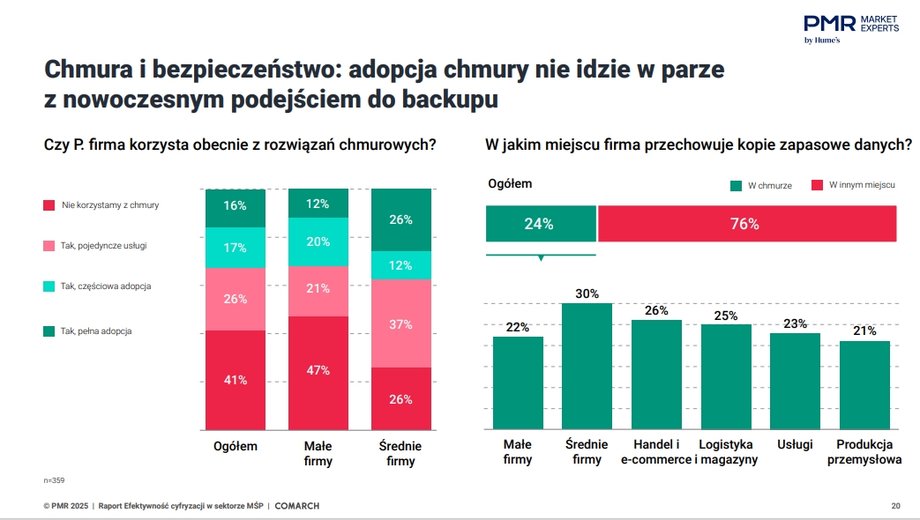
Where companies store data backups
In addition Just 11 percent companies believe that artificial intelligence (AI) is a technology of strategic importance, and 44 percent of surveyed companies buy IT software without a specific strategy.
Moreover, 22 percent companies do not sell onlineeven though online sales exist in their industry.
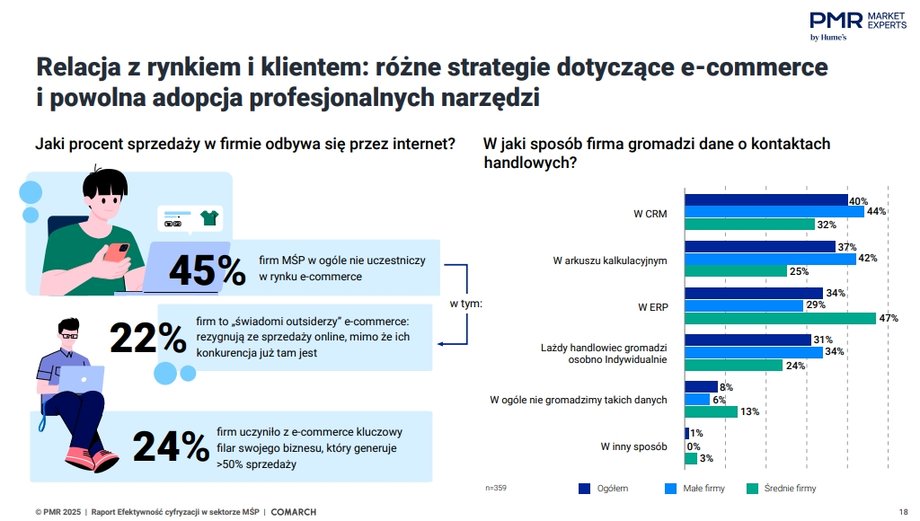
Whether companies participate in the e-commerce market
See also: KSeF. How to gain access to the system, who to give permissions to and what certificates are for
Are companies ready for KSeF and what can it change in companies?
The level of preparation for KSeF is also low. As much as 37 percent companies have not started them yet. However, KSeF may be a good excuse to digitize companies.
As Zbigniew Rymarczyk, vice president of Comarch and director of the ERP sector, says: KSeF is a much deeper change than just invoicing. — Today, companies must report data to the tax office once a month, e.g. submit JPK_VAT. In KSeF, the tax office will have daily monitoring of issued invoices. Changes in tax law may therefore give an impulse to purchase software updates or to purchase it if the company does not have it yet, says Zbigniew Rymarczyk.
— KSeF is supposed to cut through bureaucracy and bring order to the company. Companies that have implemented digital document flow say they would never go back to paper document flow. The mandatory KSeF will be like changing the company's headquarters, i.e. moving to a new office. This is an opportunity to take stock of the company and introduce digital document circulation – says Paweł Olszynka, analyst and co-author of the study from PMR Market Experts. In his opinion, it is better to do it with a partner who will help you do it well. Paweł Dobrzyniecki, director of sales of SME solutions at Comarch, is convinced that companies will be able to prepare for the mandatory KSeF. However, he has doubts whether they will do it well. — KSeF is a very big change for enterprises. The smallest of them, which do not have any systems, must therefore choose an IT or ERP system. However, it is not worth focusing only on the implementation of KSeF, but choosing a system that will allow the company to develop and will be an investment in the future – says Paweł Dobrzyniecki.
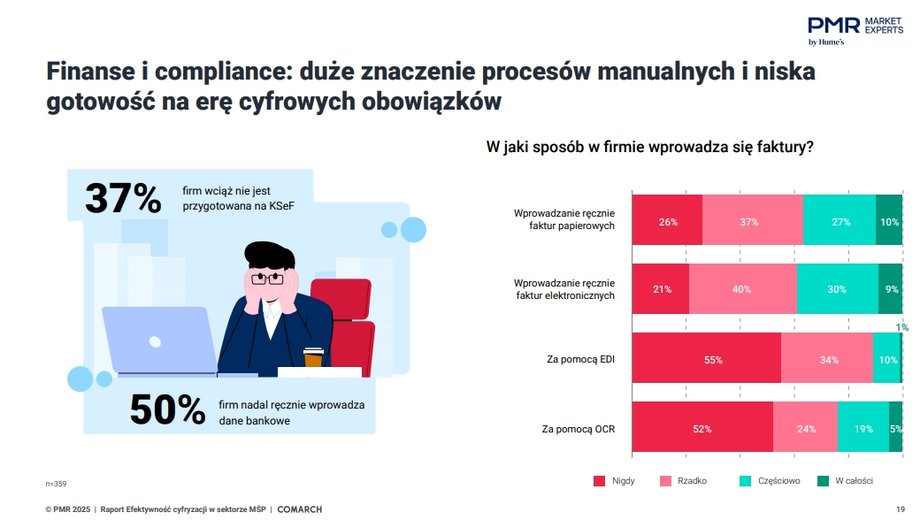
How many companies are ready for KSeF
The survey was carried out by a team of Hume's Institute x PMR pollsters in partnership with Comarch, on a random sample of companies from the SME sector, representing four main industries: industrial production, trade / e-commerce, services, logistics and warehousing. 359 managers answered the interviewers' questions. They also conducted 15 in-depth interviews with SME representatives.
Read also: Do you collect invoices? See how KSeF will change the dates and how to avoid problems