For now, Trump is taking a step back on the plan, which contradicts the US Constitution. But he points to “an unstoppable group” to take his place in the White House

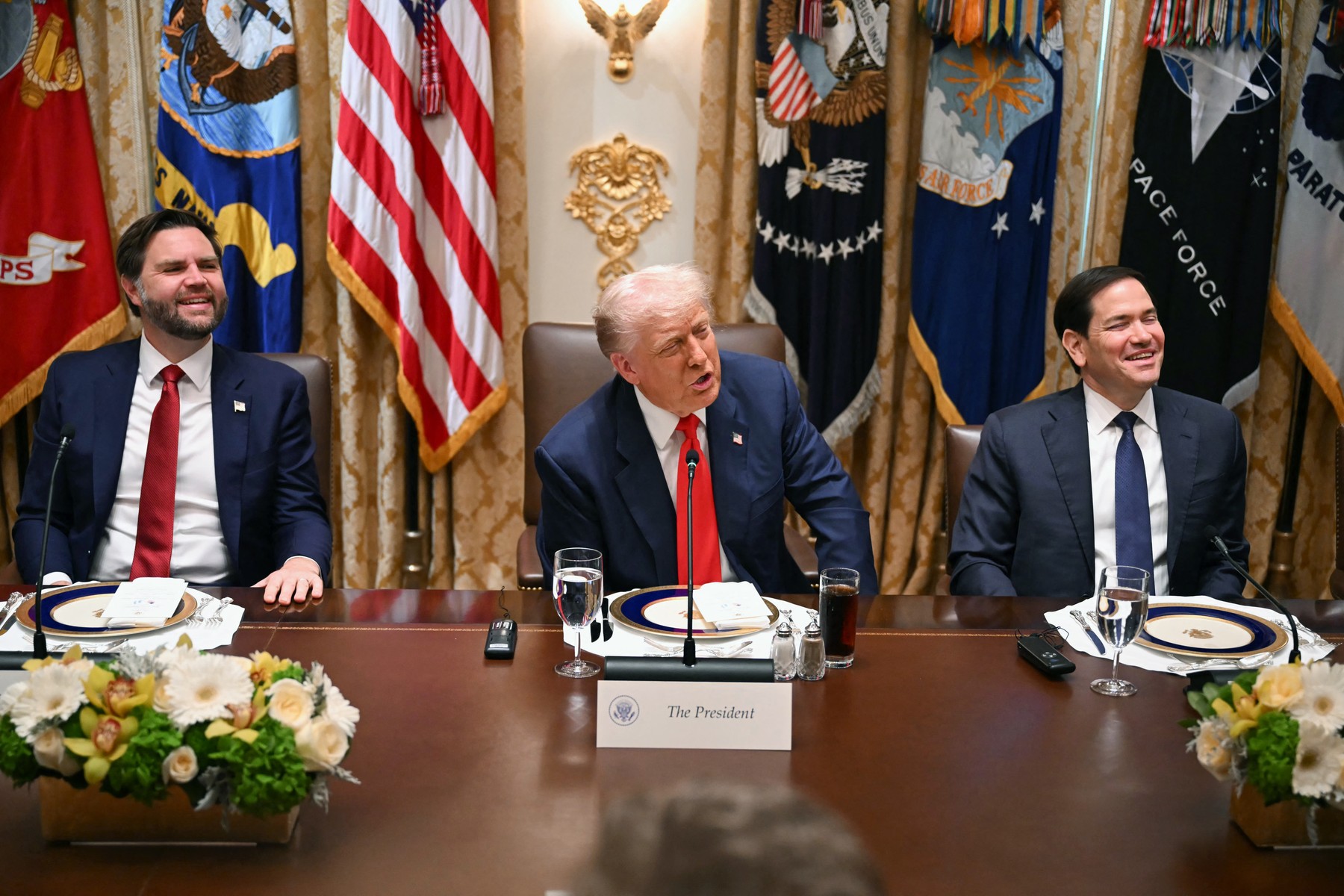
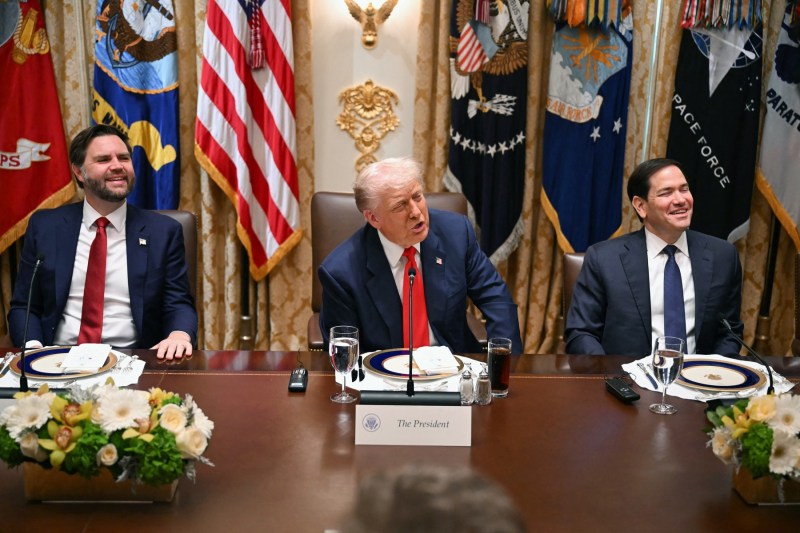
US President Donald Trump speaks with Secretary of State Marco Rubio (R) and Vice President JD Vance during their meeting with Argentina's President Javier Milei at the White House in Washington, DC on October 14, 2025. PHOTO: ANDREW CABALLERO-REYNOLDS / AFP / Profimedia
US President Donald Trump said on Wednesday he would not run for a third term, in a statement that marked a significant shift after months of suggesting the idea despite constitutional limits, but it was unclear whether this was his final word on the matter.
Trump, known for frequently changing his mind on important issues, made the statement to reporters aboard Air Force One during his visit to Asia. His constant “flirtation” with the idea has alarmed opponents and constitutional experts, who say a third term would violate the 22nd Amendment, which states that no person can be elected president more than twice.
“If you read it, it's pretty clear — I'm not allowed to run. It's a shame, but we have a lot of great people,” Trump said, referring to other Republicans who could succeed him after his current term ends in January 2029.
However, Trump frequently takes seemingly firm positions on certain issues, only to later change his mind. Aged 79, the leader of the White House has repeatedly refused in the past to rule out the possibility of running in 2028 for a third term of four more years.
22nd Amendment
His latest comments came a day after a close political ally, US House Speaker Mike Johnson, said he had told Trump he saw no way to amend the US Constitution to allow for a third term.
The 22nd Amendment to the US Constitution was adopted in 1951 after Franklin Roosevelt was elected president four times.
“It's been a wonderful time. But I think the president knows, and we've discussed that, the constraints of the Constitution,” Johnson told reporters on Capitol Hill.
“I don't see any way to amend the Constitution because, as you all know, it takes about 10 years for all the states to ratify (…) which would be approved by two-thirds of the House of Representatives and three-quarters of the states,” Johnson said.
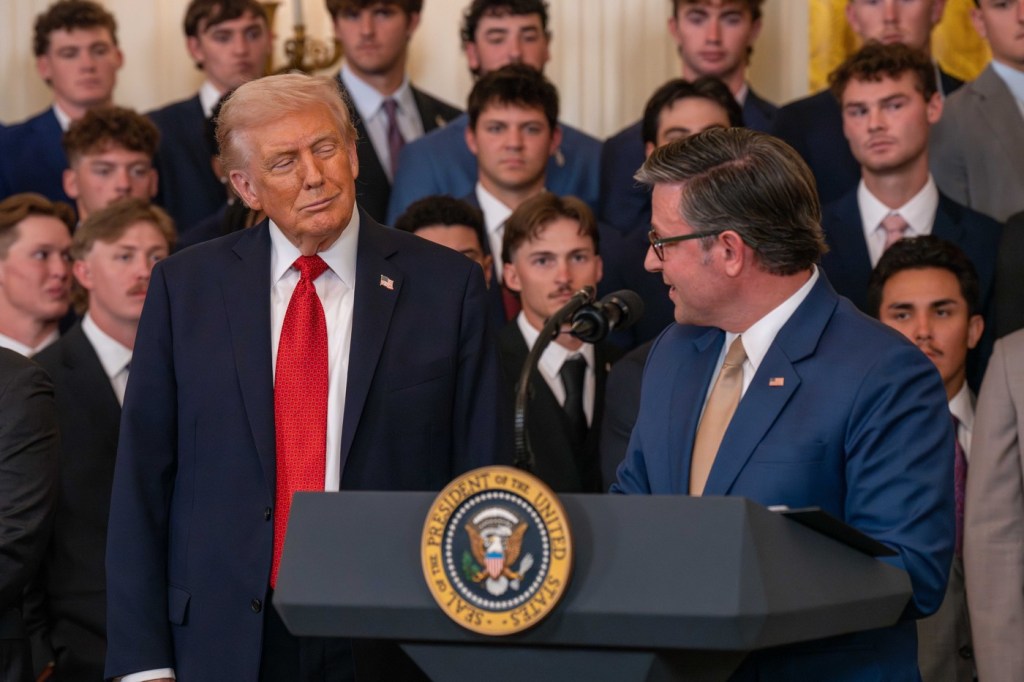 Republican leader reveals he spoke to Donald Trump about 'constraints of the Constitution' for a third presidential term
This week was not the first time Johnson addressed the legal barrier preventing Trump from seeking a third term. A former constitutional lawyer specializing in religious rights and conservative social issues before being elected to Congress in 2016, the Louisiana Republican said earlier this year that Trump understands constitutional limitations.
Johnson's new statements contrasted sharply with those of some members of the Republican majority in the House of Representatives, who have publicly said they want Trump to run for a third term to prevent a Democrat from winning the White House.
Trump often hints at a third term at his rallies and happily hands out “Trump 2028” caps to his friends in the White House.
Some political analysts see references to a third term as a strategic way to stay relevant, antagonize political opponents and avoid becoming a powerless president.
But some allies have taken the president's signals seriously, suggesting he is exploring legal or political avenues to make a third term a reality, even as most constitutionalists reject the concept.
A hard-right influencer and former Trump adviser, Steve Bannon, told The Economist last week that there are a number of alternatives for Trump to remain in office. “At the appropriate time, we will present the plan,” Bannon said. “But there is a plan.”
Bannon did not immediately respond to Reuters' request for comment on Trump's new statements.
One of his supporters' theories is that Trump would run for vice president while another Republican would run for president, only for the latter to resign, allowing Trump to retake the presidency.
Trump said Monday that he would be allowed to do so, but that he would not implement the idea because “it's too nice” and people wouldn't like it. “It wouldn't be fair,” he said.
Trump's recognition of the Constitution's limits could bolster the 2028 presidential aspirations of Vice President JD Vance and US Secretary of State Marco Rubio. On Monday, Trump also appeared to suggest that Vance and Rubio might run together.
“I think if they ever form a group, it would be unstoppable,” he said. “I really believe that. I'm convinced of that,” Trump pointed out.