Banks are victims of their own success. The president of VeloBank on the consequences of the new tax


On Friday, the Sejm adopted the government's amendment to the CIT and banking tax acts, which increase the CIT rate from 19 to 30 percent. In this way, the Ministry of Finance wants to save next year's budget by obtaining an additional PLN 6.6 billion from financial institutions. Within a decade, the estimated impact on the state budget will amount to over PLN 23 billion. The bill will now go to the Senate and later to the president. It is not known whether Karol Nawrocki will sign the new regulations.
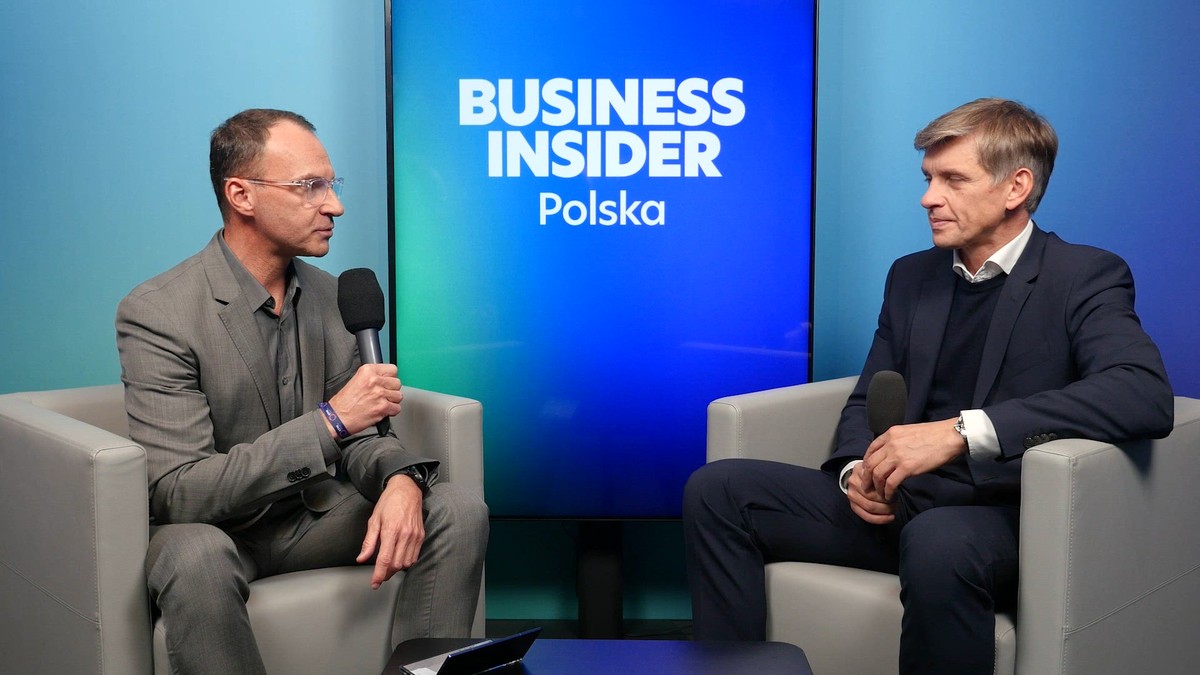
Just before the parliamentary vote, Business Insider Polska talked to Adam Marciniak about increasing the levy. According to the president of VeloBank, the financial result of the banking sector only seemingly reflects the image of the “fat years”. Banks, he argues, need additional capital to finance the development of the economy.
It's hard to explain your success
— It is worth remembering that the financial sector in Poland is one of the smaller ones in Europe. Meanwhile, financing the economy requires banks to have sufficient capital to support the growth of investments and enterprises, says Adam Marciniak.
In his opinion, the record profits are the result of rebuilding the position after years of weaker results and low interest rates. – Looking at the last fifteen years, the “fat years” are only two or three seasons in which banks rebuild capital after a long period of declines and systemic risks – for example those related to foreign currency loans – he explains.
The president of VeloBank emphasizes that profits are not a goal in themselves. — These are funds intended to enable further investments and financing of the economy, which has been developing dynamically for three decades. Banks must have capital to support entrepreneurs – says.
See also: We must set ambitious goals and move forward. Rafał Brzoska about two years of coalition on October 15
CIT up. “This is not a good solution”
The government's idea to increase CIT for banks from 19 percent. up to 30 percent sparked a heated discussion in the sector. For politicians, it is a way to increase state revenues, including: with defense spending in mind. For banks – the risk of a decline in investments and limited financing of the economy.
– This is a very big change – increasing CIT by 50%. In the short term, it may bring revenue to the budget, but in the long term it will limit the possibilities of building capital and financing development, says Marciniak. — Bank investors include not only foreign groups, but also the State Treasury, pension and investment funds. Any reduction in profits affects Poles indirectly because it affects their pensions and savings – he adds.
As he emphasizes, VeloBank estimated that if the CIT increase came into force, the lost profits could reach PLN 200 to 500 million within 3 to 5 years. — These are funds that could be used for loans and investments. Ultimately, the entire market would suffer, he notes.
Loan cost and Polish specificity
According to NBP data, the average interest rate on loans in Poland in mid-2025 was 6.8-7.5%, while the EU average is 3.3%. So do banks have anything to give up?
— TIt is important to remember that the cost of credit is influenced not only by interest rates, but also by the structure of taxes. Bank tax on assets is included in margins and passed on to customers. We cannot bear these costs ourselves – he explains.
Looking at the fundamentals of the Polish economy, including the dynamics of price growth, a clear downward trend has been visible for several months. — Inflation is falling, interest rates are falling — from 6.75 percent. up to 4.5 percent — and loans are revalued. The spread between fixed and variable rate loans is narrowing. As a result, financing costs for customers will decrease, argues the president of VeloBank.
Macroeconomics, risks and strategy of VeloBank
VeloBank, which was established three years ago on the basis of the former assets of Getin Noble Bank, is dynamically building its market position. — When we started, we had one of the lowest loan-to-deposit ratios. Today, we are consistently developing our balance sheet and improving profitability, says Adam Marciniak.
He emphasizes that the bank is growing both organically and through acquisitions. — We have incorporated the Investment Fund Company, we are developing leasing, we have signed an agreement to take over the retail part of Citi Handlowy. This is an element of building our advantage – technological and operational – he emphasizes.
Among the key risks, the president of VeloBank indicates regulatory instability and geopolitics. — Each change in law is an additional risk for investors, which may discourage them from investing capital in Poland. In addition, there are external factors, such as the situation beyond the eastern border, he notes.
At the same time, Marciniak remains optimistic: – We hope that lower interest rates will stimulate investments. The decline in margins will be made up for by volume – more loans and corporate activity.
“The market is very competitive”
There are ownership changes taking place on the Polish banking market: the entry of the Erste group, Unicredit and discussions about the consolidation of PZU and PKO BP. For VeloBank, this is an opportunity, not a threat – assures the president of VeloBank
— The Polish market has always been very competitive. We build advantage through quality customer service and digitalization. Our ambition is for the customer to be able to solve every problem – both online and in the branch – says the president.
The second pillar of advantage is to be technology. — Personalization of the offer, risk-based pricing, quick decision-making processes – these are standard today. But agility and the ability to adapt to changes still matter. A bank that does not invest in technology loses its advantage, he adds.
Artificial intelligence is changing banking
Adam Marciniak was one of the leaders of digital transformation in the Polish financial sector. Today he says openly: generative artificial intelligence is another revolution that is just beginning.
— Most organizations are just at the beginning, but the adoption of generative models in banking is progressing very quickly. They can be used in any area – from the back-office to customer relations – he explains and adds that VeloBank invests in several AI-based projects in parallel.
— We already have tangible results and will soon show them to customers. This will be our competitive advantage, he announces.
Fintechs do not threaten, but inspire
Are new financial platforms – such as Revolut or Klarna – a threat to traditional banks? Marciniak has no doubts: – Fintechs are great at exploiting niches, but once they reach a certain scale, they hit regulatory barriers and slow down.
— Polish banks quickly learn their flexibility and transfer these solutions to their own offers. The customer has no reason to change a well-functioning bank for an application that offers the same thing, he argues.
“AI agent” – the bank of the future
The president of VeloBank also shares a vision that sounds like a fragment of a futuristic scenario.
— I am fascinated by the agency of AI models – the ability to combine many algorithms that independently solve various problems. We are working on AI agents that coordinate the actions of other models, providing the client with a consistent, comprehensive response, he explains.
Can artificial intelligence one day replace the bank president? — I don't think we should entrust the entire functioning of an organization to AI. Rather, it will be a natural extension of our competences – a companion that supports decision-making and team building