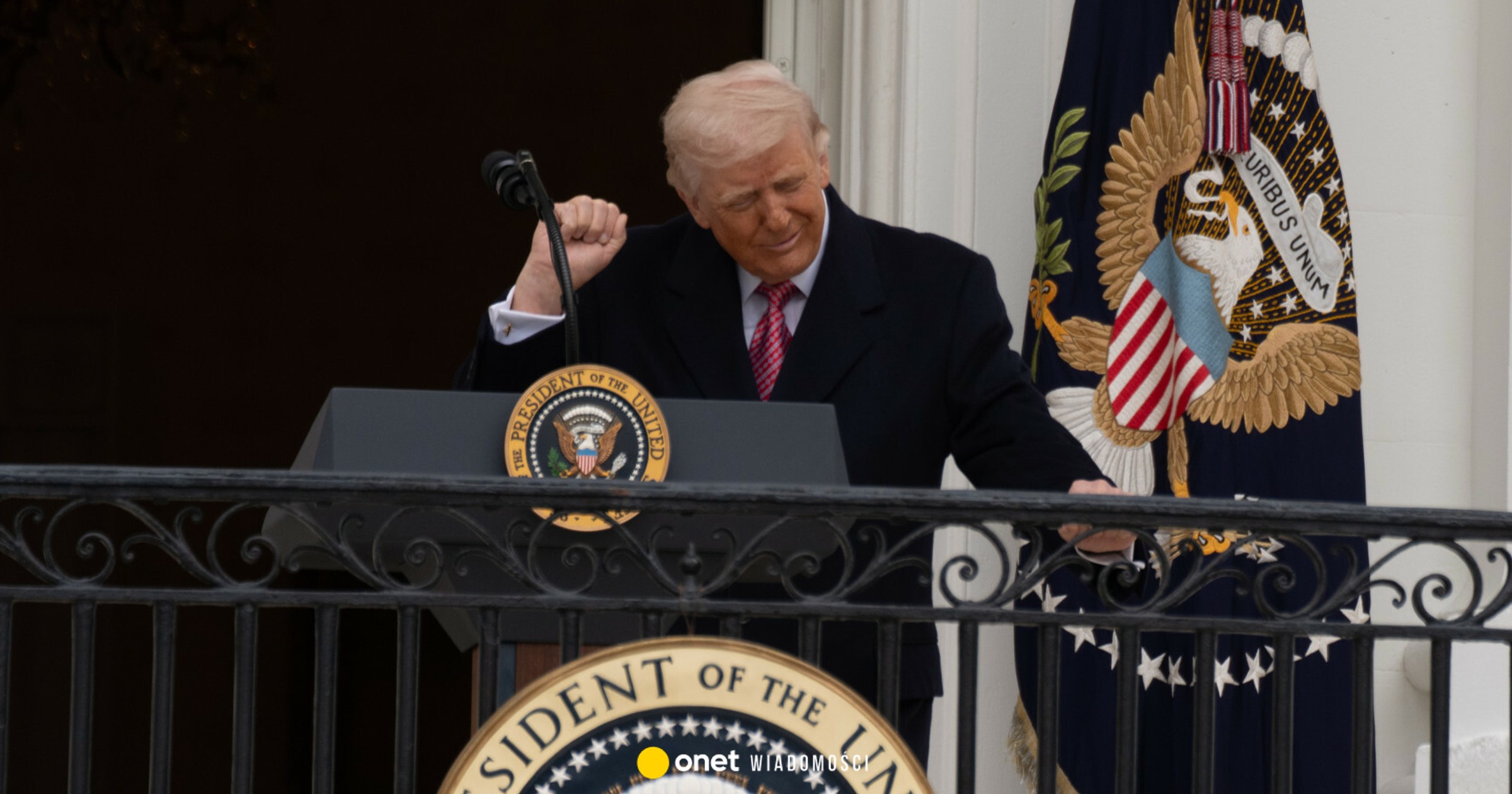
Pressure has contributed to peace in the Middle East, according to senior European officials. Countries such as Qatar, Egypt and Türkiye put pressure on Hamas by threatening to break off diplomatic relations. Israeli Prime Minister Binyamin Netanyahu was pressured by Trump himself, who forced him to accept the peace plan and apologize to the leader of Qatar for the September attack on Doha. He has not used this type of pressure against Vladimir Putin so far.
However, unlike the situation with Hamas, the pressure on Russia has its limits.
As analysts of “The Wall Street Journal” note, Russia's nuclear arsenal will always be a factor in containing escalation. According to experts, this may be a more likely scenario Trump's direct agreement with Putinand then pressure on Zelensky. However, such a vision raises concerns among European leaders.
— Ukraine and its allies hope that now, having achieved success in the Middle East, Trump will also intensify his efforts regarding the war between Russia and Ukraine
– says one of the analysts.
Trump's first real victory as a peacemaker
Political scientist Georgy Chizhov believes that the American president has actually gained some wind after the Middle East success. As he noted in an interview with Novaya Gazeta, no matter how much Trump talks about the countless wars he has ended, the release of 20 Israelis after two years of captivity is his first real victory as a peacemaker. Although it is not yet known how lasting this peace will be, for now it can be considered a success.
— Trump, of course, would also like to end the Russian-Ukrainian war and will talk about it a lot.
However, it seems to me that he was faced with a harsh reality and now he simply suffers from a deficit of ideas.
All he can do is come up with more threats against Russia – from additional economic sanctions, which, as we see, are not working very well, to threats to hand over Tomahawks to Ukraine. Coming up with something radically different until Russia makes concessions is quite difficult
– says the political scientist.
Trump criticizes Witkoff
Speaking to the Israeli Knesset on October 13, Trump detailed one of his special envoy for the Middle East Steve Witkoff's meetings with Vladimir Putin. The US president stated that Witkoff was completely unprepared for the talks. Trump expected the meeting in the Kremlin to last no more than 20 minutes, but it lasted up to five hours. Trump admitted that he personally organized the meeting, although his envoy “knew little about Russia and had no interest in politics at all.”
— I called from time to time: after an hour, after three, after four — and he was still sitting with Putin. After five hours, the conversation ended. I asked: “what the hell were you talking about for so long?“And he said, 'a little bit of everything, a lot of interesting topics.' But you can't talk about it for five hours! – says Trump.
In an interview with Novaya Gazeta, Americanist Aleksandra Filippienko notes that resolving the war in Ukraine remains one of Trump's main concerns. He points out that the US president mentioned it during an important, ceremonial speech devoted to a different topic. The American leader's words show that he is currently on the side of Ukraine and has chosen a strategy of putting pressure on Russia, the expert adds.
— We can't be completely sure, but that's what it looks like at first glance. This means that in the near future we can expect him to pay more attention to Ukraine and perhaps have more freedom of action.
Trump's priorities are clearly defined: before he actively pursues other Middle East agreements, he wants to achieve at least some result on the war in Ukraine. At least that is his public position. We'll see how it goes in practice
– says the expert.
Political scientist Georgy Chizhov adds that Trump is demonstratively showing support for Zelensky, but it is more of a tactical nature – it is his way of increasing pressure on Moscow, rather than proof of sincere support.
Meeting at the White House
On October 17, Zelensky will meet with Trump in Washington. One of the main topics of the conversation will be the deliveries of Tomahawk long-range cruise missiles. Launched from ships or submarines, they have a range of up to 2,500 km.
These missiles would give Ukraine the ability to launch attacks deep into Russian territory, including Moscow. Objectives for Tomahawks may become objects practically on the entire European territory of Russia. Potentially, these may include: military bases, arms industry plants, transport infrastructure and energy facilities. According to Kiev, such a threat could force the Russian authorities to enter into negotiations.
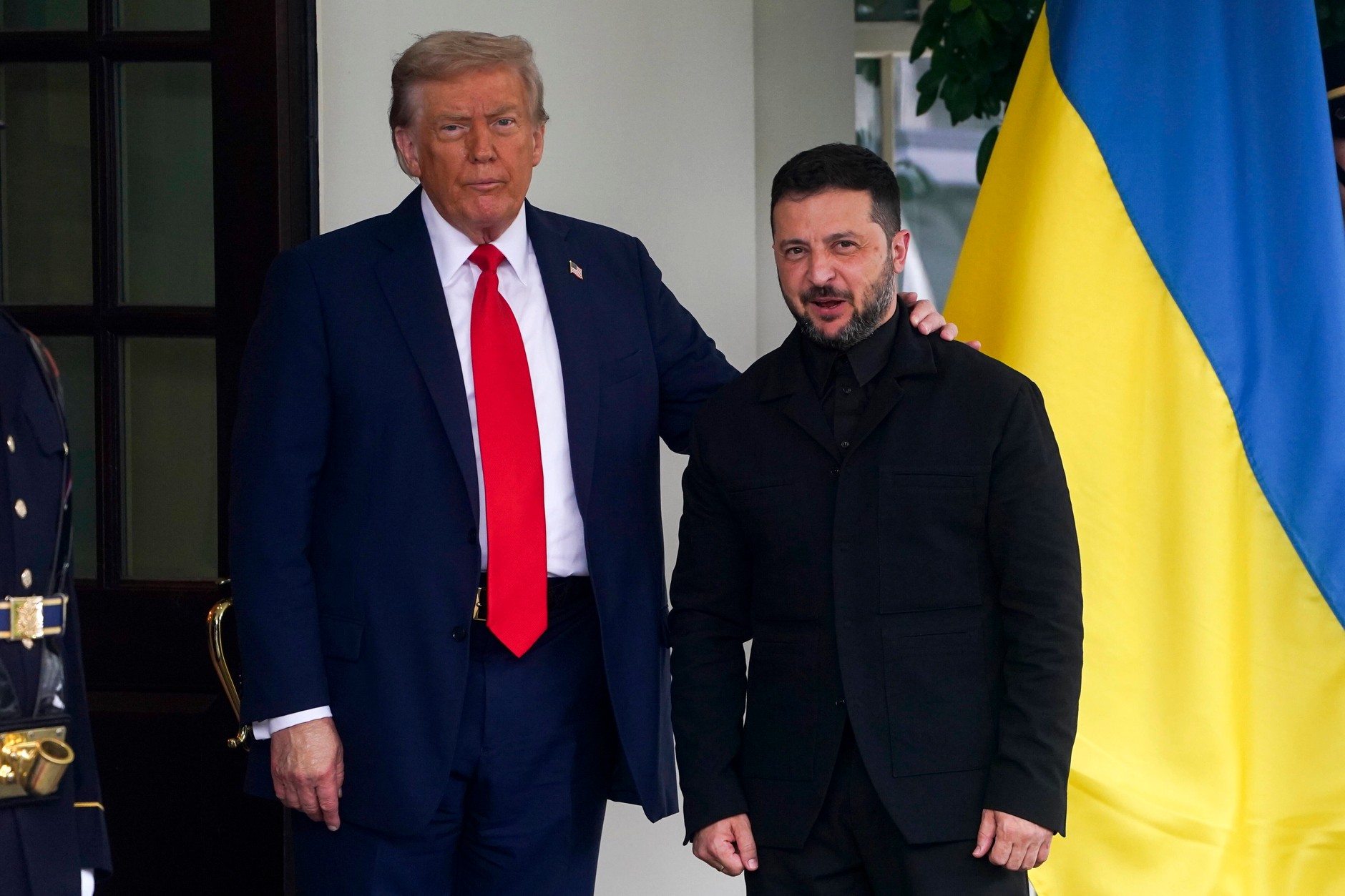
United States President Donald Trump welcomes Ukrainian President Volodymyr Zelensky at the White House, Washington, United States, August 18, 2025.Will Oliver / POOL / PAP
The United States may transfer 20 to 50 cruise missiles to Ukraine. However, Stacie Pettyjohn, director of the Center for a New American Security (CNAS) think tank, predicts that this will not have a “decisive impact on the course of the war” – these missiles will rather be a complement to attacks carried out using Ukrainian drones and long-range missiles.
The Kremlin has repeatedly warned of the “serious consequences” of handing over Tomahawks to Ukraine. As Putin's spokesman Dmitry Peskov said, Russia may treat the launch of such missiles as an attempt to carry out a nuclear attack. Putin himself declared that deliveries of Tomahawks to Ukraine would “ruin” relations between Russia and the US.
Details of telephone calls
Last weekend, Zelensky and Trump spoke by phone twice – on Saturday and Sunday. After the talks, Zelensky said Ukraine was “working closely” with the United States to strengthen its air defense system and other defense capabilities.
— Russia is afraid that the Americans may give us Tomahawks. This is a signal that this kind of pressure can work towards peace. We agreed with President Trump that our teams, our armed forces, will take care of everything we discussed, says Zelensky.
According to the Ukrainian president, the talks concerned not only long-range weapons, but also energy and gas issues. Before winter arrives, Russia is intensifying attacks on energy facilities in Ukraine, depriving hospitals, schools and residential houses of heat and water. However, for the first time since the start of the full-scale war, Kiev is responding symmetrically, hitting Russian energy systems.
According to information from the Financial Times, the United States has been providing Ukraine with intelligence data since the summer that helps it plan these attacks.
According to the American website Axios, which cites sources in the White House, Trump allegedly stated in a conversation with Zelensky that if Putin does not resume serious peace negotiations, the US may hand over Tomahawks to Ukraine. The two leaders were to discuss in detail the number of missiles needed and possible ways of using them.
They also considered intermediate variant — selling missiles to NATO countries, which would then transfer them to Ukraine. Trump emphasized that he wanted to understand exactly how Ukraine plans to use these weapons. Zelensky allegedly assured that the very fact of having Tomahawks would increase the pressure on Putin.
Despite detailed talks, the decision to transfer the missiles has still not been made, but the sides have “made significant progress.” On October 13, Trump publicly stated that he was ready to give Tomahawks to Ukraine if Russia did not end the war.
— Do the Russians want Tomahawks coming towards them? I don't think so. I could say [Putinowi]: “listen, if this war doesn't end, I can send them Tomahawks. Russia doesn't need it. I think it's worth raising this issue
Trump said.
The article continues below the video
“Will we come to an agreement or should I send more Tomahawks?”
Political scientist Georgy Chizhov notes that Trump has apparently deviated from his original plan to quickly end the war at the expense of Ukraine. According to him, the US president understands more and more that without any concessions from Putin it will be difficult to reach an agreement.
— Trump's problem is that he can't get Putin to move away from his maximalist position of “give us everything we want and more.” It is quite possible that Trump would agree to small concessions from Russia and again put pressure on Ukraine to accept them. But Russia is not giving any signals of readiness to compromise – says the interlocutor of Novaya Gazeta.
According to the expert, in this situation, Trump would like to obtain at least a bit of flexibility from Putin at minimal cost, which is why the American leader is now so actively talking about the deliveries of Tomahawks.
The ideal scenario for Trump is one in which the Kremlin takes a step back itself, so that America does not have to send any missiles. But since the Kremlin probably does not intend to change anything, the Tomahawks may actually end up in Kiev. But it won't happen tomorrow and probably not even in the next month
– says the political scientist.
At first, Chizhov predicts, the United States will deliver just a few rockets — mainly for demonstration purposes. In addition, technical issues will also need to be resolved – such as where they would be launched from. Ukraine has practically no large ships that could carry them.
— Targets for the first strikes will probably be selected jointly by the Ukrainian and American sides to achieve the greatest possible effectiveness of the attacks. Then Trump will be able to tell Putin again: “We will discuss whether I should send more Tomahawks“? If Putin does not back down even then, larger deliveries will be possible – ones that could actually influence the course of the war. But this is rather a question of the future,” Chizhov concludes.
The expert adds that the Kremlin may even feign concessions, only to return to its old demands after a while – i.e. recognition of the annexation of Crimea and the four occupied oblasts: Donetsk, Luhansk, Kherson and Zaporozhye.
— This is unacceptable for Ukraine and no one is trying to force such conditions through intermediaries anymore. Therefore, we cannot count on quick concessions from Russia, concludes the political scientist.