Should we fear the bears in the Carpathians? “Sometimes it's a Bondoc Moșneag. At other times it attacks for no reason.”


At least 10,000 bears live in Romania, most in the Carpathian Mountains, lands that the bears have divided, since ancient times, with people. Their behavior offers caution to those who venture on hiking.
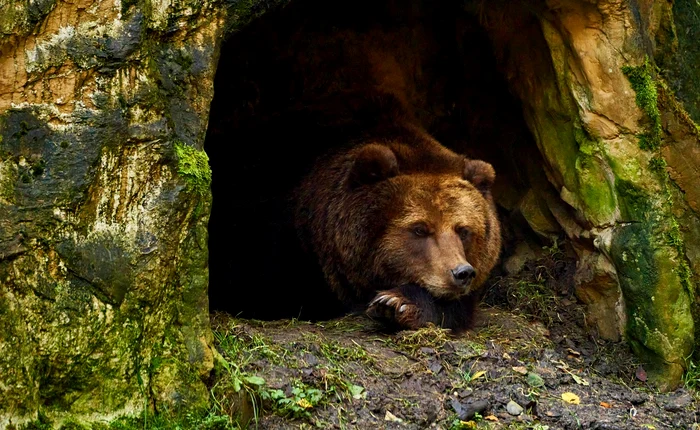
Brown bear. Photo: pixabay.com
In the autumn, bears often make their presence near the localities, when, the specialists show, they enter a phase called hyperfagia, seeking to feed more on the cold season, when their diet is poorer. In winter, bears need fat surpluses to cope with the two – three months most often spent in their beams.
It does not hibernate, say the specialists, but enter into a state of drowsiness, from which spring comes out much weaker, as from a long post.
The places wandered by bears
The presence of bears has been reported, in recent years, in all the mountain regions of Romania. The “stars” were the bears on Transfăgărășan, accustomed to tourists and the crowded traffic during the summer period, frequently publicized following the incidents and tragedies they caused.
The resorts on the Prahova Valley have “hosted” such savages, which appear on both the routes in the Bucegi Mountains and in cities. Brașov is, in turn, more and more wandered by bears, and the neighboring localities and the surrounding tourist areas have proved as “welcoming” for these animals. In Brașov, the old chronicles looked, the bead hunt was a task from the medieval period, when those who managed to chase them from the city were rewarded by the community.
In the land of Harghita and Covasna, the bears appear around the villages and orchards, as well as the thermal resorts. Significant bears populations also live in the Bihor Mountains in Apuseni, but also in the Jiu Valley, Parang and Retezat, and the forests of the Poiana Ruscă Mountains and the secular forests of Banat Montan offer, in turn, an ideal habitat. The “Via Transilvanica” travelers are also farther travelers are, in more and more places, marked with warnings related to the presence of bears in the areas crossed by the longest hiking route in Romania.
While in other countries the bears have long disappeared, the Romanian Carpathians remained a western bastion of the bears in Europe. Many Romanians look at this fact as an ordinary one, even if they sometimes have reasons to complain about the multiplication of wild. Foreign tourists look at them with fascination and sometimes with frightening, planning their hiking in the Carpathians. On the online platforms, more and more demand advice on bears in Romania.
“What is the situation of the bears now? Where are the bears in general? What general advice can you give me about how to manage the meetings with the bears and how we can find information from the locals in Brasov? Me and a friend of mine (both Dutch) we have been intrigued by the nature of Romania and we have reserved air tickets to Bucharest. We cross the mountains for 3-5 days, with backpacks and tents. He writes a tourist from the Netherlands, on the Reddit platform.
The noises drive away bears
The most popular advice received by the tourist is to make a lot of noise when moving on the mountain trails, so as not to surprise the bears. In general, bears avoid contact with people or other living things, but they are motivated by food, because of the need to gather enough reserves for winter, another tourist completed.
A local from Brasov, passionate about hiking, recommends tourists to pay attention to any sign that could indicate the presence of a bear in the area and, in general, avoid camping in the forest, preferably as far as possible. A Romanian offered a funny response to the tourist.
“What is the situation of bears now? It's good, we have enough. Where are the bears in general? Everywhere-you are at home. If you are careful and use common sense, you will be fine. Bears are rare and, most likely, involves shepherds who try to protect their flock. Run in the opposite direction. he transmitted it.
A Romanian is alerted by the increasing number of bears on the mountain trails and recommends tourists to give up long trips through the wild, especially outside the marked paths.
“The risk is extreme. The bears population has escaped from control. People have over five meetings with bears along a single road on Transfagărășan (videos with bears on social networks appear daily). There are so many meetings on the roads, this means that there are many more in the forests ”, He believes.
The mountain gendarmes offer recommendations for those who venture in the wild areas where there is a risk of meeting bears: make sure you have at least one hiking partner; Discuss, make noise, to be heard of wild animals and avoid you; Wear, hanging from the backpack, a so-called bear-bell, bell bell; When you camp, do not hold the food in the tent; Wear a pepper spray against the bears; wear a whistle to the neck; If you notice the presence of the bear from the distance, make noise; Try to avoid animals as much as possible.
Bears, unpredictable animals
Writer Ionel Pop (1889-1985) was one of the most appreciated hunting literature publicists, being the founder of the magazine “Carpathians – hunting, fishing, chinology”, one of the most popular hunting collections in Romania of the 20th century.
Author of numerous books dedicated to hunters, fauna and Carpathians, Ionel Pop has noticed as one of the good connoisseurs of the bears. In his works he gave details about their unique behavior and the fact that the bears are defended by attacking.
“The attack of the bear in the defense is among the most dangerous. He makes a few jumps to the man and, when he is directly close, he rises back, ending with the claws and with the corners. Usually, attacking the man with the claws, he scalps. The attack is short, violent and powerful,” Ionel Pop said in a 1979 interview.
The bear has a moment of moment that you cannot suspect, he notices.
“Sometimes it is a very peaceful old man, who is comfortable in the way of man; sometimes he attacks without any reason. Sometimes it is of amazing boldness, sometimes it seems cowardly, running in front of a dog that barks. It can be said to attack unconditionally. Of course, nothing remains without an explanation. He is angry and attacking. Complete the passionate writer of hunting.
Bears do not attack people to eat
Unlike other animals, the bear lives lonely and does not form a family, apart from mother and chicken, he adds. In the forest, people are often the greatest enemies and, rarely, the wild boars. Over time, wild animals lost the habitat, due to urbanization, agriculture and hunting, and the persecution it was subjected to by people, who considered them threats, was one of the reasons for reducing the bears population throughout the continent.
“A bear never attacks a man to eat it. Many accidents with people happen to the sheep, when the brave shepherds want to escape some sheep, some beef,” says Ionel Pop.
As for animals, there are bears that, feeding almost only with vegetables, do not attack the sheep. Instead, there are others who learn to compose their food from what they can kidnap, and they are a real wound.
“Using a bear to a sheepfold and making big damage, people who can no longer defend their cattle and leave. Even the best hunters are difficult to shoot a bear attacking the sheep, happening at night, unexpectedly.”the publicist reported.
The power of the bear is formidable, he notes.
“It easily kills a cow, even a bull from the sheep, and crawls it to a desi, where it is celebrated. At the corpse it usually comes several days, more nights. One of the most frightening sounds of the mountain is the death of a great cattle, the cow, the cow, the cow.