As Russians largely express indifference toward the parliamentary elections scheduled from Friday to Sunday, the Kremlin is keen on ensuring another public legitimacy for its policies. Observers expect potential troubling developments after the ballots are cast.
Polling indicates a significant lack of engagement; 66% of Russians were unaware of the election dates as of June, and 28% stated they do not plan to vote, according to the Levada Center.
Despite their disinterest, many Russians harbor concerns about what might follow the elections, fueled by rumors of a large-scale mobilization as the Russian military suffers heavy losses on the front lines, with tens of thousands of soldiers killed or injured each month.
The economy is grappling with the burdens of unchecked war spending, and the impact of the conflict is felt domestically, highlighted by drone strikes launched from Ukraine.
Europe is watching the elections closely due to rising hybrid attacks attributed to Russia, leading officials and analysts to fear that Vladimir Putin may test European defenses more seriously as the war prolongs.
Russian Choices: Who Will They Elect?
From Friday through Sunday, Russians will vote for the members of the lower house of parliament, the State Duma. Eleven regions will select governors, while 39 will elect members of regional legislative assemblies.
The voting spans three days to encourage participation among 111 million voters and includes electronic voting options.
For the first time, residents of four Ukrainian regions illegally annexed by Moscow after the full-scale invasion will participate in the elections, provoking strong protests from Kyiv, urging foreign governments and international organizations not to recognize the results.
Voting also occurs in Crimea, which Russia annexed illegally in 2014.
Half of the 450 seats in the Duma are filled through party lists, while the other half are contested in single-member districts. Voters will submit two separate ballots.
The Kremlin’s main party, United Russia, is poised to maintain its control over the Duma, while other parties of the “systemic opposition,” which generally vote in sync with the government on key issues, are expected to retain their presence, as reported by the independent publication The Moscow Times.
Commentators have noted that the Communist Party, the Liberal Democratic Party (LDPR), Just Russia, and the New People party share similar platforms with United Russia and broadly support Kremlin policies.
The liberal party Yabloko, the only registered party opposing the war, was initially included on the ballot but was removed by the Supreme Court in August, citing its anti-war stance as a violation of Russia’s territorial integrity.
Anxiety in Russia
The elections occur amidst a complicated backdrop for Russia. Ukrainian attacks on oil refineries have triggered a fuel crisis, forcing millions to wait in long lines at gas stations.
These attacks have exacerbated economic challenges, with the economy stalling after initial boosts from massive military spending. The government has raised taxes and increased domestic borrowing to manage a growing budget deficit.
Additionally, a series of attacks on warehouses of online retailers Wildberries and Ozon has led to significant losses for hundreds of thousands of individual sellers, creating shockwaves throughout the economy.
Last month, the Kremlin dismissed Andrei Klepach from a role at the state-controlled development bank VEB after the former chief economist presented a report warning that Russia could not win a protracted war with Ukraine and predicted a major social crisis.
A July poll by the Public Opinion Foundation, a significant state-affiliated polling organization, indicated that nearly 60% of Russians felt anxiety among those around them, the highest level in four years.
In that month, Russians withdrew more money from banks than in the last six years, according to Taras Skvortsov, chief financial officer at state bank Sberbank, and many fear that the Kremlin will accelerate internet restrictions.
Election Apathy
However, the three-day election will not provide Russians with many official opportunities to express their discontent. The Kremlin has turned the election into a mundane event, with results appearing predetermined. For many candidates, campaigning seems hardly worth the effort.
Throughout Russia, videos circulated announcing that planned debates were canceled due to a lack of participants.
At a forum I attended in Moscow on Saturday for young candidates and voters, no representatives from the ruling party United Russia bothered to show up, according to the New York Times.
The Moscow Times reported similar occurrences. In Ryazan, the public broadcaster Rossia 1 spent two consecutive days attempting unsuccessfully to gather Duma candidates in its studio. On both occasions, the presenter ended the program shortly after introductions because no one showed up.
Campaign videos are produced on tight budgets, including one featuring arms dealer Viktor Bout, known as the “Merchant of Death,” portrayed as a struggling businessman.
The Importance of Elections for the Kremlin
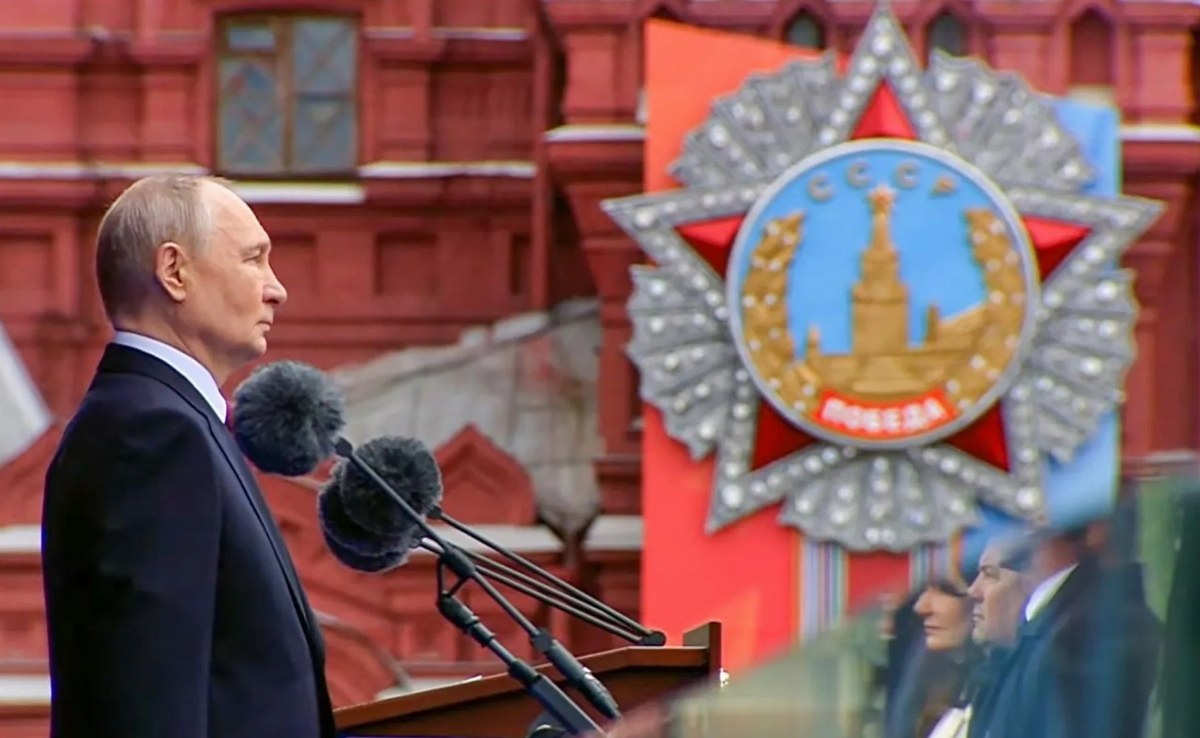
Nonetheless, the Kremlin views these elections as a means to legitimize its policies. In a televised address to the nation ahead of the vote, Putin stated that participation in the elections would contribute to ensuring Russia’s victory in Ukraine and demonstrate national resolve against external pressures.
The Kremlin insists that national unity is crucial due to perceived increasingly dangerous efforts by Ukrainian intelligence and other adversaries to incite unrest within Russia.
Many Russians are preparing for potential actions from the government on military, economic, and political fronts following the vote. The New York Times suggests a possible shock.
Ahead of the election, the Kremlin and its public relations apparatus are altering their messaging. The persistent narrative that everything is proceeding normally is shifting, with authorities acknowledging that many people are facing difficulties and are scared—urging them to unite around President Putin and his war efforts.
Two weeks before the elections, an estimated 100,000 Russians participated in a procession through the capital’s wide avenues in honor of Dmitri Donskoi, the Prince of Moscow from 1359 until his death in 1389.
Donskoi is celebrated for leading the Russian army to victory over the Mongol Golden Horde in 1380. His remains were unearthed last month in the catacombs of a Kremlin cathedral, following what Russian officials presented as an accidental discovery. The symbolism was evident: just as Donskoi defeated the Mongols, Russia will overcome the “collective West” currently supporting Ukraine.
Fears of Mobilization
Ukraine and many Western analysts have warned that the Kremlin is ready to initiate a major mobilization following the elections. Kyiv cites intelligence, and analysts note that Russian forces require serious reinforcements, given that Ukrainians are taking out more soldiers than Moscow can currently recruit.
Some Russians have begun leaving the country, fearing possible mobilization. Current figures remain difficult to estimate.
Unlike in 2022, when throngs of men fled due to a partial mobilization, there are currently no lines at border crossings or shortages of tickets to visa-free destinations like Armenia, Georgia, Kazakhstan, and Turkey.
Yan Slovizki, a human rights activist and emergency assistance coordinator for the Kovcheg organization, described “a wave of panic” pushing Russians to emigrate since mid-July amid fears of mobilization, fuel crises, and internet restrictions.
A diplomat based in Moscow told the Associated Press that “this summer has seen a palpable increase in anxiety among the population,” with anecdotal evidence showing a higher-than-usual number of Russians appearing in neighboring countries, especially Georgia and Armenia, likely out of fear of new mobilization after the Duma elections.
Twice in the first week of September, President Putin publicly dismissed rumors of an imminent mobilization campaign, calling them “total absurdity” and labeling them an “informational attack” against Russia.
On September 3, during the Eastern Economic Forum in Vladivostok, Putin stated, “there is currently no scenario that necessitates mobilization.”
Moscow’s Recruitment Efforts
Independent press reports and analysts suggest that Russia is increasingly struggling to attract new soldiers, as fewer people are willing to risk being sent to the front lines and potentially lose their lives.
Many are also discouraged by the fact that, by law, military contracts cannot be easily terminated, even though recruitment advertisements often promise only one year of military service.
An indication of Russia’s difficulties in recruiting contract soldiers has been the intensified pressure campaign on students that began this year. Students have been encouraged to enlist in the country’s drone forces, while those who fail winter exams have been offered military contracts as an “alternative to expulsion.”
The Defense Ministry also appears to have set recruitment quotas for universities in an effort to attract more students into military service.
Migrants, financially struggling individuals, and the homeless have similarly been targeted in such campaigns, according to Sergey Krivenko, head of the human rights group “Citizen. Army. Law.”
Regional authorities have also repeatedly increased one-time payments for signing military contracts, in addition to federal salaries and bonuses—an indication that Russia is compelled to offer increasingly generous financial incentives to attract recruits.
Despite these efforts, recruitment in Moscow and nationwide has decreased by a third this year compared to 2025, as reported by exiled publications Voorstka and IStories.
These developments have fueled speculations that Russia might eventually announce a new mobilization, especially as Kyiv claims Moscow intends to mobilize at least 500,000 reservists this fall.
However, other voices suggest that despite the slowdown in recruitment, Russia has thus far managed to compensate for battlefield losses with newly recruited contract soldiers.
European Concerns
Europe is also closely monitoring the elections amid intensifying hybrid conflict initiated by Russia. Reports of sabotage ordered by Moscow against Europe are becoming not only more frequent but also more reckless, as noted by Bloomberg on Thursday, citing European officials and intelligence representatives who fear that civilian casualties are only a matter of time.
According to a representative of a NATO member country, in the past two months, defense and logistics facilities directly supporting Ukraine have become prime targets of organized Russian intelligence attacks.
A source close to the Kremlin asserted that Russia aims to make life in Europe hell through asymmetrical hybrid operations in retaliation for the support given to Kyiv.
So far, although Putin’s tactics create tensions, a European official stated that they are proving counterproductive—support for Ukraine is only increasing.
The rising number of large-scale incidents has strengthened arguments for increased defense spending, closer coordination of intelligence activities, and the introduction of new sanctions.
However, combating hybrid attacks in an open society is challenging, and this openness “facilitates the attackers’ task,” stated James Everard, former deputy commander of NATO’s Supreme Allied Command in Europe.
European Commission President Ursula von der Leyen implicitly referenced this, calling for unity among EU member states in the face of Russia’s threats in her State of the Union address.
Regardless, on the eastern flank of the alliance, this confrontation is no longer viewed as hybrid. Civilian casualties are possible. “People could die. If we do not stop this, the situation will only worsen,” warned Lithuania’s foreign minister Kęstutis Budrys.