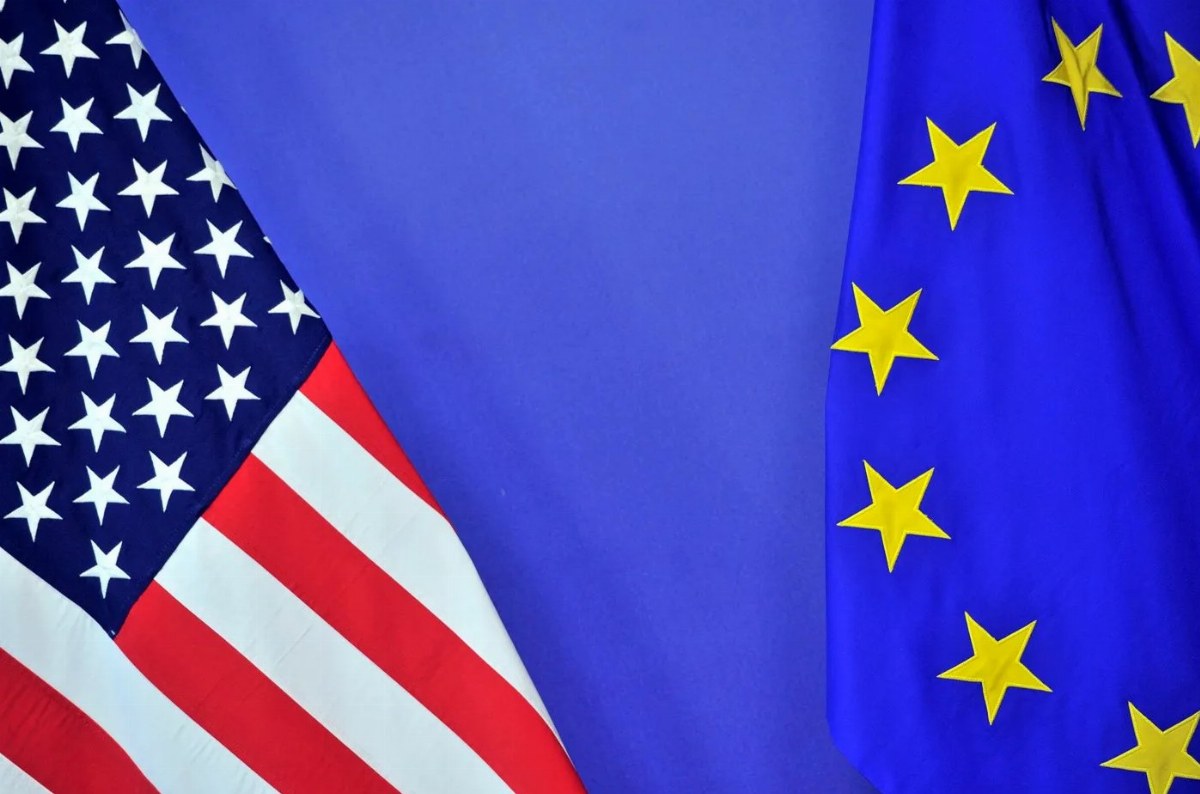
The European Union has made it clear that its association project with Canada is not intended as an anti-American alliance, following threats of retaliation from U.S. President Donald Trump. This statement was issued on Thursday by EU officials, aiming to ease tensions surrounding the proposal.
In a context marked by strained relations with the United States, European Commission President Ursula von der Leyen proposed on Wednesday that Canada become the first “associated member” of the EU, a proposal presented in the presence of Prime Minister Mark Carney.
Olof Gill, spokesperson for the Commission on trade matters, emphasized that “the proposal to strengthen our partnership with Canada is not directed against anyone.” This reassurance comes after Trump threatened to cut trade ties with the EU in response to the initiative.
Trump described the proposal as “ridiculous” during a press conference, stating, “If they do this, if I see it as a hostile act, I will impose very high tariffs or cease all trade with Europe.”
Additionally, von der Leyen expressed her desire for Canada to join a future “European Security Council,” further solidifying ties between the two entities.
France Backs Canada Alliance
Among the 27 EU member states, France has welcomed the initiative to deepen relations with Canada. French Foreign Minister Jean-Noël Barrot stated during an interview on LCI news channel, “Our mission is to create increasingly close ties with Canada.” However, he also noted that the project would need to be “debated, examined in detail, and analyzed” before France can take a definitive position.
As Canada navigates its trade conflict with the Trump administration, it is looking for new partnerships. Similarly, Europe, facing its own tensions with Washington, seeks to rebalance its strategy between the two superpowers, China and the United States.
The status of an associated member proposed for Canada is not legally defined in EU treaties, although Germany recently suggested that Ukraine could be granted such a status. The proposal implies that Ukraine could participate in certain ministerial meetings or EU summits without having voting rights.