Sweden is poised for a significant electoral showdown today, as polls suggest an almost equal split between the left and right parties. The results will determine if the Social Democrats can reclaim power or if the far-right will make a strong entry into the government.
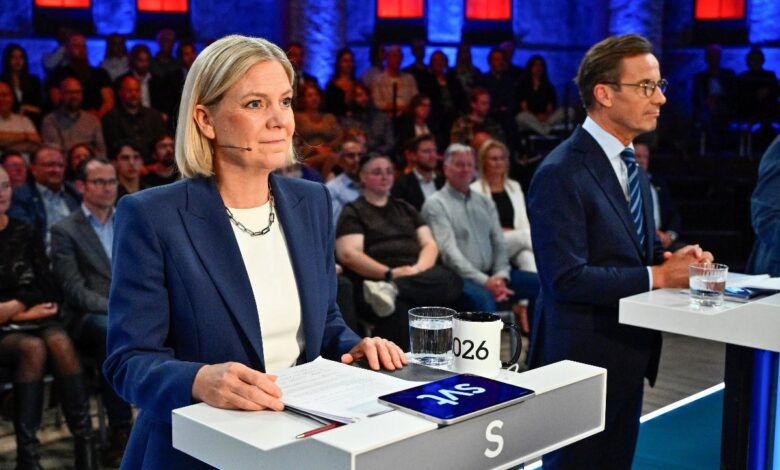
Campaign posters dominate the streets of Stockholm, displaying the main candidates vying for these critical elections. On one side stands Magdalena Andersson, the Social Democratic leader and former Prime Minister (2021-2022), who aspires to return to power.
At 50, Andersson has led in the polls for several months, focusing her campaign on healthcare and purchasing power issues. On the opposite side is Ulf Kristersson, the current right-wing Prime Minister, who believes a new term is within his grasp.
Kristersson, 62, aims to secure another four years to “restore Sweden’s greatness,” a phrase he borrowed from Donald Trump. He emphasized that Sweden is now recognized for its successful entrepreneurs rather than its past notoriety for gun violence and crime, showcasing his firm stance on immigration and crime as key aspects of his administration.
Polls Indicate a Near-Perfect Tie
For months, Kristersson’s government coalition, formed in 2022 and allied with the far-right in Parliament, was expected to lose against the left bloc. However, recent polls provide a glimmer of hope for the ruling coalition.
An Ipsos survey commissioned by Dagens Nyheter indicates a near tie: 49% support for the right and 49.3% for the left. “We all knew this would be a very close election; that’s how elections typically unfold in Sweden,” Andersson remarked during her final campaign rally.
Far-Right May Join Government
“Now it’s up to the voters to decide: do they prefer a government led by me or one entirely dominated by the far-right?” she stated, referencing a significant campaign topic. Kristersson has committed to including the far-right Sweden Democrats in his government if he emerges victorious.
This decision would be a point of pride for the party’s leader, Jimmie Åkesson, who has worked to rehabilitate the party’s image, which has neo-Nazi roots. “We have already won!” Åkesson declared to cheers from supporters during a rally in central Stockholm.
“Sweden is becoming safer, better, and more Swedish,” he emphasized as the elections approached.
Polling stations opened at 08:00 local time (09:00 in Romania) and will close at 20:00 (21:00 GMT), with two exit polls anticipated shortly thereafter. More reliable partial results are expected to be available a few hours later.
Nearly eight million voters are called to the polls, with over half having voted early. Voter turnout in this Nordic country, which has a population of 10.6 million, is traditionally very high.