
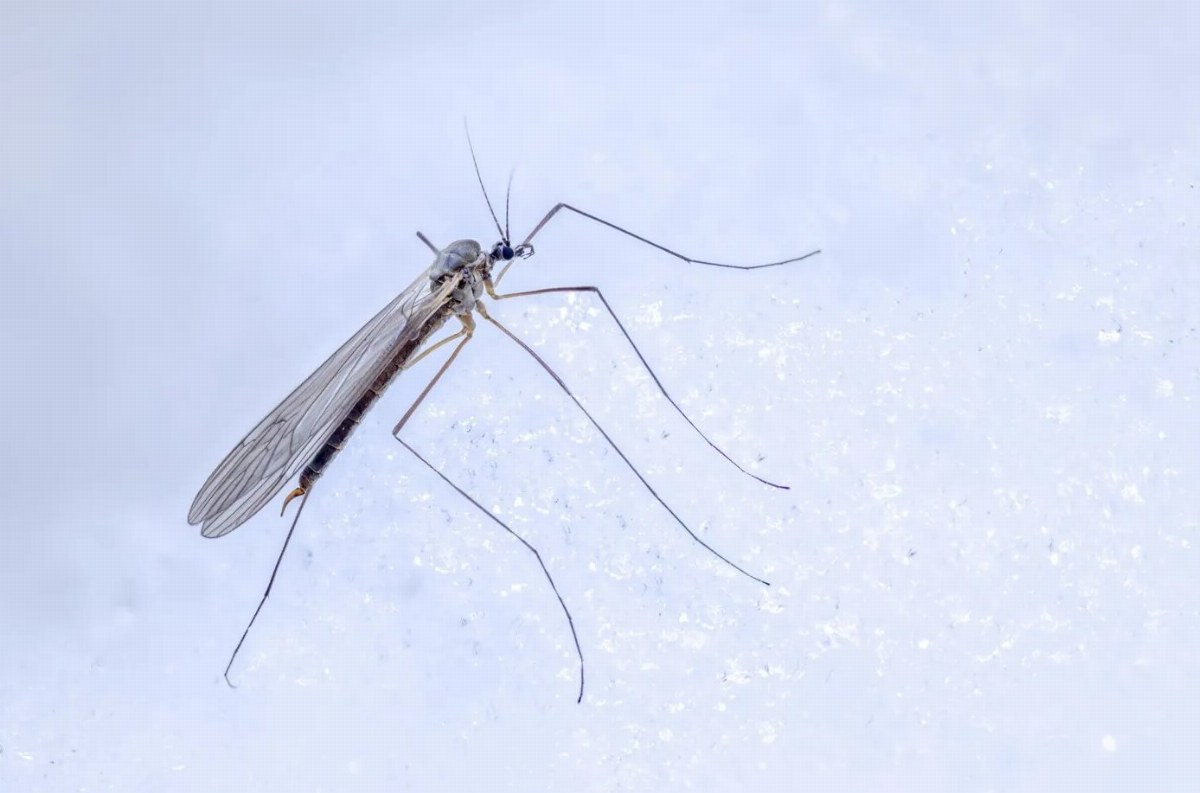
Researchers have made alarming observations of an Arctic fly species breeding in the natural environment of Antarctica, raising concerns about its impact on local wildlife. This warning was issued by Chilean scientists, who noted that the ongoing rise in temperatures due to climate change could facilitate the arrival of invasive species.
According to the United Nations, the Antarctic Peninsula has experienced one of the most significant temperature increases on Earth over the past fifty years, with a rise of nearly 3 degrees Celsius. A recent expedition led by the Centro Internacional Cabo de Hornos, a Chilean scientific research institute, documented colonies of the Trichocera maculipennis fly in several caves near penguin nesting areas during the austral summer from December 2025 to March 2026.
In the last five years, the presence of these flies had already been noted in the sewage systems of scientific and military bases in Antarctica. However, this recent observation indicates that the flies are now completing their life cycle in a natural setting, explained biologist Hugo Benitez, who is coordinating the research.
Benitez suspects that these flies may have been introduced to Antarctica via tourist, scientific, or military vessels. He stated, “Climate change is likely increasing the probability of creating a more favorable environment for species that previously did not inhabit the area,” adding that his findings are part of an unpublished study.
Having studied invasive species for over a decade, Benitez previously showed in a 2025 study published in the journal Zoologischer Anzeiger that this fly was adapting to the Antarctic environment. The research, which analyzed 294 specimens captured at four research stations, revealed a decrease in wing size over time and variations in body shape.
According to Benitez, the presence of larvae in the soil is causing a subtle increase in soil temperatures, potentially leading to an ecological destabilization of the environment. “Terrestrial ecosystems in Antarctica consist of few species. The arrival of an additional species could have a significant impact and is therefore a major cause for concern,” stated Arlie McCarthy, a researcher at the Helmholtz Institute for Functional Marine Biodiversity in Denmark, who was not involved in this new study.


