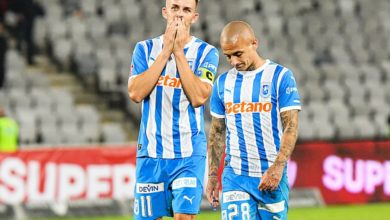
Dinamo has communicated a clear message in recent matches: under coach Nuno Campos, the team has learned to endure hardships. They faced challenges successfully during their match against “U” Cluj, capitalizing on their lone opportunity, even after losing Musi to a red card.
Despite the departures of key players like Boateng and Gnahore, the coaching change, and discussions surrounding a new logo, Dinamo’s performance has been surprisingly strong. Given the club’s tumultuous decade, supporters remain cautiously optimistic after recent successes. The Liga I remains a competitive league where even a streak of three victories can propel a team upward, while two defeats can send one spiraling into mid-table obscurity.
Fans who previously experienced the club’s glory are questioning: “Why shouldn’t Dinamo aim for the title? With a relatively weak league, why not leverage that to our advantage?”
Fortune, Struggle, and Football
In Giulești, Dinamo didn’t need to create a masterpiece; they executed a solid performance, especially in the second half, accepting moments when Rapid held the initiative and waiting for vulnerabilities in their opponent.
Last night’s match against “U” Cluj showcased a different scenario but reiterated the same message, especially following Musi’s sending off, which could have turned the game.
Dinamo operated effectively, showcasing that a team aspiring for the title must perform in various conditions, manage results, accept periods of opponent dominance, and remain calm amid adversity while prioritizing points over style.
Kopic Established the Foundation, Campos Accelerates the Game
It is essential to acknowledge Zeljko Kopic’s contributions; it’s easy to assume that all progress began with the new coach. Kopic laid the groundwork for this team, reinstating discipline, structure, and competitiveness in a club that previously struggled with its identity.
Campos employs a different strategy. Utilizing a 4-4-2 formation, he emphasizes mobility over excessive risk, allowing for dynamic shifts in play. Dinamo can transition from a classic 4-4-2 to various formations like 2-4-4 or 4-2-2-2, adapting to the flow of the game.
Players like Cîrjan and Armstrong move into central positions, two forwards stay close together, and exploiting spaces between lines takes precedence over rigid flank positioning. This approach has led Dinamo to play more directly and efficiently, requiring fewer passes to reach the opponent’s goal. The team is evolving into a more calculated, attacking side.
While some lament Gnahore’s absence, the arrival of new goalkeeper Bellarouch has proven to be an exceptional addition for Liga I, boasting a higher percentage of vertical passes than Gnahore had during his tenure with FCSB.
Gnahore would have provided stability, controlling the pace and ensuring safe build-up play, but true confidence comes from having a dependable goalkeeper. Campos’ Dinamo conveys a desire for swift progression, focusing on reaching key areas faster.
Soro, Armstrong, Musi: Three Players, Three Roles
Let’s discuss the players, as they are the ones executing Nuno Campos’ vision. Soro serves as the command center, the player Dinamo turns to when direct routes are obstructed, possessing the ability to redirect play and keep the team connected.
Armstrong has flourished in his refined role, turning possession into threats, exploiting spaces, and delivering precise shots from the edge of the box.
Musi constantly pressures the opposing defense, compelling defenders to hesitate and retreat. Collectively, these three roles create a cohesive team identity, enhancing their collective gameplay.
Championship Aspirations…
The weaknesses of the Superliga should not be viewed solely as issues; they can present opportunities. If the overall quality remains insufficient for any team to establish a significant lead, then organization, consistency, and the ability to win tightly contested matches become crucial assets.
A team entering the league with the goal of reaching European competitions will adopt a different mindset than one that believes it can win the championship. Once a team dares to dream, their approach to matches shifts fundamentally.
Let’s not deceive ourselves; the Superliga lacks the strength seen in European competitions, evidenced by poor performances abroad and subpar transfers. To claim the Romanian championship, a team only needs to slightly outperform its local rivals.
If Dinamo can maintain its capacity for resilience, preserve its attacking strength, and if players like Armstrong, Cîrjan, Soro, Musi, and others continue to develop their chemistry, while Nuno Campos strikes a balance between offensive football and result protection, the conversation about competing for the title will become increasingly serious.
This is because Dinamo is beginning to resemble a team that is unafraid of matches requiring endurance.