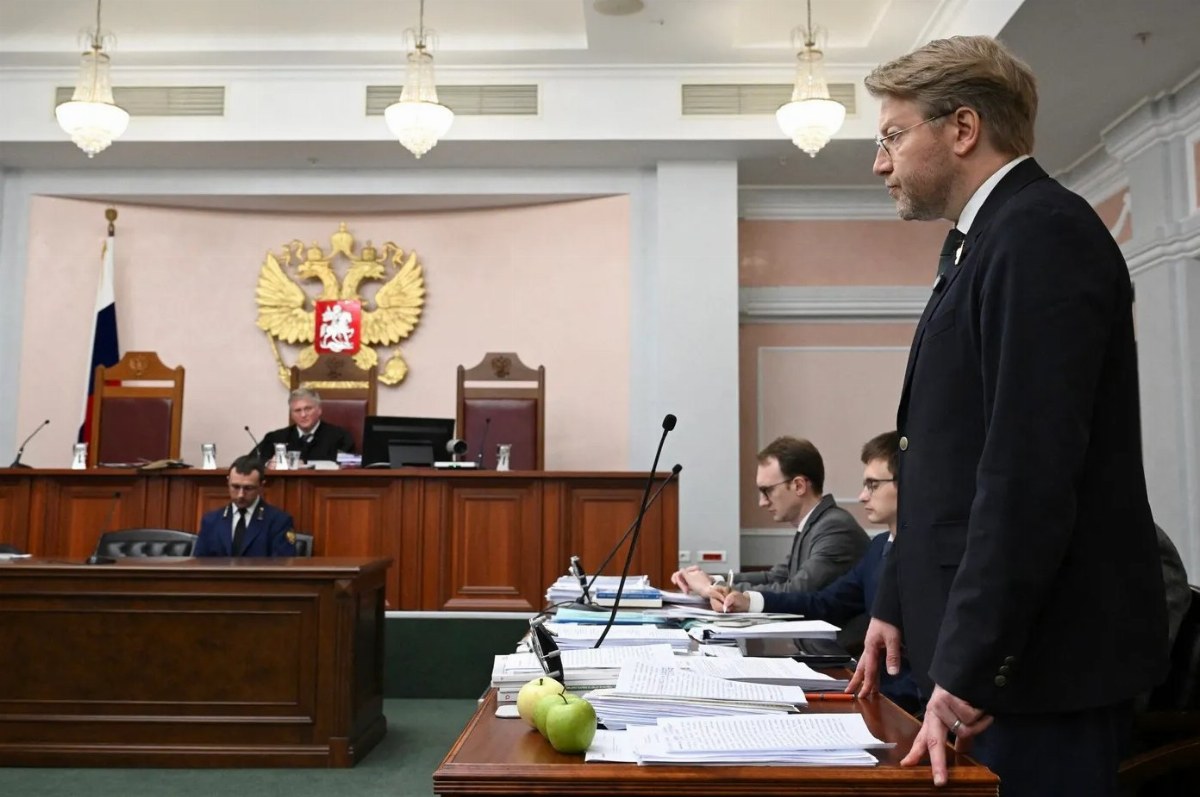
The Supreme Court of Russia ruled on Monday to exclude the liberal, pro-Western Iabloko party from the electoral race for the parliamentary elections scheduled for September. The court’s main reason for the exclusion was the party’s acceptance of foreign funding, which is explicitly prohibited under Russian law. Meanwhile, Iabloko’s leader, Nikolai Ribakov, contends that the true motive behind this decision is the party’s opposition to the ongoing war in Ukraine, according to reports from Reuters, EFE, and Agerpres.
The legal proceedings that led to this ruling were initiated by the nationalist pro-Kremlin Rodina party, which accused Iabloko of undermining both Russia and the electoral process. Additionally, the Central Electoral Commission (CEC) presented the court with documents indicating that Iabloko had received foreign funding, which is banned by Russian legislation.
Shortly before the verdict was announced, Ribakov suggested that the underlying reason for the legal action was his call for Russians to vote for peace in Ukraine. “The key difference between our party and the Kremlin is that we advocate for peace, while they promote bloodshed. They understand that people want to vote for peace, and they are afraid. That is why they want to exclude us from the elections,” Ribakov stated during his address to the Supreme Court.
He also noted, “In recent weeks, we have received millions of supportive messages from across Russia. Many people in Russia want to and are willing to vote for Iabloko in the upcoming elections.”
Iabloko, which means “apple” in Russian, embodied the hopes of pro-Western liberals in the 1990s. However, due to a lack of electoral success, it has since become largely irrelevant, failing to secure a parliamentary group in the State Duma, the lower house of parliament, since 2003.
Nonetheless, Iabloko remains the only party in Russia calling for the unconditional cessation of the war in Ukraine. Its leadership believes that the September parliamentary elections will serve as a referendum demonstrating that millions of Russians oppose the war.
In contrast, the ruling party, United Russia, which supports Vladimir Putin, is expected to win the elections easily, with other pro-Kremlin parties projected to gain significant seats. This is occurring against a backdrop where Russian authorities have acted to stifle dissenting voices against the war, asserting that Russia must remain united in the face of a largely hostile West.
Boris Nadezhdin, a politician who attempted to run for parliament on an anti-war platform, was designated a “foreign agent” last month, and he has since managed to flee the country.