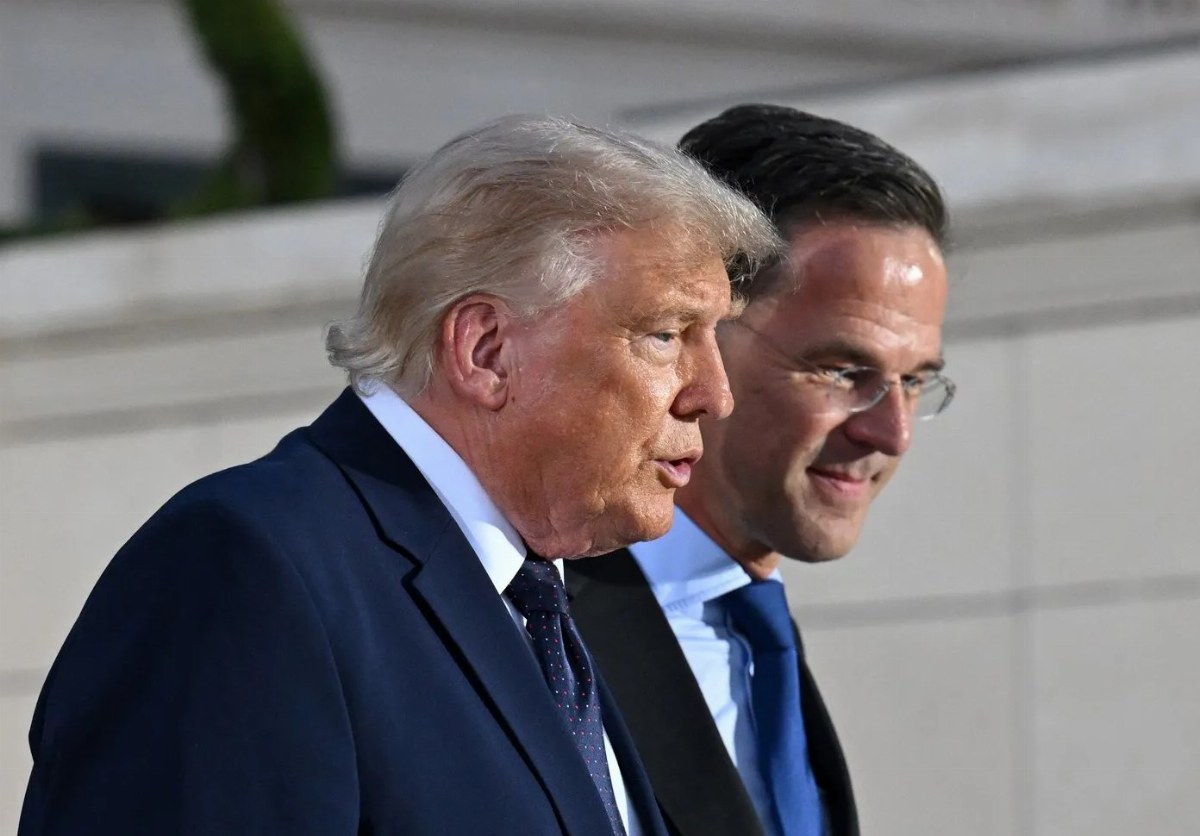
NATO leaders convened in Turkey on Tuesday to announce armament contracts valued at tens of billions of dollars, emphasizing their commitment to U.S. calls for enhanced military spending in Europe. This announcement came as President Donald Trump expressed disappointment with the NATO alliance, reiterating his desire for greater defense contributions from member nations, especially the UK, France, Italy, and Germany, amid ongoing tensions related to Iran.
The summit in Ankara aims to project unity after a challenging year marked by the ongoing conflict with Iran, which has exposed fractures within the alliance formed after World War II. In a meeting with Turkish President Recep Tayyip Erdogan, Trump indicated he might have boycotted the summit without his cordial relations with the Turkish leader, hinting at potential troop withdrawals from Europe.
Trump articulated his dissatisfaction with NATO members, stating, “We haven’t been treated well,” while asserting the U.S. has invested trillions into the alliance without adequate reciprocation. He noted previous discussions with Russian President Vladimir Putin and Ukrainian leader Volodymyr Zelenskiy about seeking an end to the war that began with Russia’s invasion of Ukraine in February 2022.
In a notable shift, Trump announced the U.S. will lift sanctions on Turkey imposed in 2020 for its acquisition of Russian defense systems and signaled openness to selling F-35 fighter jets to Turkey, highlighting the nation’s loyalty compared to other allies.
Rutte Calls for Defense Industry Revolution
NATO Secretary General Mark Rutte highlighted significant increases in European defense spending. He advocated for a “revolution” in the defense industry within the alliance, stressing the urgent need for military capabilities amid rising expenditures by Russia, China, North Korea, and Iran.
According to a NATO official, agreements valued at a minimum of $50 billion include plans for European nations to purchase surveillance drones from Northrop Grumman and GlobalEye surveillance aircraft from Sweden’s Saab. Following the announcements, Saab’s stock saw a notable increase, responding positively to anticipated European rearmament.
In a separate announcement, the UK government revealed that 12 European nations, including the UK, France, and Germany, will allocate over $50 billion in the next decade for the development of long-range precision weapons to bolster NATO’s defense capabilities.
British Prime Minister Keir Starmer is set to present the UK-led initiative in Ankara, where participating countries will issue a joint statement with further details.
The European defense sector has faced criticism for its fragmentation and bureaucratic challenges, leading to increased reliance on U.S. arms procurement. Additionally, sluggish economic growth has made defense spending politically sensitive within Europe.
Iran War and Renewed NATO Criticism
The ongoing tensions within NATO have been exacerbated by the conflict in Ukraine and Trump’s controversial remarks about Greenland. Following U.S. attacks on Iran in February, Trump has repeatedly criticized NATO members for insufficient support in the Middle Eastern conflict, even hinting at a potential U.S. exit from the alliance.
During the summit, Danish Prime Minister Mette Frederiksen emphasized the importance of respecting her country’s sovereignty, particularly concerning Greenland, which Trump believes should be under U.S. control.
European officials assert that they have largely honored commitments allowing U.S. military use of their airspace and bases, despite feeling sidelined in discussions surrounding the unpopularity of the Iranian war, which has strained their economies.
Further complicating matters, the U.S. announced troop withdrawals from Europe and a six-month assessment of its military presence in the region.
European officials anticipate renewed criticism from Trump, driven by his unpredictable relationships with various leaders, as demonstrated in his recent conflict with Italian Prime Minister Giorgia Meloni. On Wednesday, NATO members are expected to reaffirm their support for Ukraine, with Zelenskiy urgently requesting more air defense equipment.
The stakes are high, as Russia recently launched missile and drone strikes on the Kyiv region, resulting in at least 28 fatalities and underscoring Ukraine’s acute need for U.S.-manufactured air defense interceptors.
Zelenskiy’s Call for Ukraine’s NATO Membership
Ukrainian President Zelenskiy asserted that Ukraine could provide “extraordinary” defensive capabilities to NATO if admitted to the alliance and urged for more decisive support for Ukraine’s air defenses as Russia intensifies missile attacks.
“Ukraine belongs in NATO, as NATO with Ukraine represents the alliance of the future,” he stated, addressing defense industry representatives and NATO members.
While the U.S. has opposed Ukraine’s membership under Trump’s administration, Zelenskiy questioned, “Is it fair to exclude a country with such defense capabilities from NATO?” emphasizing Ukraine’s readiness to integrate into a common security framework.
He highlighted Ukraine’s advancements in drone technology and missile production, noting that these capabilities could significantly enhance collective defense within NATO.
However, Zelenskiy acknowledged that Ukraine cannot fully protect itself from daily Russian attacks without stronger partnerships. He called for a renewed commitment from allies to address air defense needs, particularly for the highly effective Patriot interceptors, as current stockpiles are limited due to the ongoing conflicts.
Nicușor Dan’s Announcement
On Tuesday, Romanian President Nicușor Dan announced Romania’s hosting of a regional office for the Defence, Security and Resilience Bank (DSRB), which aims to bolster member states’ defense and security investments.
The initiative, signed at the NATO summit, includes Canada and several European countries, committing to enhancing industrial capacities and reducing financing costs for defense projects, especially for small and medium enterprises.
As a founding member, Romania aims to contribute to the development of this new cooperative framework, with plans for the DSRB to become operational by 2027.
Signatories underscored the necessity of mobilizing public and private capital to support defense and security expansion in light of growing investments among allied nations.