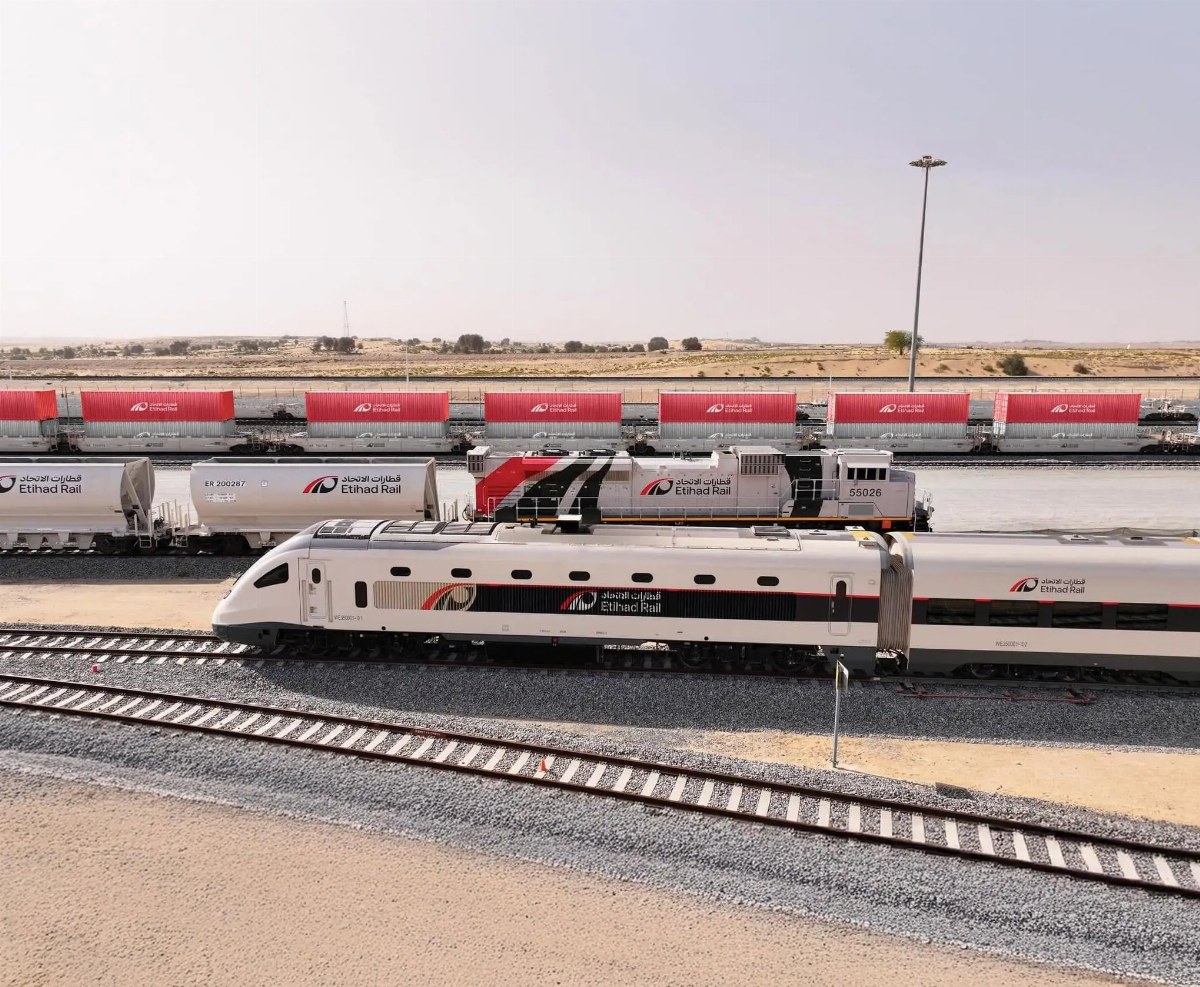
On June 30, the United Arab Emirates (UAE) will launch its inaugural passenger trains, marking a significant milestone for the nation known for its cities like Dubai and Abu Dhabi. This initiative is part of a broader ambition to develop a robust railway system.
Over the past decade, the UAE has established a freight railway network, with a $13 billion plan that includes the construction of a high-speed passenger line. The first passenger route will connect Abu Dhabi to Fujairah, with future plans to extend services to Dubai later this year. Tickets for the second class will be priced at €13, while premium class will cost €28.
Passenger Trains Limited to 200 km/h
Despite being significantly lower than speeds of 300 km/h or more seen in other countries, the maximum speed for the UAE’s new trains is set at 200 km/h. This decision is primarily influenced by the extreme climate conditions of the desert, which drive up operational costs. It has been noted that each increase of 10 km/h from a base speed of 160 km/h can double the operational expenses.
Additionally, the UAE’s railway network is relatively short at about 900 km, resulting in shorter travel times between major cities.
Challenges of Train Travel in the Middle East
While renowned for many things, Middle Eastern countries have not developed a strong tradition of rail travel. Most residents rely on private vehicles, and the region’s extensive highway systems contribute to heavy traffic.
Geographical factors such as high temperatures and arid landscapes also impose significant maintenance costs, requiring more frequent inspections of railway lines and equipment compared to regions with milder climates.
Trains must be specially designed to withstand temperatures exceeding 50 degrees Celsius and sandstorms. This includes using materials resistant to thermal expansion and installing sand filters to protect against dust storms.
However, some Arab countries are advancing their railway infrastructure. In 2018, Saudi Arabia opened its first high-speed train line between Mecca and Medina, and now the UAE is set to launch its first passenger services, featuring 13 trains manufactured by Spanish and Chinese companies.
Overloaded Highways and Future Solutions
The seven emirates cover a total area of 83,000 square kilometers, which is three times smaller than Romania. The country boasts nine major highways extending 1,093 km. The initial focus on establishing a freight railway was aimed at alleviating congestion on these already busy highways.
With a population of 11 million, there are approximately 4.5 million registered vehicles, and 3.5 million of these are in Dubai. The number of cars has doubled in the last eight years, with nearly one million people commuting daily to Dubai from surrounding areas. The introduction of passenger trains is expected to gradually reduce the number of cars on the roads.
Dubai has had a metro system since 2009, and there are firm plans for further expansions. Abu Dhabi, Dubai, and Sharjah also have public transport systems, including buses.
History of Freight Trains in the UAE
Freight trains commenced operations in the UAE in 2016, covering 250 km between Abu Dhabi and Al Dhannah, with national expansion completed by 2023. These trains primarily transport hydrocarbons, cement, stone, steel, and aluminum, developed with the assistance of Deutsche Bahn.
Construction of the first four passenger stations began in 2024, located in Abu Dhabi, Dubai, Sharjah, and Fujairah. Each station will feature a lounge area for Business class ticket holders, along with shops, cafes, and restaurants.
Three trains, each with five carriages, were procured from China’s CRRC Qingdao. Additionally, a $327 million contract was awarded to CAF in Spain for diesel trains with seven carriages.
The Dubai station is expected to open by the end of September, with another station slated for completion by December 30. The first phase of the rail network is anticipated to be finalized by March 2027, including the station in Sharjah and ultimately expanding to 900 km.
The rail service will connect 11 cities across the UAE, from Al Sila to Fujairah, with an aim to achieve 36.5 million annual trips by 2030.
Future High-Speed Connections Between Major Cities
The most ambitious segment of the railway plan involves constructing a high-speed line between Dubai and Abu Dhabi, enabling trains to travel at 320 km/h and covering the 150 km distance in just half an hour.
Estimated costs for this project reach $8 billion, with the first tenders expected to be launched in 2025 and services projected to begin by 2030. However, the complexity of the work could lead to delays.
The route will be divided into four sections, with the largest portion spanning 64 km. Contracts for consultative and design services have been awarded to companies from the UAE, Turkey, China, and India.
If successful, the UAE will join a select group of countries with high-speed rail services exceeding 300 km/h. Currently, traveling by car between Dubai and Abu Dhabi takes just under one and a half hours without traffic, and over two and a half hours during peak congestion.