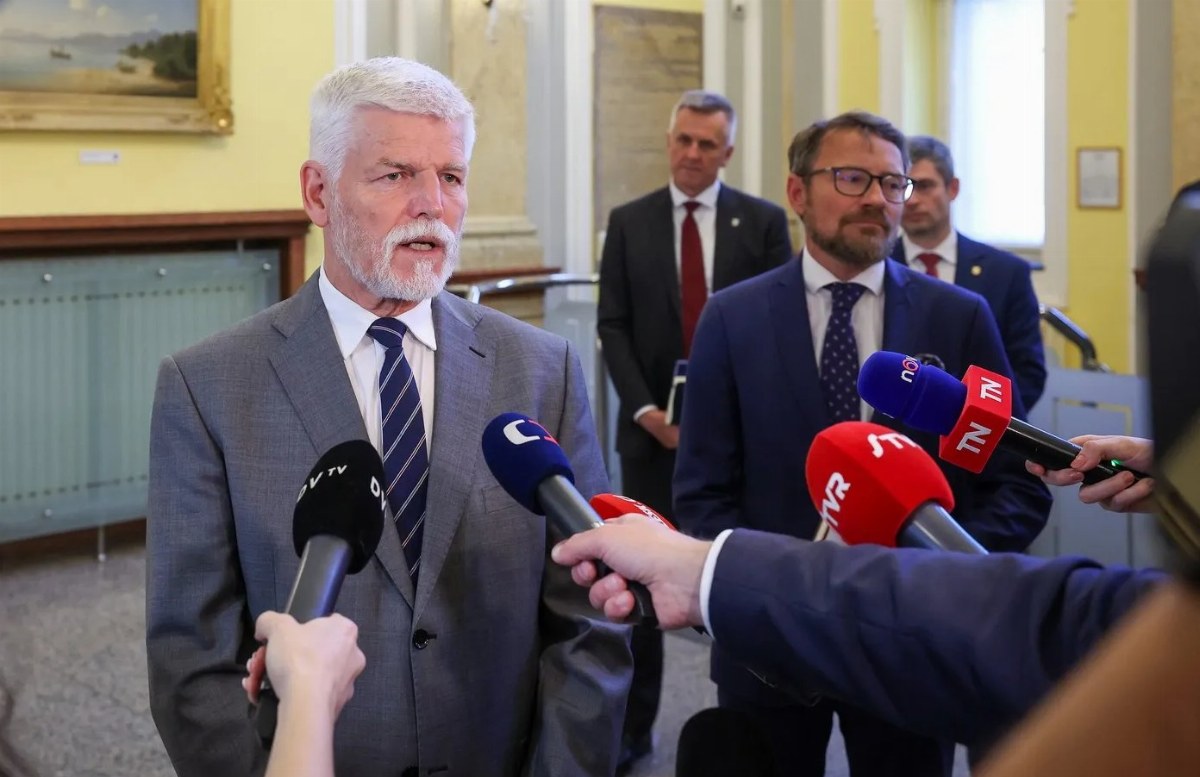
The Czech government in Prague announced on Monday that President Petr Pavel will not be part of the country’s delegation at the upcoming NATO summit scheduled for July 7-8 in Ankara, according to reports.
This decision contradicts long-standing tradition and suggests a potential legal confrontation between Prime Minister Andrej Babis and Pavel, a former general and NATO military committee chairman from 2015 to 2018. Pavel defeated Babis in the presidential elections held in 2023.
Pavel, a strong advocate for Ukraine amidst Russian aggression, had insisted on attending the alliance’s top meeting. In contrast, Babis’ coalition government, which is led by his populist ANO party, has been criticized for reducing aid to Ukraine.
“This is a very specific summit,” Babis stated during a press conference. “It probably won’t be very pleasant for our country, but we have the responsibility to defend our position.” This includes the intent to allocate less funding to the defense budget, as reported.
The Czech Constitution grants limited powers to the president, with foreign policy primarily dictated by the government. However, since the country’s NATO membership in 1999, presidents have traditionally led delegations to NATO summits, often alongside prime ministers.
The president’s office announced that Pavel will comment on the government’s decision on Tuesday. He has indicated that any exclusion from the delegation would be viewed as an attempt to limit his representation of the country abroad, and he plans to appeal to the Constitutional Court regarding this matter.
Among the parties in the government coalition that are in conflict with the president is the minor Motorists’ Party, which Pavel refused to appoint as foreign minister.
Currently, the Czech Republic is one of the NATO member states allocating the least for defense—below the 2% of GDP minimum last year. The new government led by Babis has cut the military budget compared to initial proposals, meaning it will again fall short of this threshold. The prime minister has claimed that the minimum level will be met by 2027, while allies have agreed to increase defense spending to 3.5% of GDP by 2035, adding an additional 1.5% of GDP for related programs.