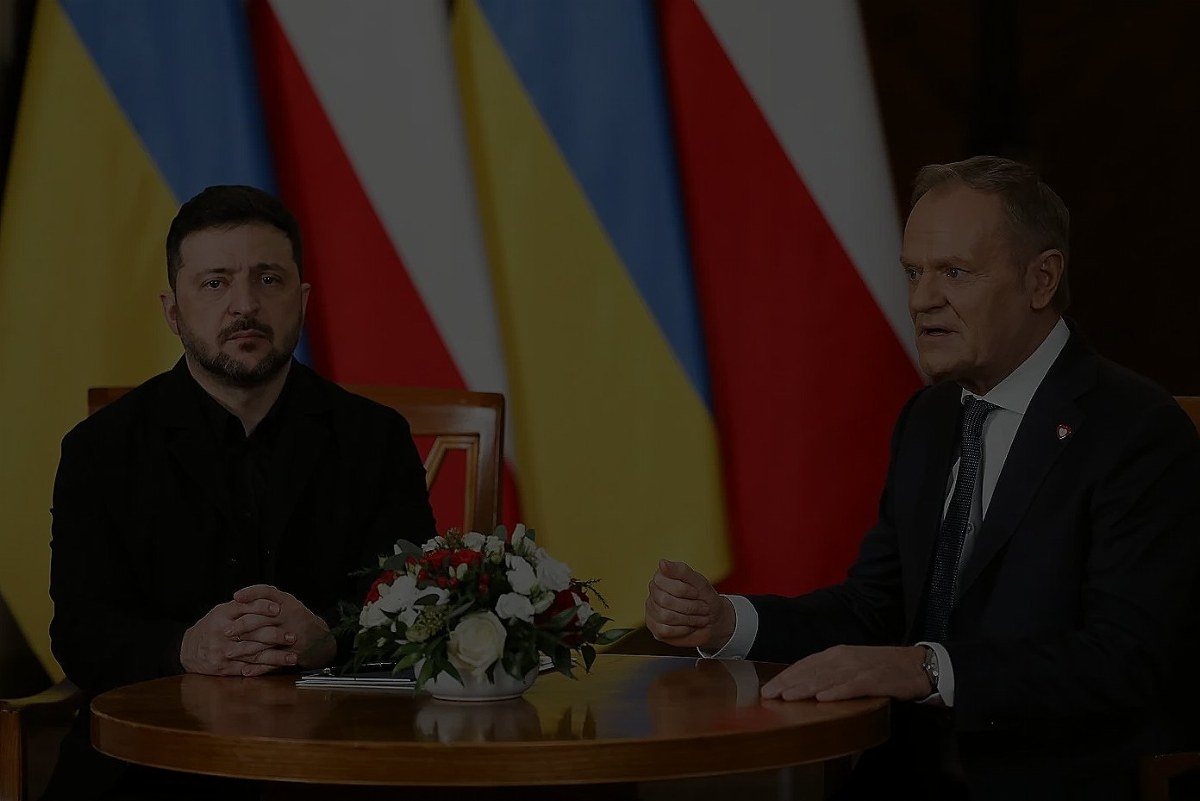
Ukraine expressed its discontent on Friday over Poland’s decision to withdraw the country’s highest honor from President Volodymyr Zelensky, calling it a “strategic error” and a “contemptuous” move. This announcement by Polish President Karol Nawrocki is set against a backdrop of heightened tensions related to the complex historical relationship between the two nations, according to reports from France Presse.
Andrii Sibiga, Ukraine’s foreign minister, lamented on Facebook that emotions had overridden rational decision-making in Warsaw, leading to unsubstantiated, impulsive actions. He referred to the situation as an “unnecessary escalation” and indicated his own return of a Polish honor as a form of protest.
Nawrocki stated on Friday that he was retracting the Order of the White Eagle, the highest honor Poland can bestow, from Zelensky. This symbolic decision threatens to strain bilateral relations, as Poland has been one of Ukraine’s most ardent supporters since Russia’s invasion began in February 2022, providing military and humanitarian assistance.
In April 2023, the awarding of this decoration to Zelensky was seen as a testament to exceptional solidarity between the two nations.
Reasons Behind Nawrocki’s Indignation
The withdrawal of the honor follows Zelensky’s controversial decision at the end of May to name a military unit after the Ukrainian Insurgent Army (UPA), a nationalist group from World War II that is blamed in Poland for the deaths of over 100,000 Poles. Nawrocki expressed his outrage over this naming, advocating for the revocation of Zelensky’s Polish distinction.
He articulated his position in a public statement on the platform X, noting, “For the overwhelming majority of Polish society, the UPA remains primarily an entity responsible for brutal crimes against the citizens of the Republic of Poland during World War II.”
Before assuming office in 2025, Nawrocki had openly criticized Kiev, opposing Ukraine’s NATO and EU membership, and blocking legislation extending special support for Ukrainian refugees in Poland. Despite numerous invitations from Ukraine, he has never visited Kiev.
In response, Kiev has assured that the naming of the military unit was not directed at Poland.
The Dark History of the UPA
The UPA was the military wing of a movement advocating for Ukrainian independence, which fought against the Red Army but also faced Polish resistance, committing acts of violence against Polish and Jewish civilians. The group occasionally collaborated with Nazi forces, albeit sometimes turning against them.
In Ukraine, the UPA is honored as a force that fought for the nation’s independence, especially following Russia’s invasion in 2022. While Kiev has acknowledged the massacres of Poles committed by the UPA and issued official apologies to Warsaw, it disputes the label of genocide as defined by Poland’s parliament in 2016.
In 2025, after years of pause, both countries resumed the exhumation of victims from the Volhynia massacre, located in present-day northwestern Ukraine.
Tusk’s Moderate Stance
The recent decision by Zelensky has sparked reactions across the Polish political spectrum. Prime Minister Donald Tusk, a pro-European advocate and staunch supporter of Ukraine, initially described the situation as “alarming.”
Tusk has urged both presidents to seek better means than retaliatory actions to defuse the tensions, also calling on Ukraine to take “responsibility for this crisis and the means to overcome it.”
He emphasized that supporting Ukraine in its fight against Russia is in Poland’s interest, asserting, “If Ukraine loses this war, we will find ourselves in a dramatically more difficult situation.”
Nawrocki’s response comes just as an international conference for Ukraine’s reconstruction is set to take place at the end of the month in Gdansk, co-hosted by the Ukrainian president.
Poland is currently home to nearly one million Ukrainian refugees, according to Eurostat. A recent survey from Onet.pl indicated that 65% of Poles believe Zelensky’s decision negatively impacts their perception of Polish-Ukrainian relations.
Another poll released at the beginning of the year showed that 48% of Poles still favored welcoming Ukrainians, while 46% opposed it, a significant drop from the 94% support for hosting Ukrainians immediately after the onset of the Russian invasion.