Many summer residents believe that by July the planting season is already closed and the beds will remain empty until the fall. This is actually a common mistake. Experienced gardeners know that after harvesting early greens, onions or garlic, a lot of space is freed up, and it should not be left empty. Properly selected plants will give a second harvest of fresh vitamins and help the earth to rest and gain strength until next spring.
Advice from experienced summer residents: On thematic forums, gardeners often remind: bare soil in the second half of summer quickly dries out in the sun, erodes and is instantly overgrown with malicious weeds. If the beds are occupied with something, the soil remains loose, moist and fertile, which means that next year the plants will grow much better.
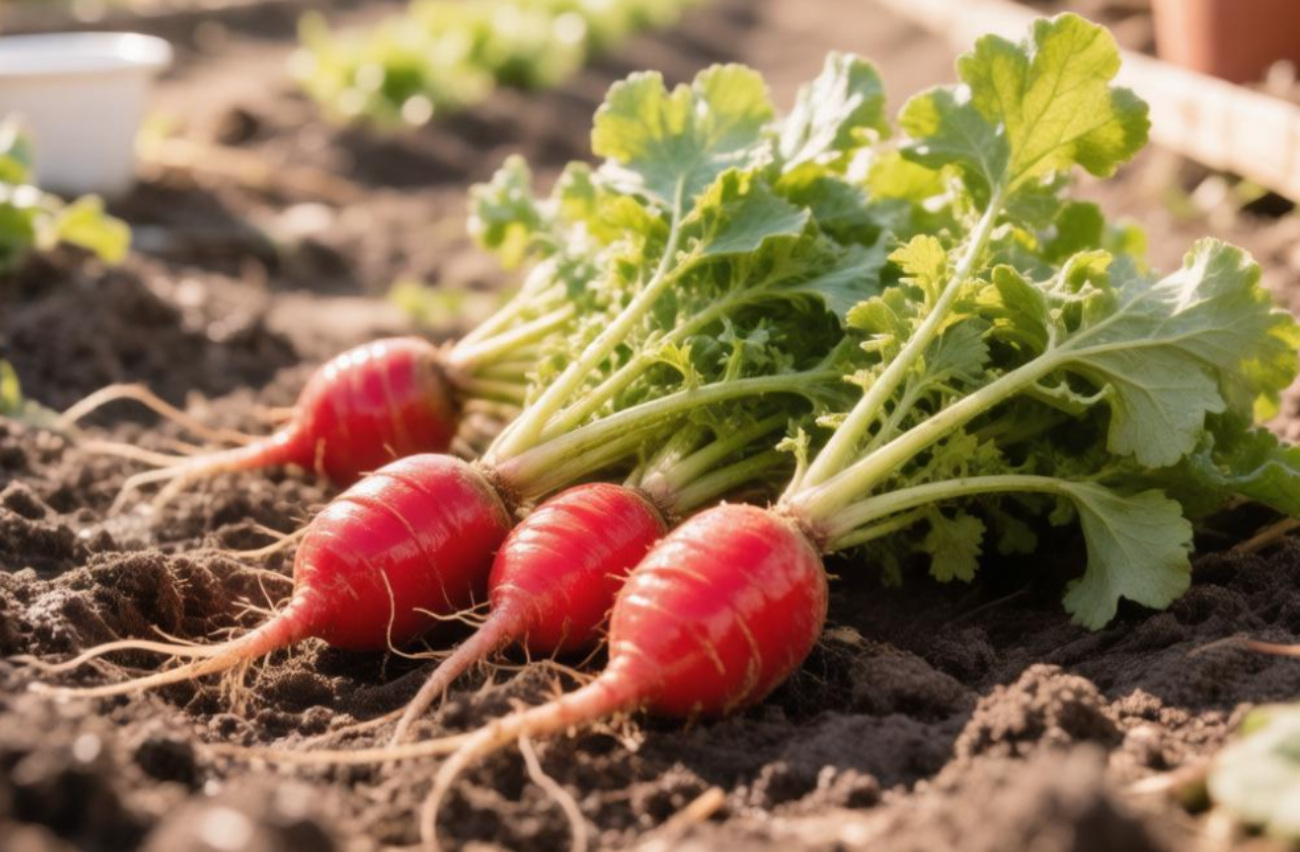
Autumn radish
Many people are accustomed to planting radishes only in the spring, fearing that in the summer they will go into arrows and become bitter. But now there are special summer varieties that grow well in long daylight hours. Root crops turn out to be large, juicy and stored much better than spring ones.
- How to plant: Make shallow furrows in the damp soil, sow the seeds and cover them in a two to three centimeter layer.
- Care: Be sure to thin out the seedlings so that there are five centimeters between the plants – this way the radishes will be large.
- Duration: The first harvest can be harvested in three to four weeks.
Leaf mustard
This spicy green is perfect when you need to fill up empty space quickly. It is not afraid of slight cold spells and produces delicate leaves with a pleasant piquant pungency.
- Harvesting: Cut off the leaves at the edges of the bush, leaving the center. This way the plant will quickly grow new greenery until late autumn.
- Benefit for the garden: In the fall, mustard does not need to be pulled out by the roots. The roots left in the ground will rot, make the soil loose and disinfect it from many diseases.
Bush green beans
An excellent choice for those who do not want to install high trellises and get tangled in long vines. Low-growing varieties grow in neat bushes right in the garden bed.
- Plus for the soil: Beans have wide leaves that shade the ground themselves, preventing weeds from growing and preventing moisture from quickly evaporating.
- How to plant: Plant the seeds in moist soil to a depth of three to four centimeters.
- Deadline: The first tender pods will appear in a month and a half. If you regularly pick the crop, the bush will bloom and produce new pods until October.
Vegetables from the second rotation are not only tasty, but also very useful for the site itself. While greenery grows in the beds, the soil does not dry out or become depleted, retaining all its beneficial properties for future plantings.