An expert explains why some teachers ignite passions for their subject and others make you hate it. The word we fear to use

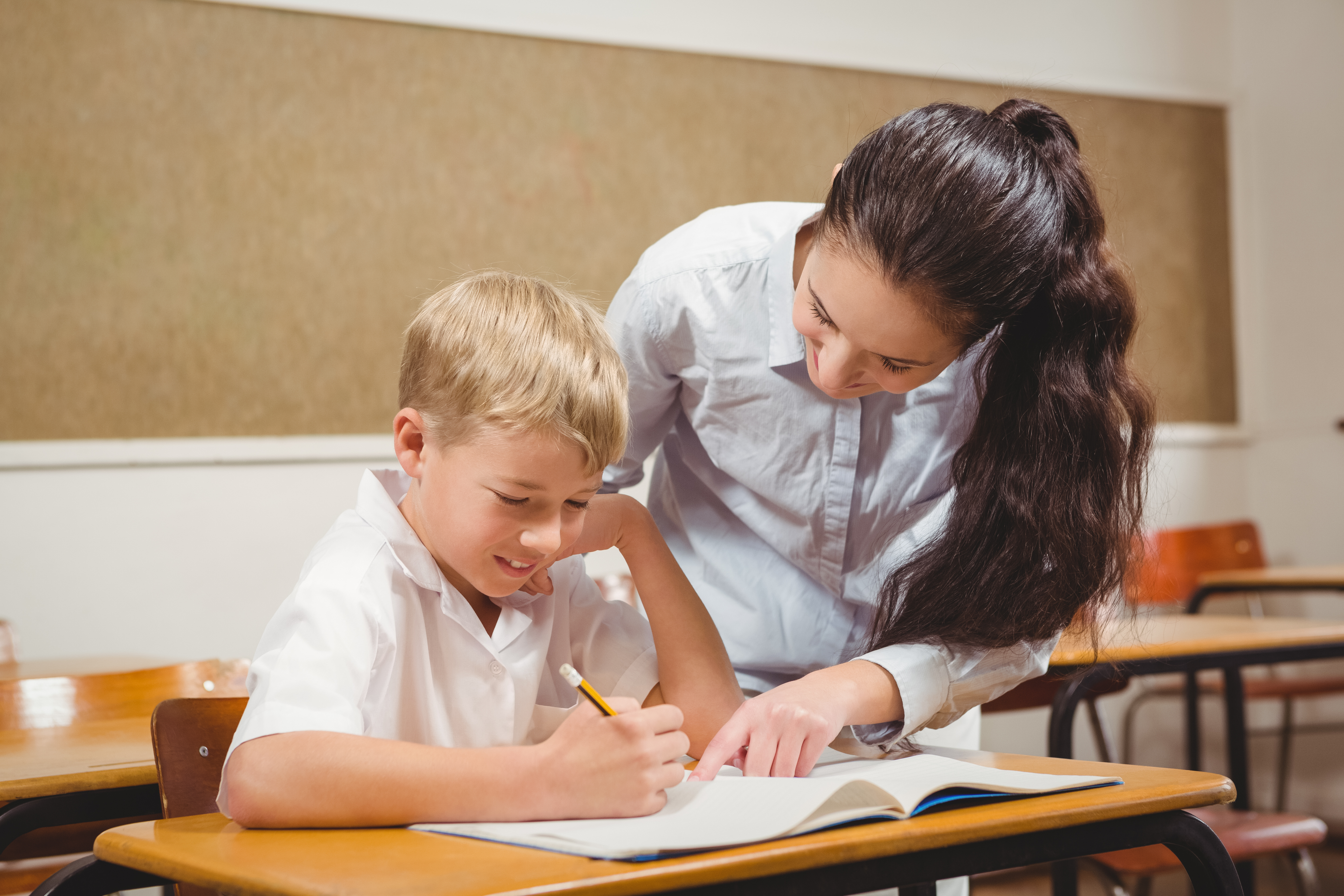
A number of recent studies confirm that a teacher's energy makes students curious or blasé about a certain subject. And energy is not a vague term, although it sounds like a spiritual term, which we do not use. Only the teacher's energy is concretely expressed in the classroom.
- “In the first phase, the children get attached to the teacher's emotion, to his enjoyment of the subject,” says Corina Dobre, cognitive behavioral psychotherapist in a dialogue with HotNews.
- “But the relationship between the student and the teacher, attention, does not mean friendship, but structure, predictability and attention to the needs of the children,” says the psychotherapist.
- What follows after the student is “attracted to the subject”, what does he need.
Researcher John Hattie, director of the Institute of Educational Research at the University of Melbourne, Australia, has conducted extensive research, Visible Learning. It's a synthesis based on hundreds of meta-analyses to see what works best to improve educational outcomes.
The emotional, decisive connection
His findings make it clear that the most important factors in learning are: the teacher-student relationship, feedback and teacher enthusiasm. A teacher who ticks off these points, Hattie argues, can radically change a student's journey – not just test results, but how they relate to long-term learning.
For his part, the American researcher Robert C. Pianta demonstrated that the emotional connection between teacher and student is decisive. They influence motivation, engagement and school performance. Therefore, teachers who succeed in becoming “attachment figures” for children make them want to explore and know more.
It's like in the example of Steve Jobs. The Apple founder discovered his interest in technology thanks to his high school electronics teacher, John McCollum, who encouraged his students to build electronic devices and participate in electronics clubs.
The teacher passed on the germ to Jobs, and this not only influenced his career, but revolutionized the technology industry and the entire world.
“The teacher who makes students feel seen and valued”
We spoke with Corina Dobre, cognitive behavioral psychotherapist, to understand how a student ends up learning for the teacher's sake and what is special about the teachers who fascinate their students and who manage to influence their future.
-Ms. Dobre, what does it actually mean for a student, a good teacher who inspires and arouses interest in his subject?
–In short, he is the teacher who is visibly passionate about what he teaches and who succeeds in doing it in such a way that his enthusiasm is contagious. It is the teacher who stands in front of the children not only to recite information, but also to give it meaning.
I am thinking, for example, of a chemistry teacher who, beyond the subject of the curriculum, talks to the students about various discoveries that have changed our lives and does experiments with them that are applicable to everyday life.
I think of the history teacher who, by explaining the past, makes students understand how it has influenced the times in which we live. Or to the Romanian teacher who helps them discover that the works they are studying are not dull comments, but a mirror of the times lived by the authors.
Equally important is that such a teacher builds real relationships with students, makes them feel seen and valued, sees their strengths, and allows them to make mistakes to learn without sanctioning them.
“Emotion beats cognition, it activates before thought”
-Why does the teacher's enthusiasm and emotional involvement matter so much for learning?
–Because, in the first phase, children get attached to the emotion that the teacher conveys, to his joy towards the subject. Specifically, because emotion trumps cognition, it activates before thought.
If a child does not feel safe, curious or connected, they will not learn effectively. Teachers who manage to create positive emotions – joy, interest, safety – have a much greater impact than those who just convey information.
Emotions are contagious in the school environment. Not just the positive ones, but also the negative ones, and that's why a blasé teacher can cut off any desire for discovery. Of course, the student also learns the subject of the blasé teacher, because he has nowhere else to go.
But he doesn't do it because of an intrinsic motivation that pushes him to want to know more and discover, but he studies for an exam, for a high grade or for a career that in his family is passed down from one generation to another.
When a student looks for information about the subject outside of the school curriculum, he is already hooked, and when it becomes part of his identity, the teacher has done a great job.
Why it is needed beyond “attraction to matter”
– Talk about the importance of the relationship that the teacher establishes with the students. Isn't it utopia to imagine that a teacher can build relationships with 30 students in a class?
–The relationship I mean is built through seemingly simple things: knowing them by name, seeing them as individuals, being consistent and creating a safe environment. Mind you, the relationship isn't about friendship, it's about structure, predictability and attention to their needs.
After the teacher draws the students into the universe of his subject, it is necessary to support them in discovering it, but also to see what each one is like, what skills, what progress they have. For children, learning also involves a mirroring process: it is important for the teacher to see what is positive in them, to notice that they are doing well.
All this makes students engaged and interested in class. And even if they won't end up pursuing careers that are directly related to that discipline, the fact that they were lucky enough to have teachers who opened their minds, planted something good in them, developed their skills, will be of great use to them in life.
What did the three teachers who influenced Corina Dobre have in common
I had three female teachers who didn't necessarily mark my professional path, but they helped me acquire skills that help me today in my job.
What did they have in common? The fact that they saw the good in each of us and encouraged us to be consistent. For example, I owe the Romanian teacher the fact that I read a lot, and that increased my capacity for introspection, which is necessary in my job.
I like to listen to people's stories, I'm curious, I make connections between different moments and events, I put things in context, and I'm sure this is also due to the history teacher and the way he made me discover and love his subject.
Why is it “lucky” to have such a teacher in Romania
-Education specialist John Hattie argues that inspiring teachers do not hunt for students' mistakes, but allow them to make mistakes in order to learn. Why does such an approach help children?
–It's true, for teachers who change lives, failure is a learning opportunity. If the student made a mistake, for example, in the simulation for the national assessment, I, as a teacher, challenge him to find out what he missed, what he needs to understand, learn, learn, so that he doesn't make mistakes again in the exam – and here I'm not just referring to the subject he has to learn.
Maybe they need to learn the order in which to do the exercises or how to manage their stress.
Finally, I would like to mention something important: if we think about the Romanian school, having a teacher with the qualities I just talked about is all about luck. Because the school system forces teachers, unfortunately, to live in a bureaucratic structure with rigid objectives that reduce their creativity, joy and enthusiasm.