Surprising discovery: researchers have identified a possible “quantum compass” in the liver of pigeons

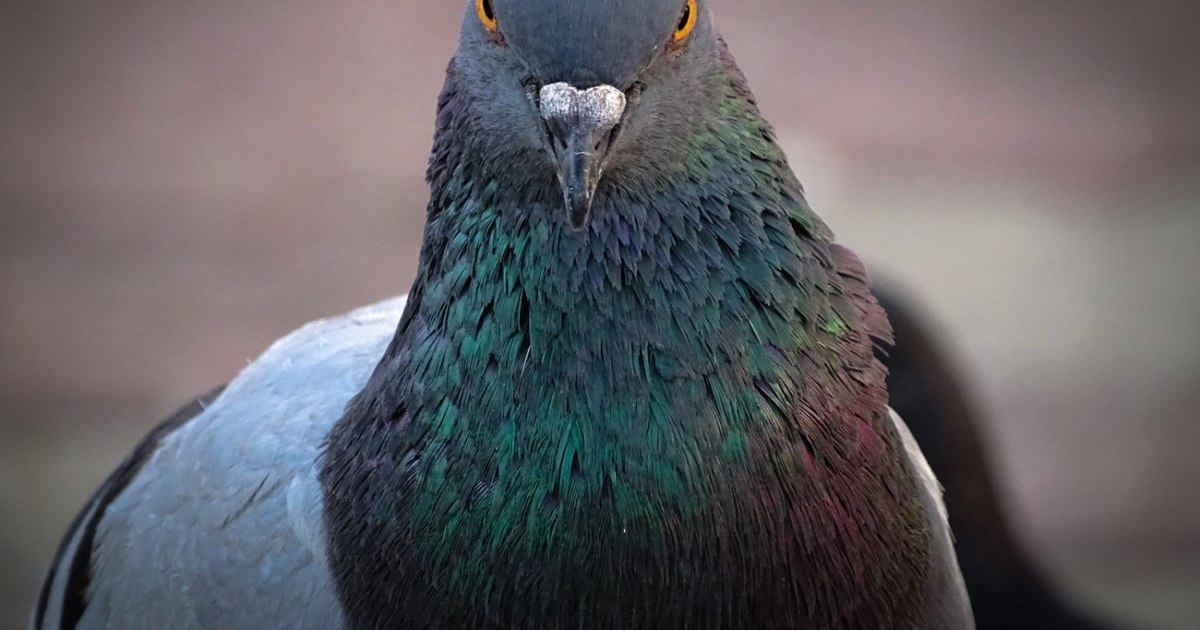
Pigeons are renowned for their ability to find their way home even after being transported tens or hundreds of kilometers away. Although this talent has fascinated humans for centuries, the mechanism underlying their orientation has remained largely a mystery. Now, an international team of researchers claims to have discovered an important piece of this puzzle: a possible “quantum compass” found in bird livers.
Pigeons detect the Earth's magnetic field PHOTO: Shutterstock
The study, conducted by specialists from the University of Bonn and the Max Planck Institute of Animal Behavior, suggests that pigeons use iron-rich structures to detect the Earth's magnetic field and orient themselves when visual landmarks are missing, reports Science Alert.
“What appears to be extraordinary bird intuition may actually have a very concrete biological basis,” explained biologist Martin Wikelski, one of the lead authors of the research.
Iron-loaded cells turned into a navigation system
The researchers noticed that the pigeons' livers contain macrophages – cells of the immune system – that accumulate large amounts of iron. These cells exhibit a rare physical property called superparamagnetism, which allows them to respond to magnetic fields.
According to the scientists, these structures could function like a compass needle, giving the birds information about the direction in which they are moving.
“We already knew that the liver and spleen can have magnetic properties because they are involved in breaking down red blood cells and storing iron in the body”said immunologist Clivia Lisowski.
Analyzing the liver tissues under a microscope, the team also identified nerve fibers capable of transmitting the information generated by these cells directly to the brain.
The experiment that put the theory to the test
To test the hypothesis, the researchers conducted an experiment with 34 passenger pigeons. The birds were released about 12 miles from their roost on a day with completely overcast skies.
The day before the test, 18 of the pigeons were given a substance called clodronate, which kills macrophages and breaks the connection between these cells and the nervous system.
The results were surprising. Pigeons that did not receive the treatment found their way home in about 70 minutes. In contrast, birds in which the supposed “quantum compass” had been disabled became completely disoriented.
“None of the pigeons treated with clodronate returned on the same day under conditions of persistent cloudiness. Their behavior indicated a random orientation in space,” stated the authors of the study.
The sun remains the main guide
However, the situation changed when the weather cleared up. In clear sky conditions, the treated pigeons were able to return without difficulty.
The scientists repeated the experiment on a sunny day and found that all the birds, including those whose magnetic system had been affected, navigated home effectively.
This suggests that pigeons use multiple methods of orientation. The sun is the main landmark under normal conditions, but the magnetic mechanism in the liver could become essential when the sky is overcast and visual cues disappear.
A new mystery of nature
The discovery provides one of the most compelling explanations yet for pigeons' extraordinary orienting ability and opens up new lines of research into how animals perceive the Earth's magnetic field.
If the results are confirmed by further studies, scientists could better understand not only the navigation of migratory birds, but also biological mechanisms that until now seemed almost impossible to explain.