Although automation and artificial intelligence have been used in car production for years, human-shaped robots are entering the game for the first time. “This will be the future of car production,” Michael Nikolaides, head of process management and digitalization at BMW, tells the BBC. He explains that humanoid forms can be placed anywhere on the production floor where a person would normally work, because they have the same dimensions and shape. This solution does not require expensive redesign of the production line, and the cost of producing robots decreases.
See also: Unexpected heroes of the German arms industry. “Robots don't care whether they check bullets or car bodies”
Robots at BMW learn from people
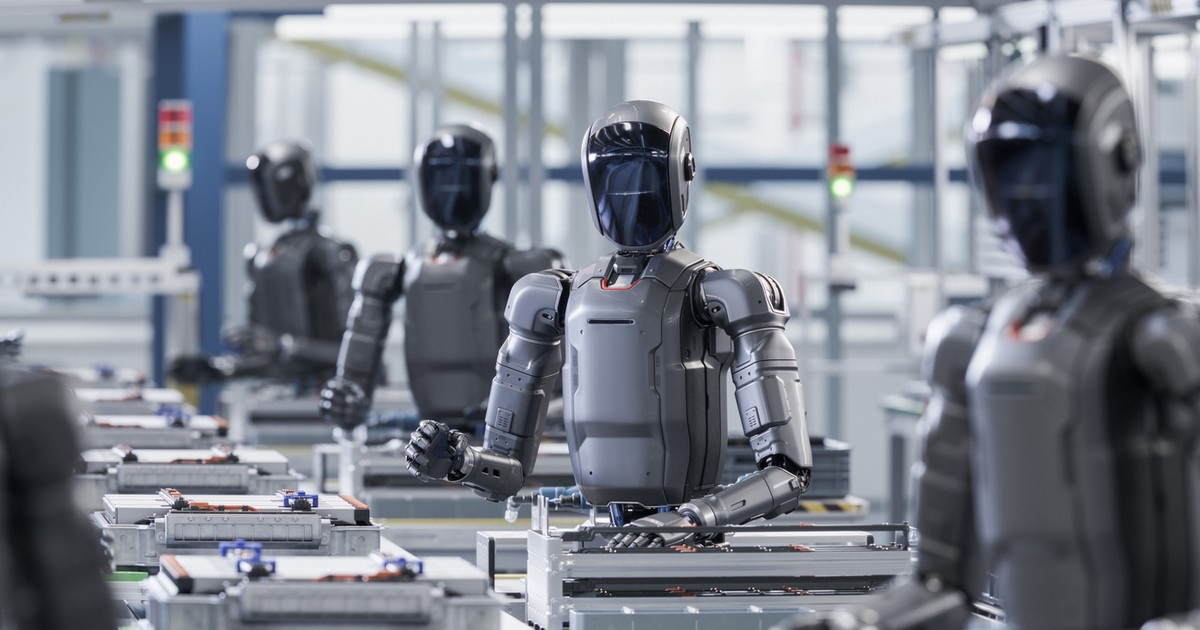
Made by Hexagon Robotics, the humanoid, named Aeon, is 1.65 m tall and weighs 60 kg. Moving on wheels, it reaches a maximum speed of 2.4 m per second and can carry a weight of 15 kg for a short time or 8 kg continuously. It is equipped with 21 sensors, including cameras, radar, microphone, and force and torque sensors.
Two such robots will work in the BMW factory. They are currently undergoing a series of training sessions, including: by imitating human movements. The robot learns to perform a task by watching a human perform it, using videos from different perspectives or motion sensors on the human. This form of training significantly shortens the training.
According to expert estimates, within three to five years the robot will be able to perform simple voice commands. Its battery lasts three hours, but can be replaced in three minutes.
See also: AI is slowly replacing electricians and plumbers. Robots are entering jobs that were supposed to be safe
The task of robots at BMW will mainly be feeding parts to production tools and performing pick-and-place tasks [pobieranie komponentów i precyzyjne układanie ich w innym miejscu] when installing the battery. Although robots are multifunctional, they are not expected to change tasks frequently.
Nikolaides says robots have the potential to help with jobs that are repetitive or physically too demanding for humans. They may also solve the labor shortage problem in the future.
“We know there will be a shortage of staff in a few years, and human robots are helping,” Michael Nikolaides tells the BBC.