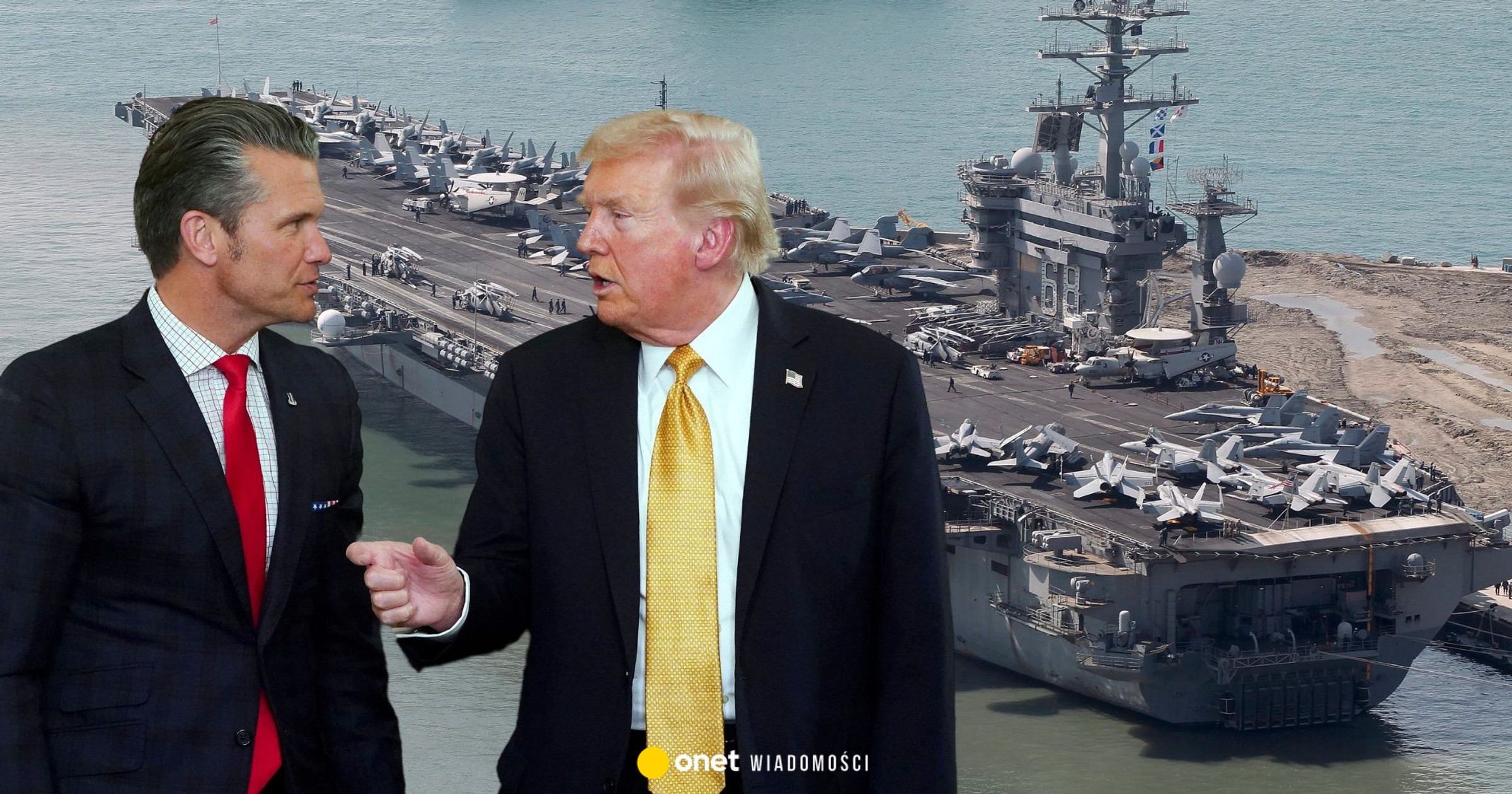
The president began to consider invading the island after economic and political pressure failed to overthrow the communist government. With a strengthened naval presence in the region—the largest in the world outside the Middle East—the United States could take immediate action.
There are several options on the table
— Cuba is in serious trouble Secretary of State Marco Rubio said during a full-cabin meeting on Wednesday. “The existence of a failed state within 90 miles of our coast is a threat to the national security of the United States,” he said.
Strengthening the forces opens up a number of military options, although the Pentagon would need additional troops to conduct a large-scale land invasion.
In his opinion, this ship, along with combat aircraft stationed in Florida and Puerto Rico, would probably play an important role in a possible military operation in Cuba. — Airstrikes are possible to destroy their air defenses to enable broader air operations or, perhaps, to eliminate their leadership with a view to establishing a relationship similar to that we have with Venezuela. The first target would be Raul Castro, he said.
This may slow down Washington's ambitions
However, the administration has limited time to take action. Many of the largest warships deployed during the summer are approaching 10 months at sea, well beyond the standard six to seven months. This raises concerns among Department of Defense officials about the excessive workload on crews and increases pressure on naval forces, which are also blocking Iranian ships in the Persian Gulf.
The White House referred questions to the Pentagon. The Navy declined to comment on current deployments. Southern Naval Command did not respond to a request for comment.
“These long, consecutive missions will add up over time,” said a Defense Department official who asked not to be named to speak candidly about military operations. “Keeping them there for so long creates more problems in the long run in terms of refurbishing and repairing these ships once they return home,” he pointed out.
“Nimitz” also extended its mission, which was to be the last in its 50-year career. It was initially scheduled to sail to Norfolk, Virginia, to have its nuclear engines removed, but the Navy decided to extend its service life until 2027.
The amphibious assault ships USS Iwo Jima and USS Fort Lauderdale have also remained in place since the summer, although the Marine Corps announced Wednesday that they will return to Norfolk next week.
However, the long missions take a toll on crews and Marines who had planned to rotate normally and are now months away from their originally scheduled return home.
“You don't join the military to have an easy life – you know there's uncertainty in every mission,” said Joe Plenzler, a retired Marine Corps officer. — But such extension of the mission, when it seems like it has no end, begins to have a negative impact on staff retention. What are the chances that I will be able to convince my family to re-enter and persevere in the ministry? – he asks rhetorically.