Why do more and more Romanians avoid talking to their neighbors and how the idea of community has disappeared

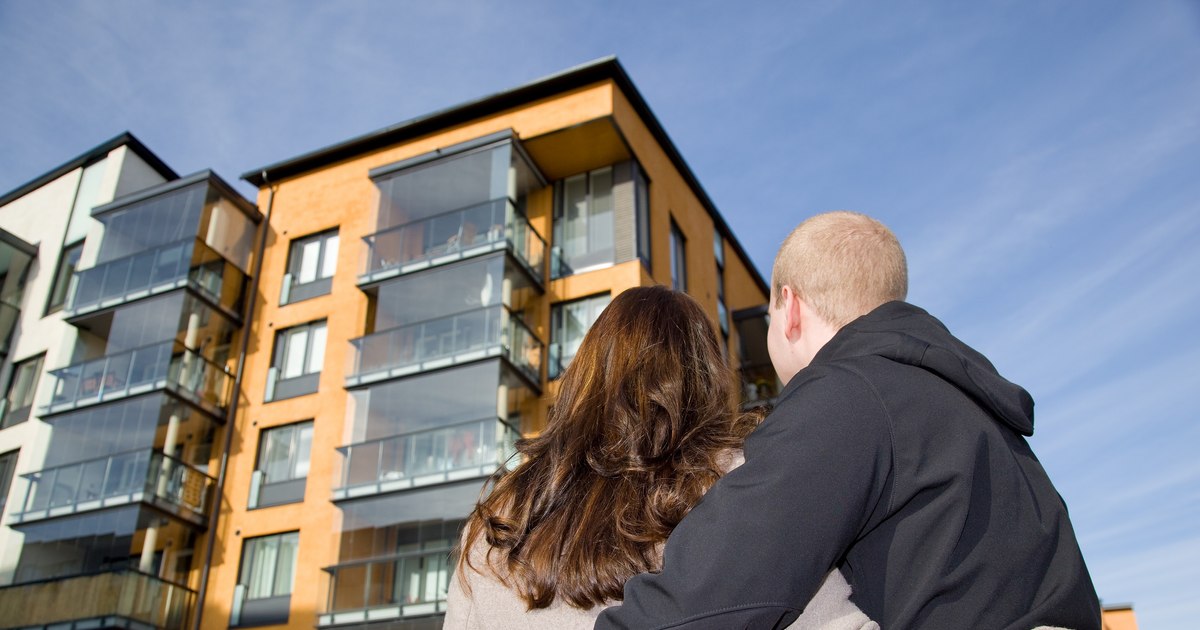
“Why has the 'blank stare' or total disregard become the new standard when we meet our neighbors in the block?”one user asks in a popular thread on Reddit. The situation described seems familiar to many: people who enter the elevator and immediately take out their phones, neighbors who avoid eye contact or respond with a grunt to a simple “hello”.
From neighbors sitting on the stories in front of the block, to people avoiding Photo credit: Shutterstock
This opened up a larger conversation about how relationships between people in big cities have changed and about the disappearance of the sense of community in modern blocks of flats.
“The block is no longer perceived as a community”
Clinical psychologist Luminița Tăbăran explains for “Adevărul” that the phenomenon is related to social and psychological transformations much greater than simple lack of politeness.
“If 40-50 years ago neighbors didn't just know each other, they had close relationships, helped each other, and their small community was a real support in any problem that might arise, today things are completely different. Technology is only the visible part”she says.
According to the psychologist, the rhythm of life is more fragmented and tiring, and people no longer have the time and emotional availability needed to build close relationships with those around them.
“If before there was a stability of the housing space, now there are a lot of people who live in rent, often changing houses, and investing in the relationship with the neighbors is not in the order of priorities”, explains Luminița Tăbăran.
In addition, many people are increasingly protective of their personal space and avoid spontaneous interactions, especially in the context where social trust has declined considerably.
“The fact that someone looks at the screen in the elevator or at the entrance to the building indirectly conveys: 'I'm busy', 'I don't want conversation' or 'I want to avoid contact'. It can be a socially accepted method of avoiding interaction without direct conflict”, says the psychologist.
The telephone, method of social avoidance
For her part, Adlerian psychotherapist Gabriela Răileanu says that the mobile phone has also become a tool through which people regulate their emotional discomfort.
“In brief, unpredictable or slightly uncomfortable situations – such as meeting a neighbor in the elevator – the phone provides a quick solution to avoid discomfort”declares this for “The Truth”.
According to the psychotherapist, online communication has enormously changed the way people relate to each other, because digital interactions are controllable and predictable.
“In the digital environment we can choose the timing, the wording and even the people we come into contact with. In real life, things are more unpredictable. A greeting or a short conversation involves spontaneity and minimal social exposure,” is the opinion of Gabriela Răileanu.
She points out that, over time, the lack of these apparently mundane interactions also affects people's ability to communicate naturally.
“Social skills are maintained through use. When short, repetitive interactions disappear, so does the ease with which they are initiated”explains the psychotherapist.
What Romanians say: “I run away if I see someone in the elevator”
The discussion on Reddit shows that the phenomenon is perceived very differently from one person to another. Some users say they've given up saying hello to their neighbors after being repeatedly ignored, while others believe that a simple “Hello” it's about education and minimal respect for those around you.
What the way you arrange your bills in your wallet says about you
A user says that, after several unpleasant experiences in an old block of flats in Bucharest, he completely stopped greeting his neighbors.
“I've said hello a few times, been completely ignored. I finally stopped because it's embarrassing to say hello and not even say hello back”he writes.
Others say avoiding social contact goes even further. “Do you get to get in the elevator with the neighbors? They run to me if they see someone waiting for the elevator. Either they pretend to have work outside until you leave, or they take it up the stairs”states another user.
However, there are also those who argue that the idea of a “block community” can sometimes become intrusive and tiresome.
“Personally, I hate the idea of a block community, and I'm glad that the block I'm in now doesn't have benches out front for everyone to gather around to crack seeds and make noise and gossip. It's nicer that way. We say hello and see each other for the rest of our lives.” writes another discussion participant.
Other users say that avoiding interactions is not always disrespectful.
“I'm neurodivergent. I try, but sometimes it's hard for me to say hello. Most of the time I succeed, but there are times when I'm tired, stressed or nervous and I don't notice that there's a person in front of me,” explains one of the commentators.
Loneliness in the crowd
“One characteristic of the present is the emergence of a loneliness that no longer depends on physical isolation. People can have many daily interactions in the digital environment and still feel a lack of belonging.” explains Gabriela Răileanu.
She explains that there is an essential difference worth remembering between simply communicating and truly connecting between people. “Communication conveys information. Connection creates a sense of relatedness,” says Gabriela Răileanu.
According to specialists, the pandemic has further accentuated this trend. For many people, isolation and avoidance of spontaneous contact became reflexes that persisted even after returning to normal life.
“Strategic alignment,” “scaling” or “synergy. Why people who use corporate language tend to make poorer decisions
Luminita Tăbăran says that in many places the feeling of “micro-community”.
“The block is no longer perceived as a group of people who share a common life, but as a temporary place where everyone goes their own way. When there is no sense of belonging, the motivation for small conversations also disappears.” explains the psychologist.
However, he points out that the need for connection has not gone away, even though the way people manage their social relationships has changed radically.
“Interestingly, many conversation avoiders also report feeling lonely. This suggests that the need for connection has not gone away, but the way people manage vulnerability and social energy has changed.” says Luminița Tăbăran.
Psychotherapist Gabriela Răileanu is of the opinion that reconnection does not require spectacular gestures. “Sometimes it starts with very simple things: looking up, a brief eye contact and a natural, no-pressure 'hello'. These gestures don't seem important on an individual level, but they are exactly those little threads that hold the idea of community together.” it concludes.